Diplomatic Incident
OPINION: Your old mate hears an international incident is threatening to blow up the long-standing Anzac alliance as Kiwis and Aussies argue over who wants new Australian resident and former NZ Prime Minister Jacinda Ardern.
 increase font size
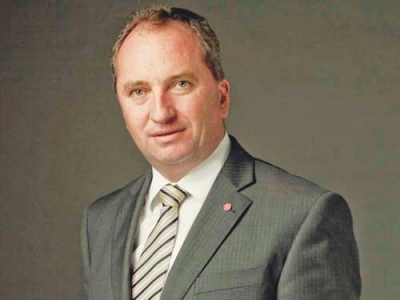 Barnaby Joyce.
Australian farm production is expected to top A$53 billion this year.
Latest figures from the Australian Bureau of Agricultural and Resource Economics and Science show the total value of farm exports in 2015-16 as A$41.8b.
“That’s money in the bank for the Australian farming and agribusiness sector at a time when it couldn’t be more important,” says Minister for Agriculture Barnaby Joyce.
Farm production value directly supports the livelihoods of Australian farmers and regional communities and makes a powerful contribution to the national economy and the way of life of all Australians, he says.
“The Australian Government understands the importance of
the contribution of agriculture to
the national economy year in, year out.
“That is why this government has prioritised the opening of new export markets, reduced barriers to trade, prioritised investment in R&D and productivity and reduced the burden of red tape on producers by A$24m.
The Abbott Government has made free trade agreements with China, Japan and Korea and opened six new live export markets in the last two years.
Joyce says expanding overseas market opportunities for Australian farmers is essential to the nation’s bottom line. “Australian farmers are trading in a competitive market and many factors affect the prices they receive.”
The National Farmers’ Federation (NFF) sees the record earnings not as a one-off, but as an emerging trend significant to the Australian economy.
The NFF says it is working to maximise Australia’s potential as an agricultural exporter, with the implementation of True Aussie – a premium brand for quality, safe and reliable food products, which will form a unified mechanism to strengthen Australia’s position in export markets.
About 80% of Australian agricultural produce is exported, and agriculture is forecast to remain a strong contributor to export earnings in 2015-16 despite a slight decline in value to A$41.8b. Exports will be reduced as a result of improving seasonal conditions driving up domestic demand for livestock as producers seek to restock, it says.
OPINION: Your old mate hears an international incident is threatening to blow up the long-standing Anzac alliance as Kiwis and Aussies argue over who wants new Australian resident and former NZ Prime Minister Jacinda Ardern.

OPINION: Your old mate hears that at a recent China Business Summit, PM Christopher Luxon delivered a none-too-subtle "could try harder" report card on the red meat industry regarding its exports to China - particularly when compared to Australia.
More Australian states are embracing virtual fencing technology, opening growth opportunities for Kiwi companies like Halter.
Fonterra says its ongoing legal battle with Australian processor Bega Cheese won’t change its divestment plans.
Farmers in the Australian state of New South Wales will soon be able to use virtual fencing and herding technology to boost farm productivity.


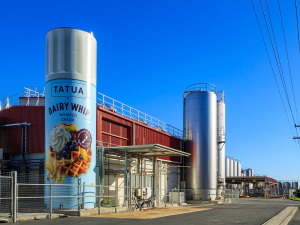
Waikato milk processor Tatua has again declared a record milk payout to farmer shareholders, leaving other processors in the dust.

A Labour-led Government won’t be bringing back the controversial freshwater rules of 2020.
National’s much-touted free trade deal with India featured in the Rural Issues Debate at Mystery Creek, Hamilton on Wednesday night.
New Zealand's 2026-27 freshwater fishing season has opened, with anglers encouraged to head to rivers and lakes over the coming days as conditions look favourable across much of the country.
Central Otago District Council (CODC) has voted against a plan to spread treated sewage sludge from Cromwell and Alexandra on farmland near Lauder, a decision Federated Farmers says reflects strong opposition from rural residents.
Pāmu has released its FY26 Integrated Annual Report, reporting a Net Operating Profit of $113 million, more than double the $49 million recorded in FY25.