Campaign targets greater awareness of stink bugs
Biosecurity New Zealand is ramping up a public awareness campaign to encourage people to report possible sightings of the brown marmorated stink bug (BMSB).
 increase font size
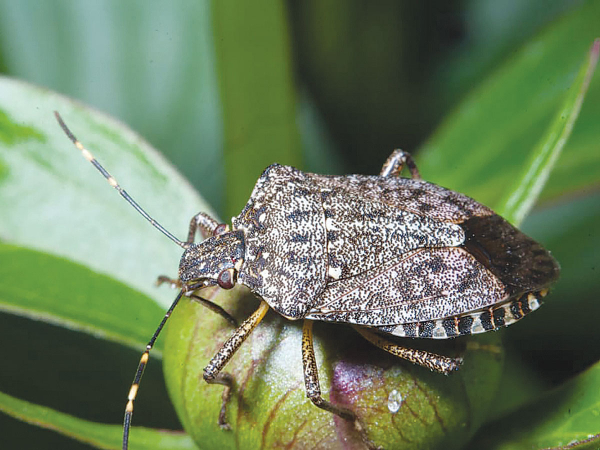 The brown marmorated stink bug (BMSB) poses a major threat to NZ's horticulture industry.
A winter campaign is underway to help raise awareness of the brown marmorated stink bug (BMSB).
BMSB - a particularly unwanted pest - poses a major threat to New Zealand's horticultural industry. "It has the potential to cost the country nearly $4 billion if it established here," says Biosecurity New Zealand's manager of readiness, Dr Cath Duthie.
"There is always the chance the unwanted pest could arrive in parcels and with other imported items. We very much want the public to help us with our surveillance efforts."
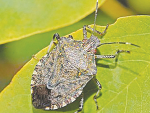
Biosecurity NZ's BMSB winter campaign focuses on showing people how to correctly identify the pest and report it. While it looks like some other bug species, BMSB has elements that make it identifiable - including white stripes or banding on its antennae and abdomen. The bug is about the same size as a 10 cent coin.
The winter campaign follows the spring-summer campaign of 2021/22 which saw stink bug ads appear on people's phone and computer screens.
Duthie says Biosecurity New Zealand is asking anyone who thinks they've found BMSB to catch it, snap it (take a photo), and report it.
"Winter is the time when BSMB is most likely to be found in enclosed spaces and indoors. This can cause problems for homeowers. As summer comes, any bugs are more likely to be found outdoors, for example in gardens."
Biosecurity NZ says there is currently no evidence of any established BMSB population in New Zealand.
There were 61 live bugs intercepted in New Zealand during the 2021/22 season - mostly associated with imported cargo.
Duthie says the number of live interceptions has dropped considerably over the last three years.
"This is largely due to the introduction of import rules that makes it harder for BMSB to enter New Zealand on risky cargo such as vehicles, machinery and parts from countries with established stink bug populations. Such cargo must be treated before arriving in New Zealand during the BMSB season."
Biosecurity New Zealand further tightened border controls recently - including introducing targeted alerts on additional goods associated with BSMB detections. Consignments covered by the alerts underwent full inspection to rule out the presence of live bugs.
"The fact we have no established BSMB populations suggests that the current biosecurity approach is working well," Duthie adds. "However, the risk of an incursion is never zero, which is why we all must play our part in keeping an eye out."
What's The Threat To NZ?
The brown marmorated stink bug (BMSB) is an agricultural, horticultural, and social pest.
It's native to Asia and has spread throughout North America and Europe. The bug isn't established in New Zealand, but the sneaky pest hitchhikes on passengers and imported goods. However, they have been caught at our border many times.
BMSB feeds on more than 300 plant species. If established in New Zealand it could decimate fruit and vegetable industries.
During autumn and winter, thousands of bugs can enter houses to shelter from the cold. When they're disturbed they release a foul-smelling liquid, which can make the house hard to live in.
Adult BMSB are a brown 'shield' shape and about the size of a 10 cent coin.
The easiest way to identify them is from the white bands on their antennae and alternating black and white markings on the abdomen. Its underside is a white/tan colour.
Stink bug eggs are light green shaped like barrels, and are usually in clusters of 20 to 30.
Biosecurity New Zealand is ramping up a public awareness campaign to encourage people to report possible sightings of the brown marmorated stink bug (BMSB).
Biosecurity New Zealand says it is ramping up a public awareness campaign designed to encourage people to report possible sightings of brown marmorated stink bug.
Scientists have developed a new trap for brown marmorated stink bugs (BMSB).
Biosecurity Minister Damien O’Connor is warning travelling Kiwis to be vigilant as the high-season for the crop-eating brown marmorated stink bug (BMSB) is under way.
New Zealand Winegrowers (NZW) was part of a small delegation that recently visited the beautiful country of Georgia, in the Caucasus region between Europe and Asia.



Synlait has swung to second-half profit as operations stabilise, but the dairy processor still posted a $75.4m annual loss.

LIC shareholders have elected a new North Island representative to the co-operative's Board, along with five representatives to its Shareholder Reference Group (SRG), following the company's Annual Meeting held in Invercargill.
Farmers across parts of Southland and South Otago are continuing to deal with difficult conditions after a prolonged run of wet weather, with pressure building around feed supply, stock management, pasture damage, farm infrastructure and everyday workloads.
Federated Farmers says it welcomes Labour's commitment to reviewing the Sharemilking Agreements Act, calling on other major parties to do the same.
For Canterbury dairy farmers Sian Meijer and Rick Wobben, wearable technology has become one of their most valuable on-farm tools - helping manage 1850 cows across an expansive, high-performing dairy operation while improving efficiency, mating outcomes and day-to-day decision making.
Fonterra has unveiled its annual results for the 2026 financial year, posting $27 billion in revenue and close to $20 billion returned to New Zealand farmer owners and unit holders.