Utilise Overseas Ag Interns
OPINION: Farmers have been clear: it is getting harder, not easier, to find and keep good people.
 increase font size
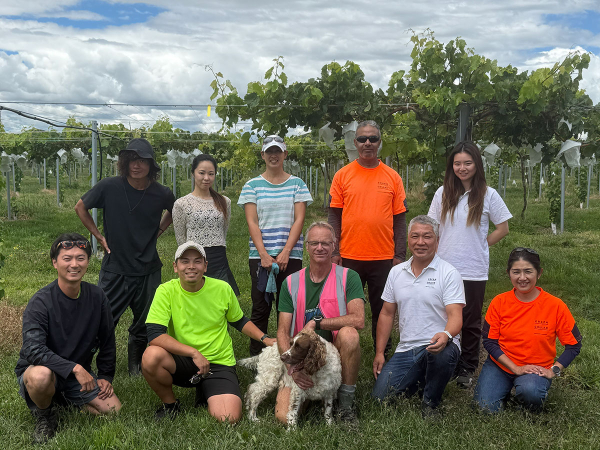 Greencollar's "mini league of nations".
A multi-cultural team is helping to establish one of New Zealand's largest plantings of premium eating grapes - while learning each other's languages and cultures along the way.
Greencollar's Hawke's Bay vineyard is part of a niche sector in New Zealand horticulture.
Fewer than 40 hectares of eating grapes are in commercial production nationwide, compared with tens of thousands of hectares devoted to wine grapes.
At around 20 hectares, Greencollar's five-year-old vineyard is one of the country's largest.
The grapes are grown by a multi-cultural team from Japan, New Zealand, China, India, and Taiwan, supported by Pasifika team members during the busiest months of the season.
“It’s a really great mix of cultures and levels of experience, with everyone bringing something unique to the team,” says Greencollar chief executive Shin Koizumi.
Shared lunches are a popular event on the vineyard, with team members introducing each other to food from their home cultures - from curry and samosas to sushi and cold noodle salads - providing a relaxed way to learn about language, customs and traditions.
Vineyard manager Taka (Takayuki) Kagayama says the New Zealand lifestyle is rubbing off on the international team, highlighting the necessary balance between work and family.
“It’s not something we really have in Japan. Here, everyone always works hard to get their responsibilities completed but we know that our family time and things we do after work are valued as well.”
The approach to growing Japanese eating grapes is very different from wine grapes, he says.
“Wine doesn’t care what the grapes look like; while we need to be focused on the whole presentation: taste, flavour, balance and look, the skins need to be perfect.”
Operations and sustainability manager Xan Harding says the diversity of the team brings practical insights into overseas markets.
“Sometimes it’s the small things, like the way the packaging is presented, or the words we’re using, that can make all the difference.”
OPINION: Farmers have been clear: it is getting harder, not easier, to find and keep good people.
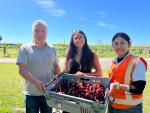
Budou are being picked now in Bridge Pā, the most intense and exciting time of the year for the Greencollar team – and the harvest of the finest eating grapes is weeks earlier than expected.
With the first harvest of high-quality table grapes from 700 vines just completed, the attention of Japanese company Greencollar is on preparing to harvest from 1400 vines next summer, and putting in another 1500 this planting season.
Divine table grapes that herald the start of a brand-new industry in Hawke’s Bay have been coming off vines in Maraekakaho.
DairyNZ says the decision to allow an extra 500 international workers to help on dairy farms will help with the present shortage - estimated to be 4,000 workers.



LIC shareholders have elected a new North Island representative to the co-operative's Board, along with five representatives to its Shareholder Reference Group (SRG), following the company's Annual Meeting held in Invercargill.
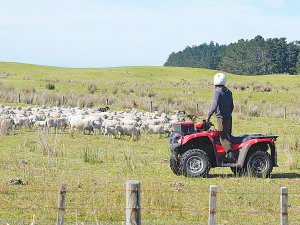
Farmers across parts of Southland and South Otago are continuing to deal with difficult conditions after a prolonged run of wet weather, with pressure building around feed supply, stock management, pasture damage, farm infrastructure and everyday workloads.
Federated Farmers says it welcomes Labour's commitment to reviewing the Sharemilking Agreements Act, calling on other major parties to do the same.
For Canterbury dairy farmers Sian Meijer and Rick Wobben, wearable technology has become one of their most valuable on-farm tools - helping manage 1850 cows across an expansive, high-performing dairy operation while improving efficiency, mating outcomes and day-to-day decision making.
Fonterra has unveiled its annual results for the 2026 financial year, posting $27 billion in revenue and close to $20 billion returned to New Zealand farmer owners and unit holders.
The first major update to the Dairy Cattle Code of Welfare in more than a decade has been released, marking what DairyNZ describes as an important step in ensuring animal welfare standards continue to evolve alongside scientific evidence and on-farm realities.