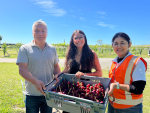
Bridge Pā Table Grape Harvest Starts Weeks Early
Budou are being picked now in Bridge Pā, the most intense and exciting time of the year for the Greencollar team – and the harvest of the finest eating grapes is weeks earlier than expected.



 increase font size
 Until now table grape growing has been a very small industry in New Zealand, with just 30 hectares devoted to commercial production across the country.
With the first harvest of high-quality table grapes from 700 vines just completed, the attention of Japanese company Greencollar is on preparing to harvest from 1400 vines next summer, and putting in another 1500 this planting season.
With the 400 planted in 2023, that will bring the vine count to near 3000. This year’s first harvest confirms the premium grape varieties, Yuho and Violet King, will excel in Hawke’s Bay’s proven grape-growing climate. The large seedless grapes are very popular for their sweetness, flavour and thin skins.
Until now, table grape growing has been a very small industry in New Zealand, with just 30ha devoted to commercial production across the country. Greencollar is determined to take advantage of the East Coast’s impressive growing conditions to rapidly build the industry, starting with planting 20 hectares in Hastings.
By full production – around 2029, depending on planting year – the vineyard is expected to yield around 240 tonnes of ultra-high quality table grapes, to be exported mainly to Japan and wider Asia, but also sold on the New Zealand market, says Hastings-based chief executive Shin Koizumi.
Growing ultra-high quality table grapes in New Zealand will allow Greencollar to sell the grapes in Japan and Asia during those regions’ offseason. Considered the King of Fruit in Japan, a bunch is often beautifully gift-wrapped and presented to show gratitude, or to wish someone season’s greetings.
This year, all the grapes were sold on the New Zealand market, primarily via high-end retail outlets, with a plan to export for the first-time next harvest.
The specially-bred grapes, Yuho and Violet King, are sweet, thinskinned, seedless and packed with flavour and require a great deal of care. At the beginning of the growing season, just one bunch per shoot is selected to stay on the vine with the rest of the flowers carefully removed. Each of the remaining bunches is hand-thinned three times to increase fragrance and sweetness, covered by delicate paper, and further protected by a little umbrella shade.
While growing the world’s best seedless table grapes is the prime aim, the company is also focused on ensuring the company’s employees have a work-life balance that is not typical in Japan.
Koizumi is passionate about grapes, but he is equally passionate about people having meaningful work balanced with opportunities for leisure that enhance their lives.
“For 30 years I worked in an office as a typical white-collar worker, commuted on a packed train, meeting after meeting, then I went home late at night just to sleep.
“I was searching for a new lifestyle where I wasn’t white-collar, nor blue-collar. I wanted to work under the blue sky and sun, that’s when I founded Greencollar.
“The passion for grapes comes from time spent helping his grandparents harvest fruit in Yamanashi prefecture.
“What we are doing now, growing grapes in Hastings and in rural Japan, brings together all of those elements – beautiful fruit, a wonderful lifestyle and making people happy.”
The Hawke’s Bay venture complements an 8ha vineyard the company has planted in Japan.
Budou are being picked now in Bridge Pā, the most intense and exciting time of the year for the Greencollar team – and the harvest of the finest eating grapes is weeks earlier than expected.
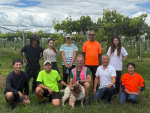
A multi-cultural team is helping to establish one of New Zealand's largest plantings of premium eating grapes - while learning each other's languages and cultures along the way.
Divine table grapes that herald the start of a brand-new industry in Hawke’s Bay have been coming off vines in Maraekakaho.
TURNERS & GROWERS have announced a significant joint venture with Unifrutti, with the two companies investing in the development of prime agricultural land in Piura, Peru.

During the nesting season, from September to December, industrious starlings can quickly build nests in the darker areas behind tractor and vehicle, usually close to hot engines, typically resulting in localised damage or in some cases complete write-offs.
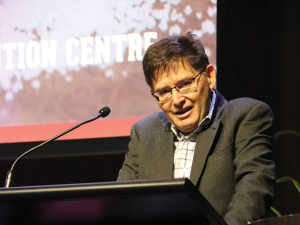
The meat processing industry is much more collegial than it was in the past and is now more focused on common goals.
With the last couple of months having seen some potential tractor purchases put on hold with the impending election and continued input cost rises, year-to-date figures, ending September, has seen deliveries up around 5% over the same period in 2025, with a total of 2026 units.
Beef+Lamb New Zealand is calling for nominations for director roles in the Northern South Island and Northern North Island electoral districts.
Fonterra chief executive, Richard Allen says being resilient has helped the dairy industry overcome extreme volatility in recent years.
The head of the Ministry for Primary Industries (MPI) trade and international relations group says New Zealand is well-positioned to secure trade access and compete internationally as the world becomes more complicated, demanding and uncertain.

OPINION: The same mainstream media muppets that brought you Jacindamania in 2017 have been flat out pimping for the Opportunities…
OPINION: Your old mate reckons the atrocious way farmers in the UK are treated by their lords and masters in…