
Diplomatic Incident
OPINION: Your old mate hears an international incident is threatening to blow up the long-standing Anzac alliance as Kiwis and Aussies argue over who wants new Australian resident and former NZ Prime Minister Jacinda Ardern.
 increase font size
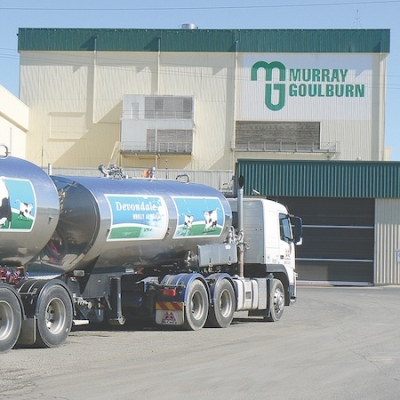 Dry weather is starting to impact milk production in Australia
Prolonged dry weather is beginning to impact milk production in parts of Australia.
Queensland and South Australia are worst hit and production is falling after a strong start to the 2014-15 season.
According to Fonterra, milk collection in Australia for the six months to December 31 reached 71 million kgMS, 6% higher than the same period last season.
But collection in December was 3% lower than the previous December – 12.5 million kgMS.
Following a strong start to the season, production has slowed as dry conditions impact pasture growth across most of south east Australia,” Fonterra says. “Supplementary feeding has increased due to low pasture availability and irrigation in Tasmania has commenced earlier than last year.”
Dairy Australia says despite the onset of dry weather, milk production continues to grow compared with the previous year.
Figures released by Dairy Australia last month show milk production was up 3% in November compared with the previous year; year-to-date production was up 3.5%.
Tasmania again drove much of the increase with an 11.9% increase in November to take its year-to-date increase to 13.8%.
NSW (up 7.9%), Western Australia (up 5.2%) and Victoria (up 1.9%) also showed growth.
But Queensland (down 5.6%) and South Australia (down 2.4%) continued their downward trajectory.
The tight season in western Victoria is also starting to have an impact with production down there 3.1%. Strong growth in Gippsland (up 7%) saw it overtake western Victoria as the biggest Victoria supply region in November. In northern Victoria, despite dry conditions and increasing water prices, production is up 1.8%.
NZ collection keeps on growing
Milk collection in New Zealand is tracking 4% higher than last year.
Fonterra says it has collected 972 million kgMS for seven months to December 31, 4% higher than the same period last year.
But the rate of growth has continued to slow, largely driven by reduced South Island production triggered by dry weather.
North Island collection in December reached 125 million kgMS, 4% higher than December last season. Some rain fell in many dairy regions, supporting grass growth and increased milk production.
South Island collection in December reached 76 million kgMS, just 1% higher than December last season.
Growing conditions have improved in Southland after a cold start to the season. However, dry conditions are impacting pasture growth across the east coast of the South Island.
OPINION: Your old mate hears an international incident is threatening to blow up the long-standing Anzac alliance as Kiwis and Aussies argue over who wants new Australian resident and former NZ Prime Minister Jacinda Ardern.

OPINION: Your old mate hears that at a recent China Business Summit, PM Christopher Luxon delivered a none-too-subtle "could try harder" report card on the red meat industry regarding its exports to China - particularly when compared to Australia.
More Australian states are embracing virtual fencing technology, opening growth opportunities for Kiwi companies like Halter.
Fonterra says its ongoing legal battle with Australian processor Bega Cheese won’t change its divestment plans.
Farmers in the Australian state of New South Wales will soon be able to use virtual fencing and herding technology to boost farm productivity.


Waikato milk processor Tatua has again declared a record milk payout to farmer shareholders, leaving other processors in the dust.

A Labour-led Government won’t be bringing back the controversial freshwater rules of 2020.
National’s much-touted free trade deal with India featured in the Rural Issues Debate at Mystery Creek, Hamilton on Wednesday night.
New Zealand's 2026-27 freshwater fishing season has opened, with anglers encouraged to head to rivers and lakes over the coming days as conditions look favourable across much of the country.
Central Otago District Council (CODC) has voted against a plan to spread treated sewage sludge from Cromwell and Alexandra on farmland near Lauder, a decision Federated Farmers says reflects strong opposition from rural residents.
Pāmu has released its FY26 Integrated Annual Report, reporting a Net Operating Profit of $113 million, more than double the $49 million recorded in FY25.