Venison alternatives starting to move
Consolidation in the deer industry in the last five years means mainly the more committed farmers are left, which is good for the industry, says Kris Orange.
 increase font size
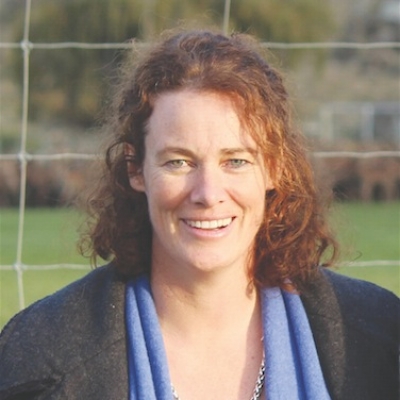 Mandy Bell
Deer farmers are being encouraged to look closely at their animal health as part of the ‘Passion2Profit’ initiative.
P2P aims to improve deer farm profits by developing new high-value markets for venison and raising farm performance. It will be partially funded by the Government’s Primary Growth Partnership.
“Animal health, feeding and genetics are the three big areas where farmers can influence the profits they make from deer,” says Deer Industry NZ chief executive Dan Coup.
“In 11 ‘Advance Parties’ we now have underway, farmers help each other to exploit opportunities in each of these areas. The first of these groups are already achieving good results for the farmers involved. Next will be ‘Clean Bill of Health’, looking at the impact animal health issues can have on deer performance.”
P2P advisory group chair Dr Mandy Bell, a Central Otago deer farmer and veterinarian, says deer are low-input animals.
“This is one of their great attractions from a farming point of view and no-one wants to change that. But you can’t just turn them out after say, weaning, forget about them and expect great results.
“Every farm is different, but case studies show that health issues can have a big impact on fawning percentages, survival rates and growth rates. With a few well-timed interventions as part of a customised deer health programme, it is possible to greatly improve farm profits.
“Before P2P was developed, the industry took a hard look at farm profitability. Deer health was identified as leaving a lot of money on the table.”
DINZ and the deer branch of the Veterinary Association have prioritised eight health issues harming deer performance on many farms.
Bell says farmers need to realise animal health is not just a cost centre, but instead has potential to increase farm profit. Farmers will be helped to recognise animal health problems on their farms, and what to do about them. Later in the year the focus will shift to animal health planning.
“All farmers want to maximise the profitability of their deer. But some of them will have undiagnosed animal health issues in their herds which, if they were addressed, would boost herd performance and profits.
“Farmers typically see vets as an emergency service, called in when an animal health issue has blown up. The ideal is for farmers and vets to work proactively together, with customised deer health plans developed and reviewed annually. Part of this involves weighing the costs of veterinary advice against improvements in farm profitability.”
Advance Parties are co-funded by the Ministry for Primary Industries Sustainable Farming Fund and DINZ.
Deer health plans pay
Mandy Bell cites two recent case studies as examples of deer farmers using customised animal health plans to boost their farms’ bottom line.
Farm 1 – The farmer contacted the vet about Johne’s disease. A risk assessment was done and an animal health plan developed.
This involved monitoring and management of all diseases, not just Johne’s, with veterinary input. Each year the plan has been reviewed. After three years, deaths are down from 13% to 2.2%, in-calf percentages are up from 80% to 94.5%, and weaning rates have increased from 70% to 89%.
Bell says these performance increases result from a planned approach to animal health, not just the treatment of the one disease.
Farm 2 – This well-managed 10,500 SU farm has an annual animal health plan. In the last year it has reduced input costs by increased monitoring. As a result, animal health costs have fallen 25% ($9082). This could not have been achieved without careful monitoring and veterinary involvement, says Bell.
Consolidation in the deer industry in the last five years means mainly the more committed farmers are left, which is good for the industry, says Kris Orange.
A conference just for the younger generation is one way the deer industry hopes to retain young people in deer farming.
Deer Industry NZ is fielding an upsurge in the number of farmers wanting to join an Advance Party (AP).
New Zealand venison exporters have started a trial to test the appetite of European consumers for Cervena venison in the summer grilling season.
Deer Industry New Zealand (DINZ) and MPI have agreed on long-awaited primary-growth partnership (PGP), to be called ‘Passion2Profit’.


Healthy snacking company Rockit has announced Wang Yibo, one of China's most influential celebrities, as its new brand ambassador.
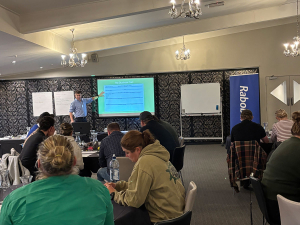
Rabobank has celebrated the tenth anniversary of its AgPathways Programme, with 23 farmers from Otago and Southland gathering for two-and-a-half days to learn new business management and planning skills.
Adopting strategies to reduce worm burden on farm goes hand-in--hand with best practice farm management practices to optimise stock production and performance, veterinarian Andrew Roe says.
Last night saw the winners of the 2026 Beef + Lamb New Zealand (B+LNZ) Awards named at a gala dinner at Te Pae Christchurch Convention Centre.
A 12-month pathway programme has helped kickstart a career in dairy for an 18-year-old student-turned-farmer.
Zespri says its global fruit sales revenue has reached a record NZ$5.9 billion from sales of 248.1 million trays.