
Beef + Lamb New Zealand Awards 2026 Winners Announced in Christchurch
Last night saw the winners of the 2026 Beef + Lamb New Zealand (B+LNZ) Awards named at a gala dinner at Te Pae Christchurch Convention Centre.
 increase font size
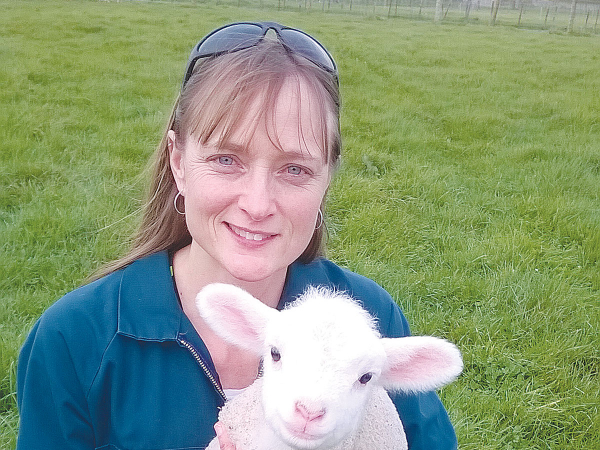 AgResearch senior scientist Sue McCoard says the results seen in lambs fed milk replacer showed significant differences in growth rates, health and need for use of antibiotics.
Recently published research suggests that farmers should avoid feeding milk replacers with vegetable proteins and fats to lambs in their early life.
A milk replacer containing 100% milk-based ingredients is better for growth, health, and welfare in the first five or six weeks, the study found.
Carried out by scientists from AgResearch - and funding from NZAgbiz - the research considered the use of different compositions of milk replacers in artificial rearing systems, what it means for animal performance and health, and costs for the producer.
Around 200 East-Friesian male lambs were allocated to pens using a randomised experimental design and reared on one of two commercially available milk replacer formulations - one being 80% casein and 20% whey milk protein and 100% milk fat. The other 50% casein, 40% whey milk protein and 10% hydrolysed wheat protein and 100% vegetable oil.
The lambs were able to feed on demand from automatic feeders, with free access to grass hay also available.
Study lead author and AgResearch senior scientist Sue McCoard says the results seen in lambs fed either milk replacer were similar when it came to death rates. However significant differences were observed in growth rates, health and need for use of antibiotics.
"Among the key findings was that feeding a milk replacer containing vegetable ingredients versus 100% milk ingredients resulted in lower growth rates (242 versus 296 g/d) - with four times more lambs failing to reach the minimum weaning weight by the end of the study," she says.
"The milk replacer containing vegetable ingredients was also associated with an increased incidence of health issues - notably scouring, pneumonia, pink eye, and external infections."
McCoard adds that the cost of health intervention by lamb was $17.20 per head, compared to $7.32 per head for those fed the 100% milk ingredient replacer.
"We also saw a 2.5 times increased likelihood of therapeutic antibiotic use to treat health issues among those lambs reared on the milk replacer containing vegetable oil," she explains.
"Notably, lambs fed milk replacer containing vegetable ingredients were eight times more likely to get scours and three times more likely to get pneumonia."
McCoard says these results indicate feeding lambs in the first five to six weeks of life with milk replacer containing vegetable proteins and fats should be avoided.
"Improving early life nutrition through feeding of milk replacers containing 100% milk-based ingredients supports growth, health, and welfare by providing protection against disease and reduces costs associated with health care. The reduction in therapeutic use of antibiotics also contributes to meeting consumer demands for chemical-free food production and reducing risk of antimicrobial resistance.”
The effects of different combinations of milk replacer ingredients used in this study are still to be established.
“It is clear however from this research and other studies, that investing in the right choices around the early life nutrition of artificially reared livestock is important, and has an increasingly important role in animal agriculture,” McCoard says.
“It not only helps producers avoid costly animal health and welfare issues but can also provide an advantage for lifetime performance as well as reducing wastage which is important for sustainable and ethical livestock production systems.”
More: www.appliedanimalscience.org/article/S2590-2865(21)00039-2/fulltext
Last night saw the winners of the 2026 Beef + Lamb New Zealand (B+LNZ) Awards named at a gala dinner at Te Pae Christchurch Convention Centre.
A significant breakthrough in understanding facial eczema (FE) in livestock brings New Zealand closer to reducing the disease’s devastating impact on farmers, animals, and rural communities.
A breakthrough in the understanding of Facial Eczema (FE) in livestock could bring New Zealand closer to reducing the disease’s impact.
An innovative idea for transforming mechanically deboned meat (MDM) into a meat flake for seasoning has taken top honours in the Meat Industry Association’s (MIA) first-ever Dragon’s Den competition.
The Government's plan to merge the seven crown institutes presents exciting possibilities for plant technology company Grasslanz Technology, says chief executive Megan Skiffington.



Waikato milk processor Tatua has again declared a record milk payout to farmer shareholders, leaving other processors in the dust.

A Labour-led Government won’t be bringing back the controversial freshwater rules of 2020.
National’s much-touted free trade deal with India featured in the Rural Issues Debate at Mystery Creek, Hamilton on Wednesday night.
New Zealand's 2026-27 freshwater fishing season has opened, with anglers encouraged to head to rivers and lakes over the coming days as conditions look favourable across much of the country.
Central Otago District Council (CODC) has voted against a plan to spread treated sewage sludge from Cromwell and Alexandra on farmland near Lauder, a decision Federated Farmers says reflects strong opposition from rural residents.
Pāmu has released its FY26 Integrated Annual Report, reporting a Net Operating Profit of $113 million, more than double the $49 million recorded in FY25.