BVD Control Begins Long Before You See A Problem
Bovine Viral Diarrhoea (BVD) is sometimes viewed as a dairy industry issue, but the reality is that the disease can have serious consequences for beef breeding herds as well.
 increase font size
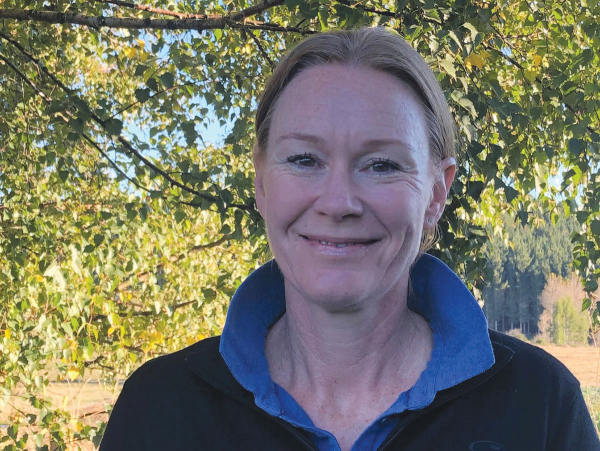 Wormwise programme manager Ginny Dodunski.
Farmers traditionally reliant on Bionic Plus capsules to manage internal parasites in ewes over lambing are being warned they may need to plan to farm without the product this year.
Boehringer Ingelheim, the distributor of Bionic Plus, has announced the adult sheep product is unlikely to be available for lambing in 2023.
“Farmers need to begin planning now,” says Dr Ginny Dodunski, sheep veterinarian and manager of the Wormwise programme.
“There are plenty of farmers around New Zealand who get great ewe performance and excellent lamb weaning weights without the use of any pre-lamb worm treatment for ewes – but the key to this are ewe body condition and feed planning. Getting this right for lambing starts the day you wean,” Dodunski says.
Last year, issues with the Bionic Plus Hogget capsule saw the product recalled and an extended meat withholding period applied to sheep already treated with the capsules. While investigations continue, it appears the capsules were not releasing product at the correct rate.
Boehringer has advised vets that out of an abundance of caution, it is ‘highly unlikely’ that either capsule will be available in 2023.
Dodunski says that while other long-acting products are available, the unavailability of Bionic Plus could be an opportunity for farmers to reset their breeding flock management.
“We know from previous trial work that the factor that comes closest to explaining why some farms see big responses to capsules is feed on offer at lambing.
“This is something that every farmer has some control over. It’s a mix of lambing date, stocking rate, autumn and winter sales policies, grazing management and fertility,” Dodunski says.
“However, you can’t wake up on the 10th July and decide to increase the amount of grass on offer at lambing – this process starts now and relies on hitting appropriate pre-winter feed targets and then managing that feed through to have good covers to set stock multiple ewes onto.
“The farmers I see who do a really good job of this do a lot of juggling in the second half of the winter to aggressively aim for those targets while still feeding their multiples well in late pregnancy.”
She says identifying ewes that are under body condition score 3 to 3.5 at weaning and offering them extra feed over summer marks the beginning of this process.
Farmers who would like training in any aspect of feed planning, body condition management and sustainable drench use are encouraged to contact their local B+LNZ extension manager for workshops in their area.
Bovine Viral Diarrhoea (BVD) is sometimes viewed as a dairy industry issue, but the reality is that the disease can have serious consequences for beef breeding herds as well.

Animal health company Bovonic is gearing up for its next stage of growth after increasing New Zealand sales of QuadSense by more than 50% in the last 12 months, including a record quarter for the business this year.
With lambing underway in many regions, Beef + Lamb New Zealand is encouraging farmers to put together a wellequipped lambing kit to help minimise lamb losses, particularly in bad weather.
Bovine Viral Diarrhoea (BVD) remains one of the most significant infectious diseases affecting New Zealand dairy herds.
Bovine Viral Diarrhoea (BVD) is sometimes viewed as a dairy industry issue, but the reality is that the disease can have serious consequences for beef breeding herds as well.


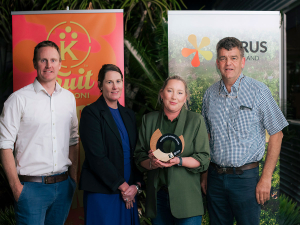
New Zealand's citrus growers were challenged to build their future on the value embedded in their fruit rather than the volume they produce, at Citrus New Zealand's annual gathering in Gisborne on 17 September.
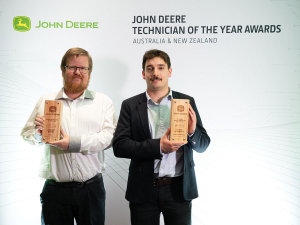
Leading John Deere technicians and apprentices from New Zealand and Australians were recognised at the recent sixth annual JD Technician of the Year Awards, held in Brisbane.
In Dacre, near Invercargill in New Zealand’s South Island, Bruce Dinnington is running a dairy operation unlike any other.
A free online platform aggregating governance vacancies across rural and regional New Zealand has been launched.
Environment Minister Nicola Grigg has announced details of a new rural plastics recycling scheme.
Agricultural drone operators say that a government decision to allow lower-risk drone work without certification won’t lower standards but drive innovation and efficiency.