
Fines For Velveting Without Pain Relief, Illegal Slaughter and NAIT Breaches
Three men have been sentenced in District Courts after Ministry for Primary Industries prosecutions over animal welfare, food safety and cattle tracing offences.
 increase font size
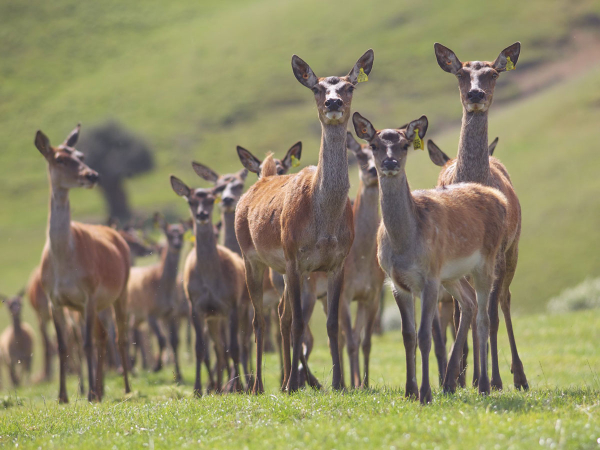 Under NAIT, all cattle or deer must be fitted with a NAIT tag and registered in the NAIT system by the time the animal is 180 days old.
A farmer who failed to register 295 deer into the National Animal Identification and Tracing (NAIT) scheme has been fined $13,750.
Under the system all cattle or deer must be fitted with a NAIT tag and registered in the NAIT system by the time the animal is 180 days old, or before the animal is moved off farm.
John Wheeler (60), Lake Tekapo, was sentenced in the Timaru District Court on four charges under the NAIT Act.
“Mr Wheeler’s animals were not registered into the NAIT system as required when they were moved off farm. We take this seriously because the scheme provides a critical tool in the fight against biosecurity incursions,” says Ministry for Primary Industries (MPI) Regional Manager of Animal Welfare and NAIT Compliance, Murray Pridham.
“The scheme helps us track and trace animals so we can respond quickly and accurately when we need to. Put simply, when people in charge of animals disregard their NAIT obligations they put the whole agricultural sector at risk.”
NAIT records showed the 295 deer had been tagged but remained unregistered between May 2021 and June 2022.
In November 2021, Wheeler was educated by an MPI NAIT officer on his obligations and how to meet them, but records show no animals were registered after that meeting even though Wheeler confirmed he knew what to do for his NAIT animals.
In 2019, penalties in the NAIT Act increased tenfold to $100,000 for an individual and up to $200,000 for a body corporate.
Pridham says while receiving one of these penalties could hurt the bottom line for people in charge of animals, the inability to trace animals can have far reaching and serious consequences for everyone.
"The NAIT tag and registration system is only as effective as the information entered in. If you are unsure about what you need to do, reach out. There is plenty of information, advice and support available," says Pridham.
Three men have been sentenced in District Courts after Ministry for Primary Industries prosecutions over animal welfare, food safety and cattle tracing offences.

OPINION: It's no surprise that "world-class biosecurity" continues to dominate as the top priority for agribusiness leaders, holding the number one spot for the 16th consecutive year in KPMG's latest agribusiness report.
South Waikato farmer David Christensen was convicted and fined $56,000 for two unlawful discharges of dairy effluent following a prosecution taken by Waikato Regional Council. The fine was imposed by Judge Melinda Dickey from the Huntly District Court after Christensen plead guilty to two charges under the Resource Management Act.
A contract milker and a dairy farm owner have been convicted and fined a combined $66,500 for the unlawful discharge of dairy shed effluent and stockfeed leachate into the environment.
Moving Day (June 1) is just around the corner and farmers who are moving farms with the herd are being urged by Ospri to start preparations now.



During the nesting season, from September to December, industrious starlings can quickly build nests in the darker areas behind tractor and vehicle, usually close to hot engines, typically resulting in localised damage or in some cases complete write-offs.

The meat processing industry is much more collegial than it was in the past and is now more focused on common goals.
With the last couple of months having seen some potential tractor purchases put on hold with the impending election and continued input cost rises, year-to-date figures, ending September, has seen deliveries up around 5% over the same period in 2025, with a total of 2026 units.
Beef+Lamb New Zealand is calling for nominations for director roles in the Northern South Island and Northern North Island electoral districts.
Fonterra chief executive, Richard Allen says being resilient has helped the dairy industry overcome extreme volatility in recent years.
The head of the Ministry for Primary Industries (MPI) trade and international relations group says New Zealand is well-positioned to secure trade access and compete internationally as the world becomes more complicated, demanding and uncertain.