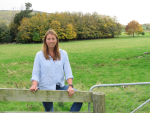
Pāmu and Meet the Need Launch Mince Recipe Cards for Food Banks
A partnership between state-owned enterprise Pāmu (Landcorp Farming Limited) and charity Meet the Need is putting more than quality New Zealand beef into food bank parcels this year.
 increase font size
 Landcorp chief executive Steve Carden.
Landcorp is paying members of its contentious environmental reference group (ERG) $1500 a day each – far more than other government body payments.
This has been revealed in answers to an Official Information Act (OIA) request by Rural News to the Government-owned farmer (trading as Pāmu Farms).
“Each ERG member and the chairman is paid a flat fee of $1500 per day they attend the ERG meeting,” Landcorp’s OIA response says. “In addition, the chair is paid an hourly rate for meeting preparation.”
During the 2017-2018 year, the state farmer also paid $2740.11 in travel costs and another $2451.43 in accommodating out-of-town ERG members for the four meetings it held in Wellington.
Landcorp set up the ERG in 2015 after protests about the state-owned farmer’s Wairakei Estates forestry-to-dairy farm conversions north of Taupo.
Its members over the years have included several high-profile farming critics, including two controversial environmentalists – freshwater ecologist Dr Mike Joy, farming critic and now Landcorp’s head of environmental; and former Fish and Game chief executive Bryce Johnson.
Current members of ERG include outspoken freshwater campaigner Marnie Prickett who also chairs the committee, Forest and Bird campaigner Anna-Beth Cohen, earth systems scientist and Māori specialist Dr Daniel Hikuroa, well-known ecologist Guy Salmon and the ubiquitous Mike Joy.
Meanwhile, it looks like members of Landcorp’s ERG are on a pretty good wicket at $1500-a-day, compared with other Government-paid bodies. Members of the Primary Sector Council are paid $500 a day, with chair Lain Jager earning $800 a day. The Tax Working Group members earned $800 a day and chair Sir Michael Cullen earned $1000 a day.
A partnership between state-owned enterprise Pāmu (Landcorp Farming Limited) and charity Meet the Need is putting more than quality New Zealand beef into food bank parcels this year.

State farmer Pamu has delivered its strongest operating result on record.
Beef+Lamb New Zealand and the Ag Emissions Centre have launched a new research project aimed at helping beef farmers reduce methane emissions without impacting productivity or profitability.
State farmer Pāmu is opening its farm gates this summer in an effort to give the rural sector the opportunity to see how large-scale, multi-system farming is delivering productivity and profitability across New Zealand.
Bank of New Zealand (BNZ) and Pāmu (Landcorp Farming Limited) have developed a new way for landowners to earn revenue from existing native forests.


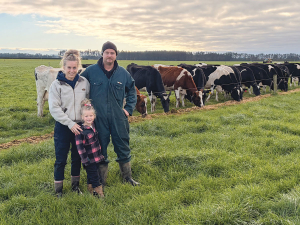
For Canterbury dairy farmers Sian Meijer and Rick Wobben, wearable technology has become one of their most valuable on-farm tools - helping manage 1850 cows across an expansive, high-performing dairy operation while improving efficiency, mating outcomes and day-to-day decision making.
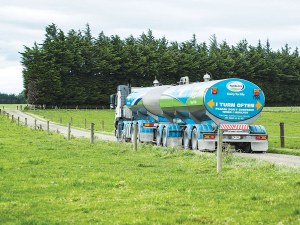
Fonterra has unveiled its annual results for the 2026 financial year, posting $27 billion in revenue and close to $20 billion returned to New Zealand farmer owners and unit holders.
The first major update to the Dairy Cattle Code of Welfare in more than a decade has been released, marking what DairyNZ describes as an important step in ensuring animal welfare standards continue to evolve alongside scientific evidence and on-farm realities.
Ravensdown shareholders have elected Jane Montgomery and Kate Acland to the Ravensdown Board for three-year terms, following a closely contested director election.
Federated Farmers says new legislation replacing the Resource Management Act will cut red tape, unlock investment and help grow New Zealand's export-led economy, after the Planning Bill and Natural Environment Bill passed their third reading in Parliament yesterday.
Leading figures from the major political parties will be questioned on their primary sector policies at the Rural Issues Debate at Mystery Creek Events Centre, Hamilton, on 30 September.