Precision N application test costs 'outweigh returns'
Precision application of nitrogen can improve yields, but the costs of testing currently outweigh improved returns, according to new research from Plant and Food Research, MPI and Ravensdown.
 increase font size
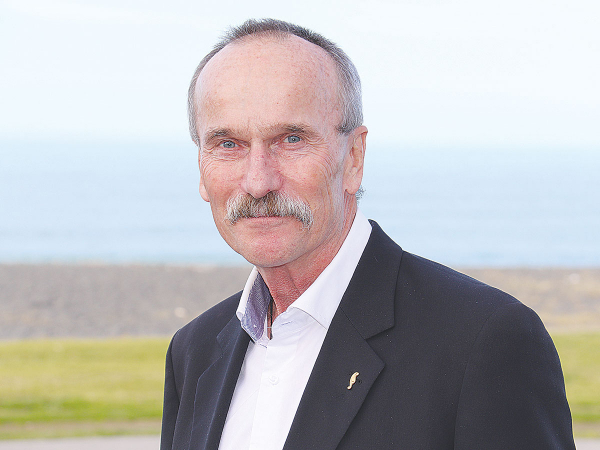 Brent Clothier is only the third president, in about 40 years, to be elected to chair the Royal Society with an agricultural background.
Well-known Plant and Food Research soil and environment scientist Brent Clothier is the new president of the Royal Society, Te Aparangi.
The society's role is to recognise, promote and support excellence in science, as well as encourage the development and use of scence for the benefit of humanity.
Clothier's appointment is for three years and he is only the third president, in about 40 years, to be elected to chair the Royal Society with an agricultural background. He told Rural News the appointment is a huge honour and responsibility.
"The society is very keen to build a connection with the CRIs and independent research organisations and also into the applied research and primary production research," he says. "This is because there is a huge amount of research, innovation, science and technology that goes on in NZ that comes out of our primary producton systems.
"Think of Gallagher electric fencing and what they have done, and now the massive amount of innovation in robotics in Tauranga."
Clothier believes his appointment indicates the Royal Society would like to engage more with the knowledge systems around primary production and also the humanities of rural and Maori communities.
While Clothier says he has no specific plans to play an advocacy role for the primary sector in his new role, he does want to broaden the reach and connectedness of the Royal Society into the science and innovation being undertaken in the sector.
"After all, 65% of our export revenue comes from agriculture which is unusual within the OECD countries."
Sixty-nine-year-old Clothier is still working full time for Plant & Food Research based in Palmerston North. He began his career as a mathematician and had planned to do his PhD overseas. However, love intervened when he met his wife-to-be and he stayed in NZ, switching to becoming a highly-regarded soil and environment scientist.
Clothier says a lot of his work is now focused in environmental issues as they impact on primary production systems.
"This is becoming more important with national policy statements on water and productive skills," he adds.
"It also impacts on what I call the 'eco credentials' of our products in international markets. We gain money in the market by having evidence-based eco credentials about our environmental performance."
Precision application of nitrogen can improve yields, but the costs of testing currently outweigh improved returns, according to new research from Plant and Food Research, MPI and Ravensdown.

Spring is the perfect time to re-set your eating habits and colourful in-season fruit and vegetables are the key to success, offering unbeatable value.
Nutritionists are urging Kiwis to kickstart their day with a piece of fresh fruit to help improve their health and wellbeing this autumn.
“We’ve just had the first decent shower in three months,” says Rob Agnew when we call him.
A one-year Erasmus Programme in France in year three of an agricultural degree introduced Victoria Raw to the wine industry, and changed her life.


Pāmu has released its FY26 Integrated Annual Report, reporting a Net Operating Profit of $113 million, more than double the $49 million recorded in FY25.

Meat Industry Association data, released alongside the Red Meat Sector conference in Wellington, shows export value climbing across the US, China, UK and Canada.
Applications are set to open for the 2027 Zanda McDonald Award, a trans-Tasman award recognised for identifying and fast-tracking talented young leaders in agriculture and agribusiness.
The Royal New Zealand College of General Practitioners (the College) and Hauora Taiwhenua Rural Health Network are calling for investment in a proposed new training pathway for rural GPs, warning that many rural practices are struggling to recruit while a large share of the existing workforce nears retirement.
Federated Farmers has called on Central Otago District Council (CODC) to drop or vote down a plan to truck sludge from Alexandra and Cromwell to farmland near Lauder, warning it would compound an "outrageous" situation created by a separate council's decision weeks earlier.
Synlait has swung to second-half profit as operations stabilise, but the dairy processor still posted a $75.4m annual loss.