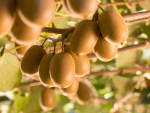
NZKGI Responds to Migrant Worker Exploitation Reports
Where any worker in the kiwifruit industry is mistreated, we expect the authorities to take action.
 increase font size

BANKS WILL need to support kiwifruit growers through a year to 18 months as they switch to Psa-V resistant varieties of gold kiwifruit, say growers representative Neil Trebilco.
Many orchards growing the gold variety Hort16 which have been devastated by Psa are likely to be grafting a replacement variety this winter – with their first crop from those vines in 2014.
“It won’t make sense for banks to foreclose at this time because the sales of that orchard will be quite low. If banks are prepared to support them for a year or 18 months, the likelihood is the growers will able to recover all the equity.”
Trebilco, who is president of New Zealand Kiwifruit Growers Inc (NZKGI), made the comments as kiwifruit growers engage in a consultation period, with meetings around the country, on a three-year Psa recovery plan released by Zespri. It proposes a broad-scale release of a new gold variety, Gold3, over the next three years.
Zespri is offering growers two options for the release of G3.
The first is a commercial proposal where Hort16A growers will be paid $5000/ha to return their existing Hort16A licence. The grower can then choose to join a commercial (closed) tender process, whereby the highest bids are successful.
The second option would offer all Hort16A growers a licence if/when they deem the timing to be right to re-graft based on their personal circumstances.
Under this option, Hort16A growers can make a fixed price bid (proposed to be $12,000/ha) for enough Gold3 licence to replace their existing Hort16A plantings.
Under both options a further 400ha of Gold3 are being released to give non-Hort16A orchards an opportunity to buy Gold3 licences and diversify their growing portfolio.
Also, under both options, a deferred payment of 80% of the cost is being offered. Growers can repay the money when their orchards begin to produce again.
In addition, ZESPRI is proposing to release up to 200ha of Green14, a newly commercialised (in 2010) sweet green variety, through a $3000 fixed price allocation.
Trebilco says there’s been a lot of grower uncertainly about what the release mechanism might be for the new G3 variety that’s “caused a lot of discussion”.
He says the “pathway to recovery” consultation “may settle some of that discussion” and options may be modified after grower discussion.
Where any worker in the kiwifruit industry is mistreated, we expect the authorities to take action.

Kiwifruit growers are watchful but remain optimistic as concerns around the potential effects of the El Niño weather pattern this season.
More signs of a booming kiwifruit sector.
After delivering a strong financial year, rural trader PGG Wrightson says the coming months will depend on customer confidence and weather.
New Zealand growers have always adapted to changing conditions, but one challenge is steadily gaining ground across the horticulture sector: resistance.



LIC shareholders have elected a new North Island representative to the co-operative's Board, along with five representatives to its Shareholder Reference Group (SRG), following the company's Annual Meeting held in Invercargill.
Farmers across parts of Southland and South Otago are continuing to deal with difficult conditions after a prolonged run of wet weather, with pressure building around feed supply, stock management, pasture damage, farm infrastructure and everyday workloads.
Federated Farmers says it welcomes Labour's commitment to reviewing the Sharemilking Agreements Act, calling on other major parties to do the same.
For Canterbury dairy farmers Sian Meijer and Rick Wobben, wearable technology has become one of their most valuable on-farm tools - helping manage 1850 cows across an expansive, high-performing dairy operation while improving efficiency, mating outcomes and day-to-day decision making.
Fonterra has unveiled its annual results for the 2026 financial year, posting $27 billion in revenue and close to $20 billion returned to New Zealand farmer owners and unit holders.
The first major update to the Dairy Cattle Code of Welfare in more than a decade has been released, marking what DairyNZ describes as an important step in ensuring animal welfare standards continue to evolve alongside scientific evidence and on-farm realities.



