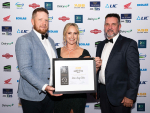
Two new awards open to help young farmers progress to farm ownership
Entries have opened for two awards in the New Zealand Dairy Industry Awards (NZDIA) programme, aimed at helping young farmers progress to farm ownership.
 increase font size
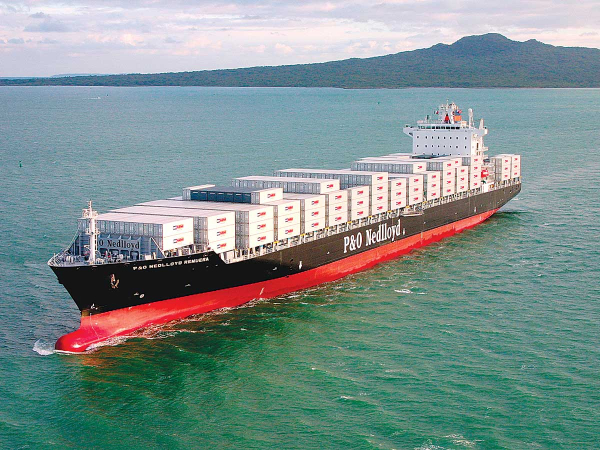 ASB's ASB ACCESS programme is designed to accelerate the export growth of established high-potential food and fibre businesses, through access to debt capital alongside advice, connections and expertise.
ASB has launched its new ASB ACCESS programme, designed to accelerate the export growth of established high-potential food and fibre businesses, through access to debt capital alongside advice, connections and expertise.
The bank says the ASB ACCESS programme will support food and fibre exporters that are at a critical scale-up phase, taking a broader approach to lending, beyond traditional thinking and measures of risk and returns.
ASB chief executive Vittoria Shortt says the bank is aware of many innovative, ambitious and sustainably minded Kiwi exporters that are ready to take the next step but require the capital to do it.
“In establishing ASB ACCESS, we’re thinking differently about how we can change to meet the needs of the businesses of the future,” says Shortt. “This programme is about being more flexible and supporting our food and fibre entrepreneurs based on the potential we see in them and their businesses.
“For example, we are in discussions with producers of plant-based foods, alternative proteins, microalgae nutrition and agri-technology from around Aotearoa,” she says
Shortt claims that with the backing of the ASB ACCESS programme, those exporters will be able to scale to meet market demand.
“ASB has a purpose to accelerate progress for all New Zealanders, financially, socially, and environmentally, and ASB ACCESS is one of the ways we are looking to do this, by taking a more purpose-driven approach to lending,” says Shortt.
Eligible food and fibre businesses will be backed with advice, connections and support with international trade, and ASB is working alongside government agencies, industry groups, local business accelerators and global innovation platforms to facilitate this.
“New Zealand produces high quality products from the land and sea, and we are committed to working with producers to ensure this value is captured in a purposeful and environmentally sustainable way. Through ASB ACCESS we’re partnering with our customers to help them grasp the economic and global potential that lies ahead,” says Rebecca James, executive general manager, business banking.
The programme will initially be piloted with around six eligible businesses, with a view to expansion if the pilot proves successful.
Food and fibre businesses that would like to talk to ASB about their eligibility for the programme should email This email address is being protected from spambots. You need JavaScript enabled to view it. to register their interest.
Entries have opened for two awards in the New Zealand Dairy Industry Awards (NZDIA) programme, aimed at helping young farmers progress to farm ownership.
According to ASB, Fonterra's plan to sell it's Anchor and Mainlands brands could inject $4.5 billion in additional spending into the economy.
Sheep and beef farmers are cautiously optimistic as farmgate prices continue to firm.
The 2025-26 season is set to start on a high and a $10/kgMS opening forecast milk price isn't being ruled out.
A global trade war beckons, which is bad news for a small open economy like New Zealand, warns Mark Smith ASB senior economist.



LIC shareholders have elected a new North Island representative to the co-operative's Board, along with five representatives to its Shareholder Reference Group (SRG), following the company's Annual Meeting held in Invercargill.
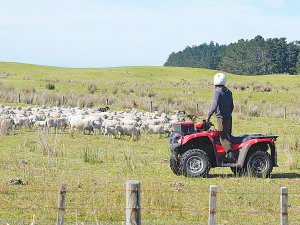
Farmers across parts of Southland and South Otago are continuing to deal with difficult conditions after a prolonged run of wet weather, with pressure building around feed supply, stock management, pasture damage, farm infrastructure and everyday workloads.
Federated Farmers says it welcomes Labour's commitment to reviewing the Sharemilking Agreements Act, calling on other major parties to do the same.
For Canterbury dairy farmers Sian Meijer and Rick Wobben, wearable technology has become one of their most valuable on-farm tools - helping manage 1850 cows across an expansive, high-performing dairy operation while improving efficiency, mating outcomes and day-to-day decision making.
Fonterra has unveiled its annual results for the 2026 financial year, posting $27 billion in revenue and close to $20 billion returned to New Zealand farmer owners and unit holders.
The first major update to the Dairy Cattle Code of Welfare in more than a decade has been released, marking what DairyNZ describes as an important step in ensuring animal welfare standards continue to evolve alongside scientific evidence and on-farm realities.




