Arable advocacy?
OPINION: Spare a thought for the arable farmer, squeezed on one side by soft global prices and on the other by limits on further yield increases.
 increase font size
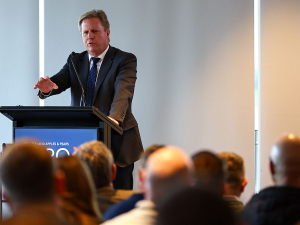
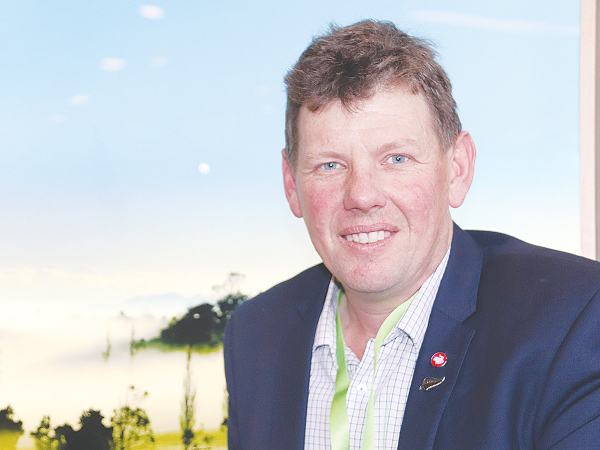 NZ’s new special agriculture trade envoy Hamish Marr.
It's all about relationships.
That's how NZ's latest special agricultural trade envoy Hamish Marr describes his new role - following in the footsteps of Mel Poulton, and before her, Mike Peterson.
Marr is the fifth generation to work on the family farm at Methven. With his brother and father, they grow a multiplicity of seed crops and also have dairy, heifer and sheep grazing operations on the 500 hectare property.
After completing a bachelor of agricultural commerce at Lincoln University in 2000, he spent five years as a field officer for Ravensdown before doing his OE, which took him to the UK and the USA. In 2006, he returned to the family farm and now lives there with his wife Melanie and three daughters.
In 2019, Marr was awarded a Nuffield scholarship and the subject of his research was glyphosate use, how it is regulated in NZ and what farmers here could learn from others if a ban or de-registration were to occur. He says while glyphosate use is important for arable farmers, it is very important right across the whole primary sector.
"We have got Roundup - like it or not - and it's integral to all the farming in NZ," he says.
Marr has just taken up his new role and admits it's too early for him to make any pronouncements on what he may do, beyond saying his role is to promote and protect the NZ brand, which he says is second to none in the world.
"For me, the job is 100% about relationships and getting to know my counterparts around the world," Marr told Rural News.
"To me, relationships are about viewing things through the eyes of the people you are talking with and somewhere amongst it all i the middle ground.
"That's my challenge, but I will get there," he says.
OPINION: Spare a thought for the arable farmer, squeezed on one side by soft global prices and on the other by limits on further yield increases.

Profitability issues facing arable farmers are the same across the world, says New Zealand's special agricultural trade envoy Hamish Marr.
New Zealand’s special agricultural trade envoy Hamish Marr believes the outlook for the dairy sector remains strong.
The chair of New Zealand's biggest grower, packer and exporter of apples says it's been a bumper season.
While New Zealand dominates some areas of international agricultural trade, we're still only a small player, warns New Zealand's special agricultural trade envoy Hamish Marr.
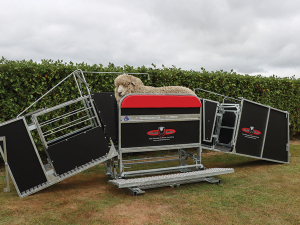
Oamaru-based livestock handling specialist Te Pari has bought Combi Clamp, the New Zealand manufacturer of Combi Clamp manual sheep handlers.
Agriculture Minister Todd McClay has admitted that a scheme bringing workers from Pacific nations to work on orchards has become too hard to navigate but says changes are coming.
A new app designed in New Zealand aims to help sheep, beef and deer farmers capture, analyse and use body condition score data more effectively.
Canterbury farmer Andy Macfarlane has been appointed to the board of AgriZeroNZ, the public-private partnership designed to accelerate the development and deployment of emissions reduction tools for New Zealand farmers.
For over 50 years Mel Ewers has been supporting the apple sector navigate through compliance and quality assurance issues.
The apple sector is enjoying a bumper harvest season.