
Lanaco and Blueair Launch World-First NZ Wool Air Filter
New Zealand wool is reaching new heights as air filtration companies move away from synthetic products to biodegradable alternatives.
 increase font size
 Both Spark and 2degrees have lifted caps for their rural broadband customers, however, Vodafone claims it can’t.
All three big telcos – Vodafone, Spark and 2degrees – are offering 24/7 unlimited data for urban broadband users in response to the COVID-19 lockdown forcing people to stay at home.
Meanwhile, both Spark and 2degrees have also applied this offer to their rural broadband customers. However, Vodafone claims it can’t.
Instead the company is only offering unlimited data between midnight and 9am. Rural broadband runs on the mobile phone system rather than the high-capacity fibre now common in urban areas. Vodafone says it has more rural customers, but less radio spectrum available.
Sharina Nisha, Vodafone NZ’s head of networks and platforms told Rural News that the company had heard the calls from its rural customers who want more data during level 4 lockdown.
“We would love to offer unlimited data to our rural customers at all times – but the rural network has a limited data supply and is simply not built for the hugely increased capacity we’re experiencing at the moment,” she explained.
“This would require additional radio spectrum and Government investment via the Rural Broadband Initiative (RBI). This means that if we removed data caps now, it would degrade the experience overall.”
Vodafone’s wholesale & infrastructure director, Tony Baird, says the company “entered new territory” as New Zealanders turned to their devices to stay connected during the lockdown.
He claims overnight data usage climbed 40%, showing that the overnight unlimited offer has been well-received.
“Overall, we’re seeing massive increases in data and voice traffic,” Baird told Rural News.
“To provide an analogy, if the internet was a road; we’re seeing anywhere between 20-70% more cars join the highway all at once.
“But our network is built to handle traffic peaks, and we’re doing all we can to keep New Zealanders connected.”
He says more Government support is required to further increase capacity on the rural networks – with additional spectrum allocation being a quick fix.
“In the longer-term, additional investment into the Rural Broadband Initiative will go a long way to keeping rural customers connected at times of crisis like we currently find ourselves in.”
The midnight to 9am unlimited offer also applies to the country’s largest specialist rural broadband provider, Timaru-based Farmside, which Vodafone acquired in 2018.
New Zealand wool is reaching new heights as air filtration companies move away from synthetic products to biodegradable alternatives.

Generative AI in the workplace, trials in the field, and industry-relevant research took centre stage at this year’s Grape Days events in Central Otago, Hawke’s Bay and Marlborough.
OPINION: The previous government spent too much during the Covid-19 pandemic, despite warnings from officials, according to a briefing released by the Treasury.
OPINION: Labour leader Chris 'Chippy' Hipkins is carrying on the world-class gaslighting of the nation that he and his cohorts started after their disastrous Covid response; now trying to undermine the Covid inquiry to protect his own backside.
Virtual fencing company Halter is going global but for founder Craig Piggott, New Zealand farmers will always remain their main partners.


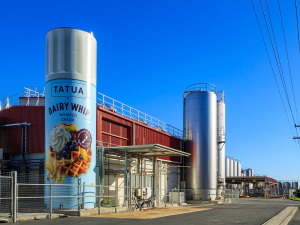
Waikato milk processor Tatua has again declared a record milk payout to farmer shareholders, leaving other processors in the dust.

A Labour-led Government won’t be bringing back the controversial freshwater rules of 2020.
National’s much-touted free trade deal with India featured in the Rural Issues Debate at Mystery Creek, Hamilton on Wednesday night.
New Zealand's 2026-27 freshwater fishing season has opened, with anglers encouraged to head to rivers and lakes over the coming days as conditions look favourable across much of the country.
Central Otago District Council (CODC) has voted against a plan to spread treated sewage sludge from Cromwell and Alexandra on farmland near Lauder, a decision Federated Farmers says reflects strong opposition from rural residents.
Pāmu has released its FY26 Integrated Annual Report, reporting a Net Operating Profit of $113 million, more than double the $49 million recorded in FY25.