Proposals for new conservation system irks anglers
Anglers are at loggerheads with an environment group over its plans for a new conservation system.
 increase font size

THE PUBLIC, and fellow farmers, are quick to complain if stock, particularly dairy cows, stray into streams and waterways. But it seems many regional councils can do little about the problem.
The Environmental Defence Society (EDS) is considering going to the Environment Court to get a clear answer on what powers regional councils have to force farmers to fence streams under the provisions of the RMA.
But it seems EDS could probably save themselves the expense of a court case: the Ministry for the Environment told Rural News councils do have the power to make farmers fence streams under the RMA, but most simply haven't incorporated this into their regional plans.
If these provisions aren't already in regional plans it can take years for them to do so.
This is seen by local government as one of the weaknesses of the RMA because it does not allow them to respond to emerging issues in a timely manner.
The Northland Regional Council, which has been criticised for not taking action about cows getting in waterways, says it's planning to begin reviewing its regional plan in June. Riaan Elliot says the present regulatory framework for dealing with such matters is very limited.
"Under the present rules any sort of enforcement action or trying to get farmers to fence their streams would be problematic. However, if it's shown to be a 'significant degradation of water quality' as a result of a specific activity, we can take enforcement action under section 17. But when we are in these 'grey' areas it's quite hard and the threshold is high," he says.
The Southland Regional Council has a rule that limits the grazing of stock within 3m of a lake, river, stream or artificial watercourse when intensive winter grazing is being undertaken. This rule also applies to "significant wetlands".
Environment Canterbury is moving to introduce additional and more stringent rules to keep stock out of waterways from June. The council's director of resource management, Kim Drummond, says the new rules mean that intensively farmed stock or any stock grazed on irrigated land will be prohibited from entering natural waterways.
"There is a real focus in Canterbury of excluding stock from natural waterways in order to improve water quality," he says.
The latest kerfuffle has prompted DairyNZ to issue a statement saying dairy farmers "are on board" in regards to riparian management. Dr Rick Pridmore says the industry has made it clear that it wants to see streams fenced.
"The public does not draw the distinction between beef stock and dairy cows grazed off the home farm. The reality is that when the public see cattle in a river or on an unfenced river bank, dairy farmers cop the flak from that," he says.
If regional councils were to change their rules about fencing streams, they would likely get support from the dairy industry. Fonterra for example has given its farmers until next June to have their waterways fenced.
The difficult question remains as to how far up a catchment fencing rules might apply and whether it would just apply to intensively grazed parts of a farm or the entire farm.
Anglers are at loggerheads with an environment group over its plans for a new conservation system.

OPINION: Some purists just seem to want to block any progress in NZ, oblivious to the social costs of preventing the country from turning a buck.
Just over 1000 submissions made on Healthy Rivers/Wai Ora: Proposed Waikato Regional Plan Change 1 are now available online for people to read.
The Land and Water Forum (LAWF) is proposing time limits for farmers to fence waterways on their properties, with dairy farmers among the first to be affected.
Gypsum can at least partially address many hydrological and chemical factors that influence the loss of phosphorus and other nutrients from farms to waterways, says a Canterbury company.


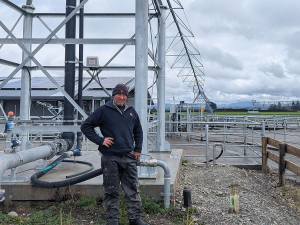
Converting a longstanding cropping farm to dairy was the only way to ensure the land stayed in the family long term, says new dairy farmer Rod May.

As the election heats up, Organics Aotearoa New Zealand (OANZ) has launched its election scorecard designed to help voters wanting to support policies that grow organic and New Zealand's organic sector.
A 'tsunami' of milk from key exporting countries is winding down and this may be good news for New Zealand dairy farmers.
Will the good times last? That's one of the key issues to come out of the latest Federated Farmers confidence survey.
Outgoing Fonterra Co-operative Council chair John Stevenson says that it has been a privilege to represent the co-op's farmer shareholders.
Have a plan in place for your cows and staff.