Stuffed!
The canine crusader always has his nose in the air for more media maleficence, so was pointing as soon as he saw the Stuff headline: ‘Wellington residents respond to PM saying he doesn’t need his job!’.
 increase font size
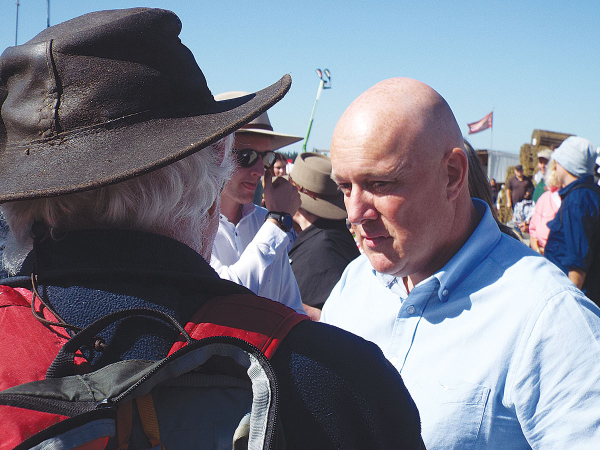 Prime Minister Christopher Luxon was popular among farmers at the Southern Field Days this month.
Returning to the field days circuit after a break of four years due to Covid, the Southern Field Days at Waimumu, near Gore, was all about positivity – following six months of negative sentiment in New Zealand agriculture.
With visitor numbers hitting an all-time high of 45,500 over the three days, bringing the overflow carpark into play, 780 sites offered plenty of interest for the folk who experienced sunburn on day one, followed by a hefty dose of rain on day two.
While the mood was good, it was a case of mixed reports from stallholders, with the purveyors of smaller items such as silage grabs or bale feeders doing business, whereas larger capital goods were on the back burner, with companies reporting it was a little quiet, especially after 2pm – probably an indication of the move towards dairying in the region.
Indeed, chatting to a few farming families at the hotel – those either dragged out for Valentines or grabbing a post-event feed on the way home – many said chequebooks were locked away until their fortunes improved.
Day one saw the arrival of Prime Minister Christopher Luxon, alongside a number of rural MPs. He said farmers had been treated like villains for the past six years, but his Government was working hard to remove red tape and regulations that had stalled the rural economy.
“We want farmers to know they are not villains, but deeply valued individual or corporate businesses that this Government will back,” he said.
Spending time to talk to farmers, contractors, council officials and farming advocacy groups, his presence was in sharp contrast to the last visit paid by a Prime Minister; Jacinda Ardern spent an hour at Fieldays in 2020 and was roundly heckled by the crowd.
By contrast, Luxon was greeted by a huge round of applause when he noted, “NZ agriculture has been persecuted with 23 different rules or regulations over the last six years that have buried farmers in endless red tape.
Our job is to remove those regulatory barriers and, if need be, replace them with smart or considered alternatives, but only after proper discussions with the affected communities”.
Asked what he would do to stimulate the rural economy, he responded by suggesting, “over the next decade, if we can grow agriculture by 2% per annum, we will end up creating $35 of billion growth in the NZ economy”.
Southern Field Days chairman, Steve Henderson, said although spending was likely to be down at this year’s event because of low commodity prices and higher interest rates, Luxon’s visit had been positive, “showing the new Government was taking agriculture seriously, although it might take a while until things start to come right”.
The canine crusader always has his nose in the air for more media maleficence, so was pointing as soon as he saw the Stuff headline: ‘Wellington residents respond to PM saying he doesn’t need his job!’.

Ravensdown's next evolution in smart farming technology, HawkEye Pro, was awarded the Technology Section Award at the Southern Field Days Farm Innovation Awards in February 2026.
While mariners may recognise a “dog watch” as a two-hour shift on a ship, the Good Dog Work Watch is quite a different concept and the clever creation of Southland siblings Grace (9) and Archer Brown (7), both pupils at Riverton Primary School.
South Island dairy farmers will soon be able to supply organic milk to Fonterra.
With the rising interest in alternative fuels, it’s no surprise that manufacturers of ATVs and side-by-side vehicles are introducing alternative power solutions into their ranges.


Farmer-owned fertiliser company, Ballance Agri Nutrients is welcoming National’s plan to negotiate security agreements with key supplier countries to protect New Zealand-bound products from export restrictions and greater supply chain certainty.
Carrfields has announced the appointment of Stu Hall to the newly created role of chief operating officer, Carrfields Ltd, reflecting the continued growth of their agribusinesses and the need to ensure the company has the leadership capacity and support in place as it pursues the emerging opportunities ahead.
New Zealand's role is not to compete with Indian growers, according to NZ Apples and Pears.
The potato industry is celebrating the success of two rising stars - James Blair, the 2026 Young Grower of the Year and runner-up and innovation award winner, Amber Davy.
Twenty-eight emerging leaders from across the horticulture sector spent two days last month learning valuable skills and connecting with industry experts.
There are five entrants in this year’s Young Horticulturist of the Year, competing in a series of technical, practical, business and leadership challenges.