Weed wiping has taken many formats over the last 50 years or more, with some systems achieving much better results than others.
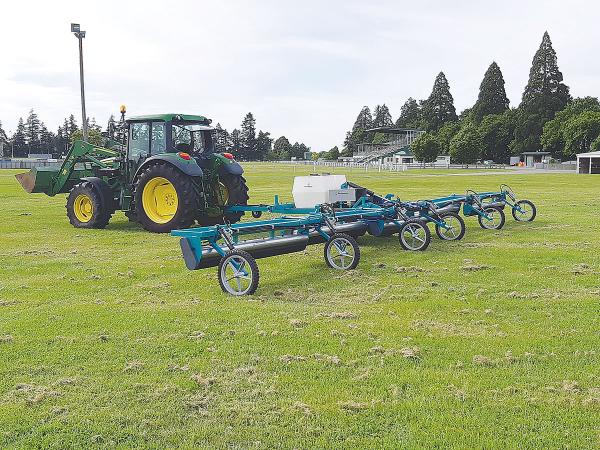
The Ashburton-manufactured Rotowiper system applies more chemical onto the plant than any other type of weed wiper applicator, delivering sufficient chemical to kill problem weeds in a single pass across the paddock.
The exceptional results, alongside reduced running costs and less chemical use compared to conventional spraying, raises the question why some farmers are not reducing their weed burden with such an efficient tool.
With land values rising or even holding, giving over paddocks to weeds is hard to understand, with some farmers still failing to realise that problem weeds will not disappear on their own and there is an actual cost attached to letting them to survive. Weeds will choke out your grasses and clovers, resulting in reduced production, meaning reduced revenue and profit margin.
For a small capital outlay, the addition of a Rotowiper to a farm’s machinery fleet allows users to tackle this problem in a cost-effective manner, with the concept on using expensive chemicals when the problem weed encounters the applicator roller.
The efficacy of the application is also greatly improved as the machine applies chemical to the more vulnerable underside of the leaf and the plant stem.
There are also ecological benefits as there is no spray drift, so applications can be undertaken even on windy days, there is no need for a blanket coverage as the applicator only applies chemical to the weeds that sit above the crop.
Evolving since its introduction, larger Rotowipers have been added to the range, with the 9-metre FU 900 three point linkage machine released in 2022, while 12-metre machines have become more common and bespoke machines created with a 24-metre working width.
As technology has evolved, these larger machines can now be equipped with auto functions and easy to use electric over hydraulic controls.
www.rotowiper.com