Dawn Meats acquires German distributor Alexander Eyckeler GmbH
Irish meat processor Dawn Meats has acquired Alexander Eyckeler GmbH, a long-standing German customer and partner of Alliance Group, for an undisclosed sum.
 increase font size
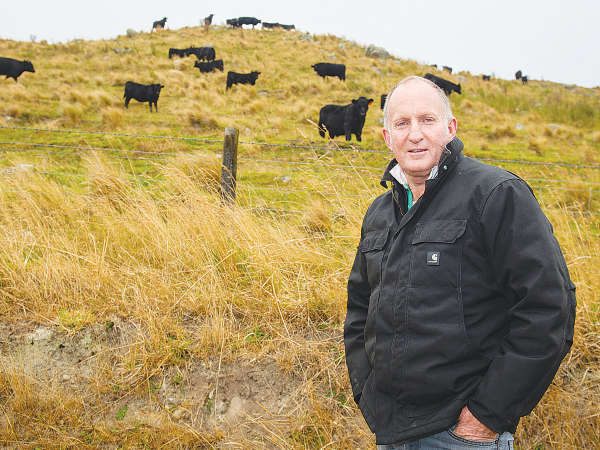 Former Beef + Lamb New Zealand chairman and Alliance Group shareholder, Andew Morrison.
A group of Kiwi farmers are urging Alliance farmer-shareholders to vote against a deal that would see the red meat co-operative sell approximately $270 million in shares to Ireland's Dawn Meats.
The farmers say they have secured credible alternatives to prevent the sale and keep Alliance 100% New Zealand-farmer owned.
They are calling on the Alliance board to consider their proposals.
The group's alternative plan involves capital contributions from shareholders, som asset-rationalisation and debt repayments via profits.
The plan would also make use of the ability to offset $191 million of tax-losses against future profits, which they say is an opportunity that would be given away in a majority sale.
Speaking for the group, agribusiness leader Jeff Grant says that on the back of recent restructuring, Alliance Group Limited (AGL) has achieved a significant turnaround and return to profitability.
"In this 'non-peak' year, AGL generated a profit of circa $20 million, a $90 million turnaround versus last year, and profit is projected at $75 million last year," Grant says.
"The question farmers need to ask themselves before they vote is, why would we sell this critical asset at a time when red meat prices have never been better and global demand for our world-class protein is exploding?”
Meanwhile, former Beef + Lamb New Zealand chairman and Alliance shareholder Andrew Morrison says the group "has gone above and beyond to secure credible options, and we're now in a stronger position to be putting these forward to the board and fellow shareholders".
He says there are "critical benefits" to Alliance's processing infrastructure remaining New Zealand-owned.
"Shareholders have repeatedly expressed concern to the Alliance Board that we were not given the same opportunities, or access to the same information as Dawn Meats, to explore alternatives that could retain full ownership," Morrison says.
He argues that farmers need to vote against the Dawn Meats proposal because if it goes through "there's no coming back".
"There is a better way, the numbers prove it: Now is not the time to sell out, it's the time to invest in our business and the right people, to guarantee our best possible future," Morrison says.
"Let's get on with making this work."
Irish meat processor Dawn Meats has acquired Alexander Eyckeler GmbH, a long-standing German customer and partner of Alliance Group, for an undisclosed sum.

Alliance Group chief executive Willie Wiese is leaving the company after three years in the role.
Alliance Group has commissioned a new heat pump system at its Mataura processing plant in Southland.
Alliance and Dawn Meats have completed their new strategic partnership.
After two years, Alliance Group has returned to profit.
DairyNZ says Waikato farmers need certainty on Plan Change 1, but they say that certainty must be matched with practical, workable rules and a clear transition that doesn't get ahead of the new resource management system currently under review.
While the Government has moved quickly to make commercial hauliers' lot easier during the current fuel crisis, they appear to be stuck in the creep box when it comes to the agricultural industry.
Waikato farmers have been told that the Government’s new planning system legislation and the region’s Plan Change 1 (PC1) “won’t mesh together very well”.
Farmer owned co-operative Ravensdown has signed a two-year naming rights sponsorship of the Canterbury A&P Show.
OPINION: Confidence in the wool sector is rebounding as prices hit levels not seen in more than 15 years.
More than 300 growers, exporters, researchers, service providers and industry leaders will descend on Queenstown later this month for EXPO 2026, the annual conference for New Zealand’s apple and pear sector.