Farmers warned to upgrade as 3G shutdown looms
As the clock ticks towards the 3G mobile network shutdown, farmers are being warned to upgrade or risk losing connection to their supply chain.
 increase font size
 Rural internet suppliers are now matching ADSL and VDSL in urban areas.
Rural internet suppliers have improved their time-of-day (TOD) performance over the last 12 months, now matching ADSL and VDSL in urban areas.
The internet speed monitoring company TrueNet says time-of-day variances on fixed wireless are worse than ADSL, but the actual speeds overall are faster.
TrueNet says TOD is a critical performance criterion and ISPs serving the rural sector have responded by matching standard connections with Rural Broadband Initiative (RBI) funded connections at 95% or better.
The company says fixed wireless is now a viable and successful technology in rural regions and places between ADSL and VDSL in performance.
“As fixed wireless gains in popularity it’s expected to suffer from some congestion as demand grows, so it’s good to see that the rural wireless speed has settled around 78% of best hour speed.”
As the clock ticks towards the 3G mobile network shutdown, farmers are being warned to upgrade or risk losing connection to their supply chain.
With the COVID-19 lockdown placing even greater emphasis on the need for reliable internet networks, a former All Black is working to keep New Zealand’s rural folk connected.
Farmers are calling for an improvement of the rural broadband network.
Rural Women New Zealand (RWNZ) says it is pleased to hear the Government’s announcement of new funding for improved rural broadband.



LIC shareholders have elected a new North Island representative to the co-operative's Board, along with five representatives to its Shareholder Reference Group (SRG), following the company's Annual Meeting held in Invercargill.
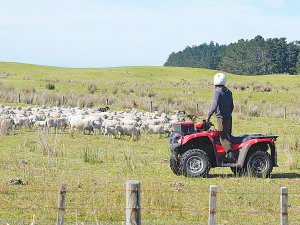
Farmers across parts of Southland and South Otago are continuing to deal with difficult conditions after a prolonged run of wet weather, with pressure building around feed supply, stock management, pasture damage, farm infrastructure and everyday workloads.
Federated Farmers says it welcomes Labour's commitment to reviewing the Sharemilking Agreements Act, calling on other major parties to do the same.
For Canterbury dairy farmers Sian Meijer and Rick Wobben, wearable technology has become one of their most valuable on-farm tools - helping manage 1850 cows across an expansive, high-performing dairy operation while improving efficiency, mating outcomes and day-to-day decision making.
Fonterra has unveiled its annual results for the 2026 financial year, posting $27 billion in revenue and close to $20 billion returned to New Zealand farmer owners and unit holders.
The first major update to the Dairy Cattle Code of Welfare in more than a decade has been released, marking what DairyNZ describes as an important step in ensuring animal welfare standards continue to evolve alongside scientific evidence and on-farm realities.