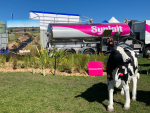
What Would Synlait Be Worth to Fonterra or a2 Milk?
Speculation of a possible joint move by Fonterra and a2 Milk to buy Synlait raises a much bigger strategic question, says agribusiness expert Dr Nic Lees.
 increase font size

Fonterra is reducing its 2011-12 forecast payout by 15c/kgMS as a result of declining commodity prices and a soaring Kiwi dollar.
The revised forecast comprises a farmgate milk price of $6.35/kgMS, down from $6.50/kgMS. The season's distributable profit range forecast of $570 million – $720m, equating to 40-50ckgMS/share remains unchanged.
Fonterra chairman Henry van der Heyden notes price declines in the five out of the last six Global Dairy Trade (GDT) trading events.
Overall, the GDT-Trade Weighted Index is down 5.7% since December 13 2011 when the forecast of $6.50/kgMS was announced.
He says the New Zealand dollar's continuing strength, higher levels of global milk production, and uncertainties in international markets led to the board decision to lower the Fonterra farmgate milk price forecast.
Fonterra chief executive Theo Spierings says the trends are indicating for stronger global production continuing into 2012.
"While we have had a strong start to the season in New Zealand, with record milk flows, we are also seeing higher milk production levels in the US and Europe.
"International milk powder demand, however, currently appears robust which should help offset the impact of the stronger milk supply growth.
"In the past few weeks, global markets seem to be reacting to the ongoing economic difficulties in Greece, the potential for conflict in the Middle East and China's reduced growth forecast. These events appear to be having a negative influence on most commodity prices.
"We think dairy commodity prices are likely to remain under some pressure through to mid-2012," says Spierings.
Fonterra will announce its interim results and dividend on March 29.
Speculation of a possible joint move by Fonterra and a2 Milk to buy Synlait raises a much bigger strategic question, says agribusiness expert Dr Nic Lees.

After delivering a strong financial year, rural trader PGG Wrightson says the coming months will depend on customer confidence and weather.
In the past, much has been made of the concept of farm to fork, but an Australian expert in food science and marketing with experience in the dairy industry, Dr Angeline Achariya, says the reverse of this slogan is critical to win modern day consumers.
A four year trial has reaffirmed that mixing plantain into dairy pastures can help reduce nitrogen losses to freshwater while maintaining milk production and profitability, say researchers.
Fonterra has opened its upgraded Chengdu Application Centre, bringing New Zealand dairy expertise closer to customers in one of China's fastest-growing regions.


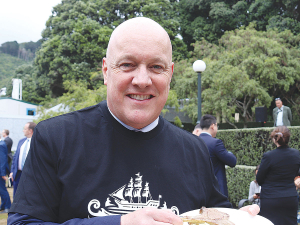
OPINION: In politics, credibility is and should be big. It must surely rank higher than charisma, which is quite trite and superficial. Yet, voters nowadays are often wooed and influenced by how someone looks or talks at a superficial level. TV plays a huge role in this.

Farmers can spend less time on paperwork, thanks to a new data sharing agreement between DairyNZ’s DairyBase and LIC’s MINDA software.
Kaikōura families affected by July's severe storm have found a practical solution to a problem that's kept some children away from regular schooling for weeks: a washed-out section of Inland Kaikōura Road, which has stopped the local school bus from running its usual route.
Rural New Zealand is welcoming the Government’s recent package of rural healthcare initiatives.
Interest in agritech and production animal systems has prompted Massey University's School of Agriculture and the Environment to new majors to its popular animal science degree.
Ballance Agrinutrients chief executive Kelvin Wickham says despite a tough year, he is pleased the business has returned to profit.