COVID-19: Dairy gains support export rise
Statistics released today offer some insight into how COVID-19 is affecting New Zealand’s primary exports.
 increase font size
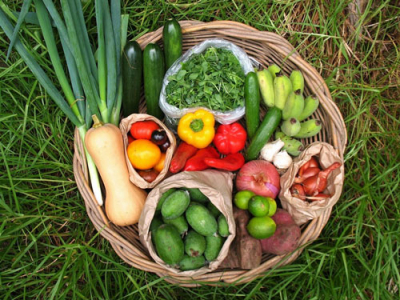 Food prices rose 1.0% in January.
Broccoli prices more than doubled and lettuce prices rose almost 80% in January.
Statistics New Zealand revealed today that average price of a 350g head of broccoli was $2.76 in January, up from a near seven-year low of $1.25 in December.
Stats NZ consumer prices manager Caroline White says the increase was the result of a bumper harvest and low broccoli prices in December. A larger than usual price rise was seen as the harvest returned to normal levels in January.
Lettuce prices rose 79% in January. The price of a 500g head of lettuce was $1.86 in January 2019, compared with $1.04 in December 2018.
“The price of lettuce in January this year was more than 50 cents a head higher than the same month last year,” White said.
The price for a 200g avocado fell to $1.58 in January 2019, a drop of 43% from January 2018. Avocado prices were particularly high in early 2018, due to the small harvest.
The price of milk also fell to a 19-month low in January 2019, to $3.49 per two-litre bottle of standard dark blue top.
“Supermarket milk prices are highly influenced by the farmgate milk price,” White said.
“Fonterra’s forecast milk payout was cut multiple times from May last year. While dairy farmers face tougher times, consumers usually benefit from the lower prices when supermarkets pay less to the suppliers.”
Yoghurt prices rose 14%, coming off specials in late 2018. Cheese prices rose 4.6%, and butter prices rose 2.4%.
Overall, food prices rose 1.0% in January 2019, compared with December 2018.
Food prices were up 0.8% in the year to January 2019, mainly driven by higher prices for ready-to-eat food (up 3.3%), milk, cheese and eggs (up 2.9%) and restaurant meals (up 2.3%), partly offset by lower fruit prices (down 5.8%).
Statistics released today offer some insight into how COVID-19 is affecting New Zealand’s primary exports.
Meat and dairy boosted the total volume of manufacturing sales to its strongest quarterly rise in six years, Stats NZ said today.
Export prices for meat achieved their highest-ever level in the December 2019 quarter, Stats NZ said today.
If you think you paid too much for kiwifruit last Christmas, you aren’t wrong!
Export lamb and beef prices reached new highs in the September 2019 quarter, while forestry products fell sharply.



Pāmu has released its FY26 Integrated Annual Report, reporting a Net Operating Profit of $113 million, more than double the $49 million recorded in FY25.

Meat Industry Association data, released alongside the Red Meat Sector conference in Wellington, shows export value climbing across the US, China, UK and Canada.
Applications are set to open for the 2027 Zanda McDonald Award, a trans-Tasman award recognised for identifying and fast-tracking talented young leaders in agriculture and agribusiness.
The Royal New Zealand College of General Practitioners (the College) and Hauora Taiwhenua Rural Health Network are calling for investment in a proposed new training pathway for rural GPs, warning that many rural practices are struggling to recruit while a large share of the existing workforce nears retirement.
Federated Farmers has called on Central Otago District Council (CODC) to drop or vote down a plan to truck sludge from Alexandra and Cromwell to farmland near Lauder, warning it would compound an "outrageous" situation created by a separate council's decision weeks earlier.
Synlait has swung to second-half profit as operations stabilise, but the dairy processor still posted a $75.4m annual loss.