NZ Red Meat Exports Hit $867m in August, Up 23%
New Zealand's red meat and fifth-quarter exports reached $867 million in August, up 23% on the same month last year, as stronger returns lifted earnings across all major markets.




 increase font size
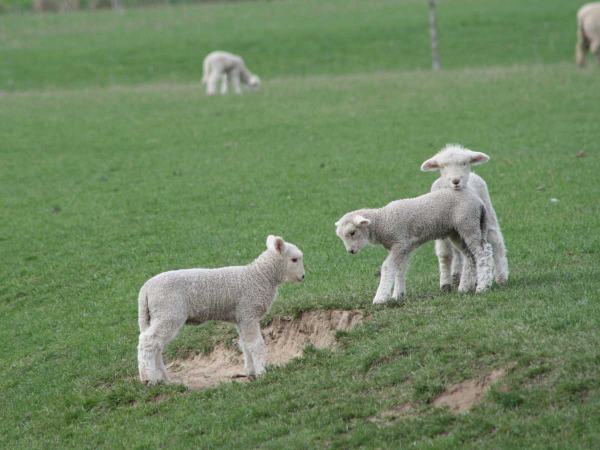 Lamb prices are continuing their record run.
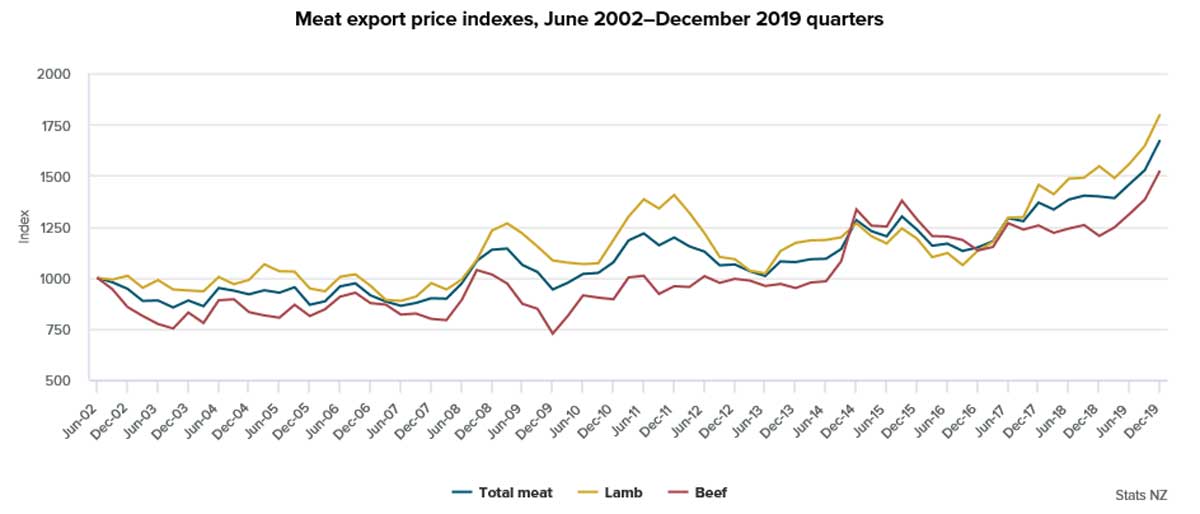
Export prices for meat achieved their highest-ever level in the December 2019 quarter, Stats NZ said today.
“Meat export prices have risen for three quarters in a row, on the back of strong demand towards the end of last year,” says Stats NZ business prices manager Bryan Downes said.
Meat volumes rose 3.2%, and values rose 12% in the December 2019 quarter.
“Over the year, meat prices also rose, with both beef and lamb prices up,” says Downes.
The impact of coronavirus on New Zealand’s export prices is yet to be announced by Stats NZ.
“Exports of meat and logs increased towards the end of 2019, before the outbreak of coronavirus in China,” says Downes.
China is New Zealand’s biggest trading partner.
“Any impact of the coronavirus on prices for our goods and services, mainly because of disruptions to global trade, could be reflected in the March 2020 quarter,” says Downes.
 |
|---|
|
Meat export price indexes, June 2002-December 2019 quarters. Source: Stats NZ. |
Wood export prices also rose in the December 2019 quarter, up 8.2%, partly recovering from falls in the previous two quarters.
Partly offsetting the rise in meat and wood export prices was a 2.4% fall in dairy prices.
While volumes were up 14%, the value of dairy exports rose by only 11%.
The fall in dairy prices was driven by an 11% fall in butter prices in the latest quarter.
However, butter prices remain at historically high levels following strong price increases a few years ago.Overall, export prices rose 3.0% in the December 2019 quarter.
Terms of trade at record level
The merchandise terms of trade rose 2.6% to its highest level, as export prices rose more than import prices.
The terms of trade is a measure of the purchasing power of New Zealand’s exports abroad.
An increase means New Zealand can buy more imports for the same amount of exports.
New Zealand's red meat and fifth-quarter exports reached $867 million in August, up 23% on the same month last year, as stronger returns lifted earnings across all major markets.

Meat Industry Association data, released alongside the Red Meat Sector conference in Wellington, shows export value climbing across the US, China, UK and Canada.
The New Zealand Institute of Forestry (NZIF) says unnecessary changes to New Zealand’s Emissions Trading Scheme (NZ ETS) will seriously erode investor confidence and result in significant reductions in forest planting rates.
OPINION: The stats speak for themselves.
Chinese beef trade quotas and a looming suspension of Brazilian beef imports into the European Union are expected to reshape global beef trade flows over the remainder of 2026, with implications for New Zealand exporters, according to Rabobank's Q3 Global Beef Quarterly report.



The potato industry is celebrating the success of two rising stars - James Blair, the 2026 Young Grower of the Year and runner-up and innovation award winner, Amber Davy.
Twenty-eight emerging leaders from across the horticulture sector spent two days last month learning valuable skills and connecting with industry experts.
There are five entrants in this year’s Young Horticulturist of the Year, competing in a series of technical, practical, business and leadership challenges.
A seasoned horticulturist has been appointed to deliver the Apple Action Plan, a key initiative of the India-New Zealand Free Trade Agreement.
New Zealand's citrus growers have been told to compete on the value built into their fruit rather than the volume they grow.
Hawke's Bay fruit growers are being reminded of the need to prepare for whatever the El Niño weather system may bring in the coming months.





OPINION: The same mainstream media muppets that brought you Jacindamania in 2017 have been flat out pimping for the Opportunities…
OPINION: Your old mate reckons the atrocious way farmers in the UK are treated by their lords and masters in…




