NZ Must Prioritise Food Security, Says HortNZ's Malley
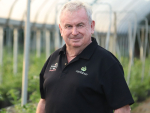
New Zealand needs to make sure that it continues to focus on its own food security, according to HortNZ board member and blueberry grower Dermott Malley.
 increase font size

Primary Industries Minister David Carter says the Government is reviewing three forestry schemes to decide whether they need to be tweaked to encourage more forestry plantings.
This coincides with a fall in the international price of carbon from a high of $25 to the present low of $3 a tonne.
Carter says he's aware of the criticism about overseas carbon credits. "Anybody in the New Zealand forestry industry expecting a return out of carbon is obviously concerned. They are looking for ways to insulate New Zealand from the international carbon price. I personally believe we need to see more trees planted in New Zealand particularly in areas of the land which are eroding significantly."
Carter says the three schemes in question – The East Coast Forestry Project, The Hill Country Erosion Programme and the Afforestation Grant Scheme – are being reviewed.
New Zealand needs to make sure that it continues to focus on its own food security, according to HortNZ board member and blueberry grower Dermott Malley.
Bank of New Zealand (BNZ) and Pāmu (Landcorp Farming Limited) have developed a new way for landowners to earn revenue from existing native forests.
Forestry Minister Todd McClay has today congratulated the winners of the 2026 Growing Native Forests Champions Awards at Fieldays.
The Fieldays Forestry Hub returns to Fieldays in 2026 for the fifth consecutive year, highlighting the important role forestry and wood processing play in supporting New Zealand's economy, environment, and regional communities.
Two forestry companies have been sentenced for road failures that led to the death of Coromandel truck driver Greg Stevens.



Now in its fourth year, the 2026 Fencing Industry Awards, formed part of the proceedings of the FCANZ Conference, held in Nelson during August.
DairyNZ deputy chair Cameron Henderson has been re-appointed unopposed for another term.
OPINION: The stats speak for themselves.
Farms across the upper North Island are trialling different pasture mixes as part of a research programme that aims to build greater resilience into farming systems.
Election years are always a concerning time for farmers, according to DairyNZ chair Tracy Brown.
The Ballance Farm Environment Awards are coming to the West Coast of the South Island.