Federated Farmers Welcomes ACT’s New Farming Policies
Federated Farmers has welcomed new rural policies released by ACT, saying they align closely with its own election priorities.
 increase font size
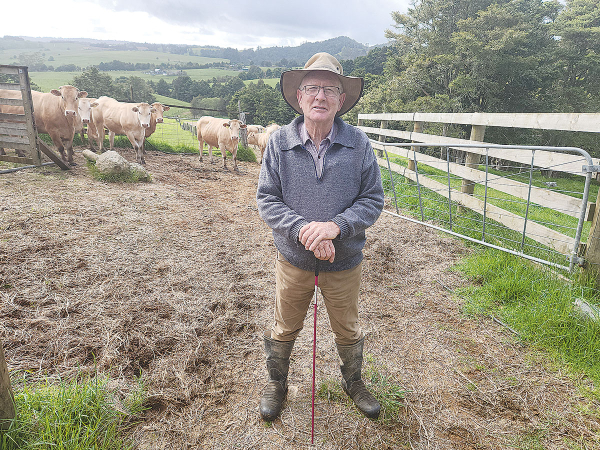 Northland Federated Farmers president Colin Hannah says Northland District Council’s proposed freshwater plan has raised deep misgivings among farmers in the north.
Northland Federated Farmers is calling on farmers to take action over Northland's District Council's proposed freshwater plan.
President Colin Hannah says some farmers are already aware of what the plan could mean for their operations and were "very hot" about it. Advertisements are set to appear in local papers shortly to advise farmers to act.
"The whole thing needs to be reviewed," he says. "The plan was released in mid-October and has raised deep misgivings".
Hannah told Rural News what was of most concern was that the primary sector felt it had been excluded from development of the policy. He says there have been no meetings of the council's Primary Sector Liaison Group over the last year.
"Yet the plan will deeply impact rural economies and individual farmers, particularly those on hill country, which will include some dairy farmers."
Hannah estimates the proposed requirement to fence off land from livestock where there's an over 20-degree slope will affect around 250,000 hectares of Northland farmland. That could cost from $270-300 million annually to be lost from the region's economy, creating a trickle-down effect of more than $1 billion loss for the Northland economy.
"More farms could become uneconomic without owners being to graze steeper areas, freezing works could close with reduced stock numbers both affecting employment opportunities and farmers' workload would increase."
While council staff had argued that forestry could be planted, Hannah says harvesting consents might not be granted on these steep slopes.
He also believes the proposed 10 metre setback from waterways could see a "fire highway" created with these fenced off areas remaining ungrazed and hosting easily combustible weeds such as gorse.
"Fencing costs used in the proposal were from 2015 and so out of date. And there would be social costs with interest rate increases likely as farming was considered higher risk, bank foreclosures and an increased rates burden on remaining farmers and urban areas."
Hannah has met with council staff to express farmers' concerns and says he had a good hearing. He's also hand delivered a letter to the council's chief executive signed by himself and national president, Wayne Langford asking that the proposals be delayed and reconsidered.
The date for submissions on the plan has already been pushed back from early December to mid-March, but he says there's a lot of holidays over that period so the date should be extended.
"We do need to have some rules," he says. "We're not against change as such, but farmers will respond."
Feds is planning to have a map on display at its stand at Northland Field Days in early March showing farmland affected by the proposed new regulations.
The council says it knows the rules will have a big impact on landowners, but decisions need to be made which will work for the community as well as the area's waterways.
Federated Farmers has welcomed new rural policies released by ACT, saying they align closely with its own election priorities.

Federated Farmers is backing Feilding High School’s call to keep Agriculture and Horticultural Science as a standalone subject in Year 11.
National’s pledge to introduce 19 new national standards shows the party is serious about getting Wellington out of farming, Federated Farmers says.
Mobile phone coverage and reliability are deteriorating in rural areas, and farming families are bearing the cost, according to a Federated Farmers survey.
Central Otago District Council (CODC) has voted against a plan to spread treated sewage sludge from Cromwell and Alexandra on farmland near Lauder, a decision Federated Farmers says reflects strong opposition from rural residents.


Federated Farmers has welcomed new rural policies released by ACT, saying they align closely with its own election priorities.

Rural Contractors NZ says proposed changes to land transport rules for agricultural vehicles are a welcome response by the Government to out of date regulations which have seen members hit with huge fines.
Alliance is calling for final applications for its 2027 Graduate Programme, with applications closing on Sunday 25 October.
Decades piloting planes has ensured vet and farmer David Hayes is focused on safety. So, after a serious accident while welding on farm, he is sharing his experience so others can learn from it.
Canterbury milk processor, Synlait Milk has confirmed Leon Fung as its chief executive officer.
OPINION: Making it easier to collect rainwater and use it to grow crops and livestock is a no brainer.