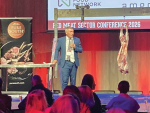
Mark Hooper Joins NZPork Board as Independent Director
Rural leader Mark Hooper has been appointed as an independent director to the NZPork board, bringing extensive farming, governance and advocacy experience to the role.
 increase font size
 NZPork chief executive Brent Kleiss.
Over 40,000 metric tons (MT) of overseas pork from 22 countries were imported into New Zealand in 2023.
A recent analysis of pork imports from January-October by NZPork shows that the highest volume of imported pork was from the United States with 7,335MT, a 128% increase compared to last year.
Canada was the next highest at 6,238MT, up from 3,824MT. However, imports from Spain were down at 6,047MT compared to 9,685MT in 20223. Imports from Australia and the Netherlands also increased.
NZPork chief executive Brent Kleiss says that while two thirds of pork consumed in New Zealand is imported, there is no requirement for the products to meet New Zealand’s rigorous pig welfare standards.
“New Zealand has imported pork from 22 different countries this year,” Kleiss says. “Although the European Union is currently reviewing animal welfare legislation, most EU members and other countries exporting pork to New Zealand have lower standards of pig care and less rigorous enforcement regimes than we do.”
For example, he says, gestation stalls are banned in New Zealand yet in Canada and many European countries sows can be confined in gestation stalls for the first four weeks of pregnancy and in the US they can be confined for their entire pregnancy.
“Our farmers do not castrate piglets at all but they are routinely castrated in Europe, the US and Canada – and in Spain, Poland and the US that is done without pain relief,” Kleiss explains.
In New Zealand, sows are only housed in farrowing systems when it is time for them to give birth and care for their piglets – with a maximum of five days pre-farrowing and 28 days after. Yet most EU countries and the US have no limit on how long a sow can be confined in a farrowing system, either before or after giving birth. Canada allows up to six weeks.
Kleiss says there has been a significant decline in pork volumes supplied from large European producers where new and proposed legislation around farming are making it harder to farm pigs.
“These pork imports have been replaced by products from the US and Canada where they are less stringent on environmental and welfare standards,” he says.
“New Zealand pig farmers deserve a level playing field.”
Kleiss is calling on the new Government to subject imported pork to the same standards applied to New Zealand farmers and New Zealand pork.
“The pork sector would also like to see Government departments backing local farmers through their food procurement,” he adds. “Government agencies such as the Department of Corrections, Ministry of Defence and Ministry of Education that are regularly providing food should be required to source that food locally whenever possible.
“We’ve been told by previous ministers that customers will pay more for pork, ham and bacon produced to more stringent standards, but the Government’s own departments and ministries have been choosing pork from countries with lower standards. We’re hopeful the new Government will see this corrected.”
Rural leader Mark Hooper has been appointed as an independent director to the NZPork board, bringing extensive farming, governance and advocacy experience to the role.

As the cost-of-living crisis continues to put pressure on household grocery budgets, new figures show pork remains one of the most affordable fresh meat options for New Zealand families.
New data shows that pork remains one of the more affordable meat options for New Zealand households at a time when grocery costs continue to put pressure on budgets.
NZPork says the Government needs to strengthen its proposed planning laws to ensure New Zealand's pig farmers can continue to produce pork.
Following a recent director election, Canterbury farmer Sean Molloy has been appointed to the New Zealand Pork Industry Board.



Farmer-owned fertiliser company, Ballance Agri Nutrients is welcoming National’s plan to negotiate security agreements with key supplier countries to protect New Zealand-bound products from export restrictions and greater supply chain certainty.
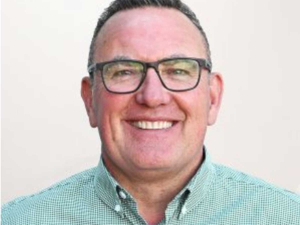
Carrfields has announced the appointment of Stu Hall to the newly created role of chief operating officer, Carrfields Ltd, reflecting the continued growth of their agribusinesses and the need to ensure the company has the leadership capacity and support in place as it pursues the emerging opportunities ahead.
New Zealand's role is not to compete with Indian growers, according to NZ Apples and Pears.
The potato industry is celebrating the success of two rising stars - James Blair, the 2026 Young Grower of the Year and runner-up and innovation award winner, Amber Davy.
Twenty-eight emerging leaders from across the horticulture sector spent two days last month learning valuable skills and connecting with industry experts.
There are five entrants in this year’s Young Horticulturist of the Year, competing in a series of technical, practical, business and leadership challenges.