
Rural NZ Welcomes $8.5m Government Health Package
Rural New Zealand is welcoming the Government’s recent package of rural healthcare initiatives.
 increase font size
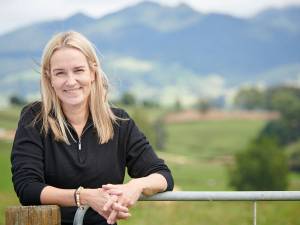
 RWNZ president Sandra Matthews.
Rural Women New Zealand (RWNZ) says Pharmac needs to reconsider its decision to fund only one brand of hormone replacement therapy (HRT) patches used by women going through perimenopause and menopause.
Earlier this week, Pharmac announced that Estradiol TDP Mylan would be the main funded brand of oestradiol patches from 1 July 2025 and would be the only funded brand available from 1 December 2025.
According to Pharmac, in the past three years, demand for oestradiol has tripled and is expected to continue rising.
The Mylan patches have been provisionally approved by Medsafe and Pharmac says it anticipates full approval by Medsafe before 1 July 2025.
The decision has been met with concern and outrage, with a petition being launched asking the government to step in and reverse the decision.
RWNZ national president Sandra Matthews says that while her organisation is pleased to see a more secure supply chain for oestradiol patches and gel after recent global shortages, the decision to limit the funded brands will remove “freedom of choice for women to make the right choice for their bodies”.
“This is causing concern for many women around New Zealand, many of whom have tried several different types of HRT patches before finding the right one,” Matthews says.
“Managing menopause is a major part of a woman’s life and this decision is affecting many women’s health, wellbeing and welfare during and already incredibly challenging period of their lives,” she says.
Matthews claims the decision is also inequitable because women who prefer other brands will need to fund them themselves or face using a brand that doesn’t work for them or could cause adverse effects.
“We call on Pharmac to do the right thing by women and reconsider its decision to de-list existing available brands,” she concludes.
Meanwhile, Pharmac chief executive Sarah Fitt says she understands people are concerned by the decision, but adds that it was Pharmac’s only option given the continuing supply issue.
“Pharmac has been managing ongoing supply shortages of the current oestradiol patches for several years, and we know that’s been very difficult for people,” Fitt says.
“Based on the information from the current supplier, Sandoz, it is unable to fully meet our supply needs with Estradot due to the continually increasing demand The company we will contract with, Viatris, has provided an assurance that it is able to meet current and future demand – making it the only viable option,” she says.
Fitt notes that the new brand may not be suitable for all women and so is working to ensure there is an alternative option available if needed.
“We’re still working out the details and we’ll share that information once it’s confirmed.”
Rural New Zealand is welcoming the Government’s recent package of rural healthcare initiatives.
OPINION: In the 1980s, concern was expressed in West Germany about the falling birth rate. Some simple analysis was performed by Professor Helmut Sies, physician and biochemist at Dusseldorf University. His letter ‘A new parameter for sex education’ was published in Nature in 1988:
Celebrating 50 years in the rural landscape of Central Canterbury and beyond, Ashburton-based Carrfields, has been the exemplar for all aspects of modern agriculture via its extensive range of services including supply, growing, agronomic advice and marketing.
Deputy Prime Minister and ACT Party leader David Seymour says advocacy group Rural Women New Zealand (RWNZ) has submitted against a controversial bill without consulting its members.
Women up and down the country are the glue that hold rural communities together, giving so much to so many, says the inaugural Rural Woman of the year award winner Kate Acland.


Minister of Conservation Hon Tama Potaka has appointed Susan O'Regan as Chair of the Queen Elizabeth II National Trust (QEII) for a three-year term.

Red meat farmers are welcoming Labour’s plan to review the Emissions Trading Scheme and not to campaign on pricing agricultural emissions.
Where any worker in the kiwifruit industry is mistreated, we expect the authorities to take action.
Mid Canterbury Federated Farmers arable chair, Bevan Lill, said Beef + Lamb NZ data indicated that for the last six years, the average arable return on investment was about 0.8% while inflation ran about 4% - so the average arable farm was going backwards at about 3% a year.
Seed and grain companies share the concerns of arable farmers about the viability of their sector, says Seed and Grain New Zealand chief executive Dr Sarah Clark.
The New Zealand Institute of Forestry (NZIF) says unnecessary changes to New Zealand’s Emissions Trading Scheme (NZ ETS) will seriously erode investor confidence and result in significant reductions in forest planting rates.