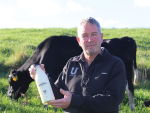
Moxham Family's Organic Milk Now Comes as Gelato
Horowhenua organic dairy farmers Ange and Wayne Moxham have taken their business to a new level.
 increase font size
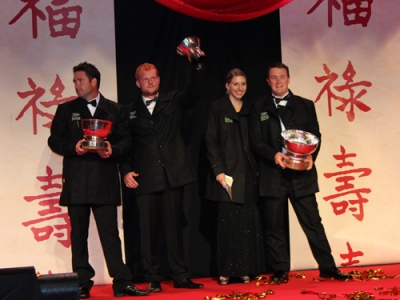 2015 NZ Dairy Award winners.
The dairy industry is facing a “perfect storm” but innovative business people on farms will carry New Zealand through the cycle, the NZ Dairy Industry Awards final was told.
Gavin Roden, chairman of the NZ Dairy Industry Awards, said at the awards final dinner at Sky City that everyone sitting in the room would be nervous about where the industry was heading in the next 12 months. The dairy awards were never more relevant.
With the process the 530 entrants in the awards went through and the feedback they received, they “should be well placed to ride out this perfect storm,” Roden said. The industry had been told to expect more volatility and build resilient businesses.
Head judge of the Sharemilker/Equity Farmer of the Year, Mark Horgan, said through the judging process it was evident that the emphasis was on the lower payout cycle.
“The focus on lower cost pasture-based farming was a common trend with the majority of the regional winners. A number of the farms we visited had field trials for different grass types which were being studied to ensure production was being achieved onfarm.
“As we look back in history this pasture based system is what New Zealand dairy farming was known for. Although this lower cost pasture-based system is not for every farmer, it showed that the contestants we judged are smart adaptive business people who are willing to take risks with new technologies.
“The judges believe these innovative business people will carry New Zealand through this lower payout cycle and reinforce New Zealand as the key dairy farming nation in the world.”
However, the Farm Manager awards head judge, Richard Jones, said in that category there was a definite push to more and more production, with high input farming becoming more common place.
“As an industry we need to focus on the key fundamentals driving profit,” he warned. “Our strength is the ability to grow grass and harvest it. It is the engine room for every farm system and must be the foundation upon which this business is built. This will ensure we maintain our competitive edge. Everyone involved – farm staff, owners and rural professionals – needs to be focused on profitability every season regardless of payout.”
Nevertheless the judges were impressed by what they saw while visiting the 11 finalists throughout New Zealand. “The use of technology is incredible. Smartphones and apps are allowing today’s managers to make accurate decisions on the go. One has even created a computer programme with all the relevant information so that a touch of a button will spit out pasture allocations and supplements for multiple herds.
“Farm environment matters are being approached in a very proactive manner with many farms going beyond their general consent conditions in order to stay ahead of the game. Believe it or not we do care about our environment despite what many of our critics will say. Farm safety is another area where the bull has really been taken by the horns.”
Horowhenua organic dairy farmers Ange and Wayne Moxham have taken their business to a new level.
As the dust settles after Fieldays, we're once again reminded of the sheer volume of technology now available to New Zealand dairy farmers.
Wayne and Ange Moxham of Horowhenua have just been named as Fonterra's top organic performer for milksolids. As well as providing organic milk to Fonterra, the couple also sell Udderly Organic milk to more than 100 outlets in the region and are embarking on another exciting venture producing organic gelato. Reporter Peter Burke went along to see their farming operation.
Fonterra has reduced its forecast 2026/27 Farmgate Milk Price.
The perception of dairy as a career path is changing, according to a mid-Canterbury training provider.
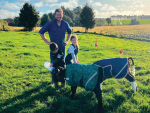
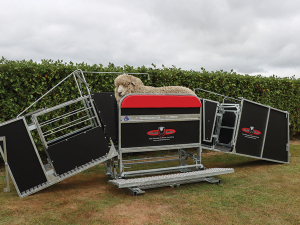
Oamaru-based livestock handling specialist Te Pari has bought Combi Clamp, the New Zealand manufacturer of Combi Clamp manual sheep handlers.
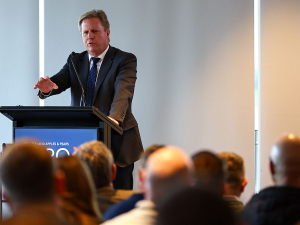
Agriculture Minister Todd McClay has admitted that a scheme bringing workers from Pacific nations to work on orchards has become too hard to navigate but says changes are coming.
A new app designed in New Zealand aims to help sheep, beef and deer farmers capture, analyse and use body condition score data more effectively.
Canterbury farmer Andy Macfarlane has been appointed to the board of AgriZeroNZ, the public-private partnership designed to accelerate the development and deployment of emissions reduction tools for New Zealand farmers.
For over 50 years Mel Ewers has been supporting the apple sector navigate through compliance and quality assurance issues.
The apple sector is enjoying a bumper harvest season.