
Federated Farmers Praises Labour's Emissions Tax Backdown
For the first time in a quarter of a century, Federated Farmers has something positive to say about the Labour Party’s climate change policy leading into a general election.
 increase font size
 James Shaw.
Minister for Climate Change James Shaw has announced the membership of the Interim Climate Change Committee.
The committee will begin work on how New Zealand transitions to a net zero emissions economy by 2050.
Committee members have been chosen because of their expertise across areas related to climate change: agriculture, agribusiness, climate change science and policy, resource economics and impacts, Te Tiriti o Waitangi, te reo me ona tikanga Māori and Māori interests, international competitiveness, and energy production and supply.
“If we want to help lead the world towards meeting the goals of the Paris Agreement, we must create a moral mandate underpinned by decisive action at home to reduce our own emissions,” says Shaw.
“Setting up the Interim Climate Change Committee is a great step in that direction,”
Dr David Prentice, the Interim Committee Chair, was most recently the chief executive and managing director of infrastructure firm Opus International Consultants.
He is joined by deputy chair, Lisa Tumahai, who has significant governance experience and is Kaiwhakahaere of Te Rūnanga o Ngāi Tahu.
The other committee members are:
For the first time in a quarter of a century, Federated Farmers has something positive to say about the Labour Party’s climate change policy leading into a general election.
Climate, nature and animal wellbeing make up Fonterra's refreshed sustainability roadmap released last week.
A five-year study has found that the cost of reducing emissions without technology may be significant and unsustainable for Northland dairy farmers.
OPINION: With the winter months officially here, I trust all is well at your place.
OPINION: The global crusade against fossil fuel is gaining momentum in some regions.


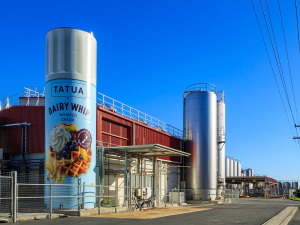
Waikato milk processor Tatua has again declared a record milk payout to farmer shareholders, leaving other processors in the dust.

A Labour-led Government won’t be bringing back the controversial freshwater rules of 2020.
National’s much-touted free trade deal with India featured in the Rural Issues Debate at Mystery Creek, Hamilton on Wednesday night.
New Zealand's 2026-27 freshwater fishing season has opened, with anglers encouraged to head to rivers and lakes over the coming days as conditions look favourable across much of the country.
Central Otago District Council (CODC) has voted against a plan to spread treated sewage sludge from Cromwell and Alexandra on farmland near Lauder, a decision Federated Farmers says reflects strong opposition from rural residents.
Pāmu has released its FY26 Integrated Annual Report, reporting a Net Operating Profit of $113 million, more than double the $49 million recorded in FY25.