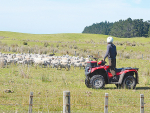
Mark Hooper Joins NZPork Board as Independent Director
Rural leader Mark Hooper has been appointed as an independent director to the NZPork board, bringing extensive farming, governance and advocacy experience to the role.
 increase font size
 NZPork chief executive David Baines.
Kiwi consumers are being urged to look out for labels showing pork is 100% New Zealand born and raised with the introduction of new food labelling regulations.
The Commerce Commission has issued guidance to support compliance with the new Country of Origin for Food regulations, which come into force on 12 February.
Under the new regulations, fresh pork and cured pork for retail sale must be labelled with the country or countries where the animal was raised.
Cured pork includes bacon, ham, prosciutto and other preserved pork products containing at least 66% of whole pieces of pork, such as pickled pork.
However, imported pork processed into other products in New Zealand, including marinated pork and sausages, are not covered by the regulations because they fall outside the cured pork definition. They will only be required to be labelled with the name of the New Zealand manufacturer or retailer.
NZPork chief executive David Baines says the organisation’s research has shown that Kiwis expect and prefer the meat they buy to have been grown in New Zealand.
“Although we ultimately want labelling where imported pork is being used to be far more prominent, we welcome the introduction of these new requirements. This will shine a light on this area and give consumers more clarity about the origin of pork in at least some of the further processed products,” Baines says.
“We will be encouraging those using born and raised New Zealand pork in their products to emphasise and promote New Zealand origin far more prominently than the regulations require because that is what Kiwis want.
“Kiwis should look for the ‘100 per cent NZ’ pork labelling or NZPork’s PigCare label on pork packaging,” he explains.
“This will help provide consumers with the confidence that they are ‘buying local’, knowing they are supporting Kiwi farmers and purchasing pork raised to high levels of animal welfare.”
Rural leader Mark Hooper has been appointed as an independent director to the NZPork board, bringing extensive farming, governance and advocacy experience to the role.

As the cost-of-living crisis continues to put pressure on household grocery budgets, new figures show pork remains one of the most affordable fresh meat options for New Zealand families.
New data shows that pork remains one of the more affordable meat options for New Zealand households at a time when grocery costs continue to put pressure on budgets.
NZPork says the Government needs to strengthen its proposed planning laws to ensure New Zealand's pig farmers can continue to produce pork.
Following a recent director election, Canterbury farmer Sean Molloy has been appointed to the New Zealand Pork Industry Board.


Pāmu has released its FY26 Integrated Annual Report, reporting a Net Operating Profit of $113 million, more than double the $49 million recorded in FY25.

Meat Industry Association data, released alongside the Red Meat Sector conference in Wellington, shows export value climbing across the US, China, UK and Canada.
Applications are set to open for the 2027 Zanda McDonald Award, a trans-Tasman award recognised for identifying and fast-tracking talented young leaders in agriculture and agribusiness.
The Royal New Zealand College of General Practitioners (the College) and Hauora Taiwhenua Rural Health Network are calling for investment in a proposed new training pathway for rural GPs, warning that many rural practices are struggling to recruit while a large share of the existing workforce nears retirement.
Federated Farmers has called on Central Otago District Council (CODC) to drop or vote down a plan to truck sludge from Alexandra and Cromwell to farmland near Lauder, warning it would compound an "outrageous" situation created by a separate council's decision weeks earlier.
Synlait has swung to second-half profit as operations stabilise, but the dairy processor still posted a $75.4m annual loss.