Pyke to chair AGMARDT
Former Foundation of Arable Research (FAR) chief executive Nick Pyke is chair of the AGMARDT Board of Trustees.
 increase font size
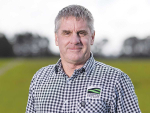
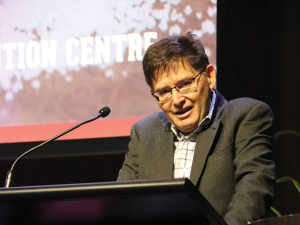
 Left Field Innovation’s Nick Pyke.
Why would we, as a country, produce low value meat alternatives to stuff in a hamburger for a fast food chain to feed to overweight, disinterested consumers?
That's the question from Nick Pyke, co-founder of Left Field Innovation.
Pyke was presenting the case that New Zealand should not go down the commodity path as it develops its plant protein industry. He cited pea protein used in plant based ‘hamburger patties’ as an example of a ‘commodity’ plant protein.
The former Foundation of Arable Research chief executive says there are various options for pea protein fractionation but asked “why would we go there?”
He pointed out that Canada is set up to fractionate 750,000 tonnes of peas annually.
“I don’t know what we produce – something like 30,000t. Most of that is for seed, not for human use.”
Pyke says NZ can grow the raw material and use some existing processing capability, but creating value with innovative ingredients and foods will require investment in new processing plant.
“That’s where we really need to think about what our point of difference is for New Zealand.”
Referring to low value meat alternative for hamburgers he asked ‘is that really our point of difference?’
He says Plant and Food Research sums up well where we should go using words such as ‘high value plant protein foods’, and ‘trusted, sustainable and diversified production systems meeting future climate challenges and premium products for particular customers’.
Pyke says the three things integral to NZ’s point of difference, are high quality, high value and high health.
“And a lot of other underlying attributes will be part of that. They may not all apply to everything we do but trust is a critical one we need to build on,” he explained.
“We need to focus, not on producing for everybody, but just for a small percentage of the world’s population. We need to ensure it is unique, it needs to be traceable and it needs to be produced in a clean environment.”
He believes food safety and sustainability will be critical.
“Provenance may apply in some cases, and niche innovative, healthy and tasty are going to be all important, as will having documentation that is defendable on health issues in particular.”
Along with that we’ve got to develop the right infrastructure, Pyke adds.
“We cannot compete on scale in these commodity protein regions. Currently we import pea and soy protein to make foods in New Zealand and probably that’s the best thing we could be doing unless there are particular niche spots for those things.”
Best of both worlds
A point of difference for NZ could be innovative foods using a combination of plants and animals, says Pyke.
“We can produce plants and animals. We can blend plants and animals which I think is a real strength we have that not many countries have and we don’t really do that enough.”
And potential points of difference for NZ exist in our native berries, green leaf such as kawakawa, our huge range of seaweeds and possibly insects.
“And what do we do with the seeds of kiwifruit?” Pyke asks.
One possibility is to be a world leading beverage supplier, he suggested.
“We can create a range of beverages to target a range of markets. Some may be focused on protein and some may not be.”
Pyke believes NZ’s points of difference are water, soil, climate and our high quality food producers.
“We know we can grow the best ingredients, we just have to figure out what we have to grow. We know we can produce really valuable food, we know we can tell the truth in our story and we know we can deliver to market high value products.
“We just need to ensure that consumer insights confirm what we do as we develop plant protein.”
Former Foundation of Arable Research (FAR) chief executive Nick Pyke is chair of the AGMARDT Board of Trustees.
Canterbury cropping farmers now have access to a Farm Environment Plan (FEP) template developed especially for their farm system.
Eat your heart out dairy farmers: even if your pasture is the best in the country it won’t come close to amassing the feed/day a cereal crop can, judging by Foundation of Arable Research (FAR) findings.
FOUNDATION FOR Arable Research chief executive Nick Pyke says over 600 people attended the organisation’s flagship biennial event Crops 2014 – more than any previous FAR industry event.


During the nesting season, from September to December, industrious starlings can quickly build nests in the darker areas behind tractor and vehicle, usually close to hot engines, typically resulting in localised damage or in some cases complete write-offs.
The meat processing industry is much more collegial than it was in the past and is now more focused on common goals.
With the last couple of months having seen some potential tractor purchases put on hold with the impending election and continued input cost rises, year-to-date figures, ending September, has seen deliveries up around 5% over the same period in 2025, with a total of 2026 units.
Beef+Lamb New Zealand is calling for nominations for director roles in the Northern South Island and Northern North Island electoral districts.
Fonterra chief executive, Richard Allen says being resilient has helped the dairy industry overcome extreme volatility in recent years.
The head of the Ministry for Primary Industries (MPI) trade and international relations group says New Zealand is well-positioned to secure trade access and compete internationally as the world becomes more complicated, demanding and uncertain.