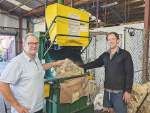
Woolpress working like a dream
As the maker of the TPW Woolpress celebrates its 50th anniversary, one Christchurch company is singing the praises of the machine, which has been a centrepiece of its operation for most of that time.
 increase font size

A national management plan for dealing with the kiwifruit Psa virus has been formally approved by the Government, Primary Industries Minister Nathan Guy has announced.
"This plan means that the primary responsibility for managing Psa is now moving to the industry themselves as they are best placed to co-ordinate and lead the response.
"As part of this, the Government has approved a levy rate on exported kiwifruit equating to one cent per tray for green fruit and two cents a tray for gold fruit. This will help cover disease management, monitoring, plant material movement and dealing with unmanaged and abandoned orchards.
"The levy has been voted on by growers and will have a shortfall until yields return to pre-Psa levels. Therefore Cabinet has agreed that $3.5 million remaining from the initial Government funding of $25 million will be passed to Kiwifruit Vine Health (KVH) to implement the plan.
"Since the discovery of Psa in Te Puke in late 2010 there has been a very effective partnership between the Government and the industry on disease management. The Government has provided $25 million, matched dollar for dollar by industry, to help fight the disease.
"The industry body charged with managing Psa, Kiwifruit Vine Health (KVH), has done a great job in consulting with growers throughout New Zealand and developing the proposal for this plan. It has been pleasing to see a high-level of support from growers to establishing the plan," says Guy.
Guy says that despite moving the management of Psa to industry, the Government still has a strong interest in the recovery of the kiwifruit industry.
New Zealand Kiwifruit Growers Incorporated (NZKGI) welcomes the decision to approve the National Psa-V Pest Management Plan (NPMP).
NZKGI's president, Neil Trebilco, said the NPMP is a vital tool for the industry to help reduce the impacts of Psa and manage orchards in a Psa environment.
"As an industry, we have had to accept that Psa is here to stay. As a result, we have had to change the way we manage our orchards and for most growers, this has meant extra work on the orchard and extra financial challenges.
"The NPMP is a key component to the on-going survival of kiwifruit orchards and the kiwifruit industry.
"We need to work together to keep inoculum levels low. An important part of achieving this is to effectively manage abandoned and unmanaged orchards. These are a real concern for some growers, causing unnecessary risks to successfully producing orchards."
Until now, the success of managing Psa, and keeping inoculum levels low, has relied on growers and the industry voluntarily applying best practice activities, with varied degrees of success.
"Kiwifruit Vine Health (KVH) can now deliver a very high standard of Psa control and management," says Trebilco.
"It also means as an industry, we can continue to upgrade our focus on other biosecurity risks facing the kiwifruit industry."
As the maker of the TPW Woolpress celebrates its 50th anniversary, one Christchurch company is singing the praises of the machine, which has been a centrepiece of its operation for most of that time.
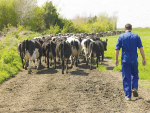
Good planning and communication are crucial to ensure a successful moving day.
A Mid-Canterbury dairy farmer is bringing a millennial mindset to his family farm and is reaping the rewards, with a 50% uplift in milksolids production since he took over.
Trace elements are the ‘invisible fence at the top of the cliff’ that can protect a dairy herd’s health and ensure cows meet their full production potential, says SealesWinslow nutrition extension specialist Simon Butler.
New Zealand farmers know that pastoral fortunes can shift rapidly once summer’s extreme dryness gives way to cooler, wetter autumn conditions.


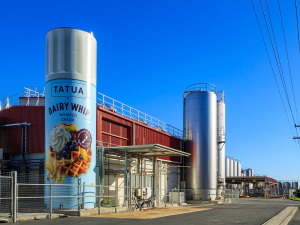
Waikato milk processor Tatua has again declared a record milk payout to farmer shareholders, leaving other processors in the dust.

A Labour-led Government won’t be bringing back the controversial freshwater rules of 2020.
National’s much-touted free trade deal with India featured in the Rural Issues Debate at Mystery Creek, Hamilton on Wednesday night.
New Zealand's 2026-27 freshwater fishing season has opened, with anglers encouraged to head to rivers and lakes over the coming days as conditions look favourable across much of the country.
Central Otago District Council (CODC) has voted against a plan to spread treated sewage sludge from Cromwell and Alexandra on farmland near Lauder, a decision Federated Farmers says reflects strong opposition from rural residents.
Pāmu has released its FY26 Integrated Annual Report, reporting a Net Operating Profit of $113 million, more than double the $49 million recorded in FY25.