A ‘Brighter’ future?
It seems that farmer/shareholder ownership of primary sector entities is almost worshipped in some quarters.
 increase font size
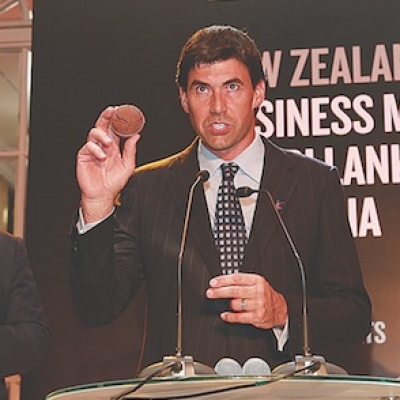 Former NZ cricket captain Stephen Fleming
The Cricket World Cup is a ‘game opener’ for better business relations between India and New Zealand, says Sunil Kaushal, India New Zealand Business Council chairman.
Primary producers are being invited to attend an international summit in Auckland called ‘Growing with India: Inspire, Innovate, Grow’ in Auckland on March 13. It will coincide with New Zealand and India facing off in World Cup matches.
The council is asking the pipfruit and avocado industries to take part because they could be exporting to India. And Kaushal also sees opportunities for honey, wine, meat, agricultural machinery and products, agri services, new technology and other primary produce.
This year’s summit builds on the success of last year’s, but with the added benefit of top industry leaders from India also taking part – some making the journey to New Zealand for the World Cup games.
Kaushal says though India aims for self-sufficiency, there’s a lot of opportunity for agritech and services to help its primary sector develop. “New Zealand has a lot to add to that but India needs to be open also.”
A key message he will push to visiting Indian representatives is that New Zealand is not a threat: it could never produce enough to feed India’s 1.2 billion population “but we should be there to complement and collaborate”.
“The World Cup is a game opener for us – an ice breaker – that is another common thread that we have.” Cricket has already opened doors for New Zealand lamb into India via companies like Quality New Zealand and Alliance. (Quality NZ is headed by NZ cricket personalities Sir Richard Hadlee and Stephen Fleming).
Even if New Zealand companies look only to India’s premium market (1% of the population) it would face a market exceeding New Zealand’s total population, Kaushal says. “The forum is a good opportunity to come and engage with India, learn more about what India needs and wants. India is a country of feel, touch and see.”
Agritech is important: up to 40% of India’s produce goes to waste before it reaches households. Pipfruit also has opportunity because its export season is during India’s non fruit producing season. India also runs out of onions on a seasonal basis.
“India is opening up: the Prime Minister is saying ‘come, we are ready to do business; come and do business with us’. But any game is two way – you’ve got to think how the other party will benefit from it.” For instance India has produce not grown in New Zealand such as mangoes and pomegranates.
“We also talk about dairy but we shouldn’t limit it to milk powder. Dairy is many other things.” India has various environments weatherwise, he says. New Zealand companies could look at how they can help various states in cow productivity, feed, soil, environment, fertiliser, etc.
Big-noter billed
Keynote speakers at the International Summit include Nandan Nilekani, from India, an acclaimed entrepreneur, bureaucrat and politician.
Time listed him as one of the 100 most influential people in the world in 2006 and 2009. Fortune conferred on him ‘Asia’s Businessman of the year 2003’. He was named the Corporate Citizen of the Year at the Asia Business Leaders Award (2004).
“I see many opportunities for trade and cooperation between India and New Zealand to flourish,” says Nilekani
Also joining the keynote speakers is Dr Reuben Abraham, chief executive at the IDFC Institute, a think-tank set up by India’s largest infrastructure finance company. The IDFC Institute’s focus is on political, economic and other issues. Abraham entered the Wired ‘Smart List 2012: 50 people who will change the world’.
He was selected as a Young Global Leader for 2009 by the World Economic Forum, where he serves on the Global Agenda Council on Emerging Multinationals.
It seems that farmer/shareholder ownership of primary sector entities is almost worshipped in some quarters.
A STALLED free trade agreement (FTA) with India has been kicked into life again.
Primary Industries Minister David Carter says the Government is reviewing three forestry schemes to decide whether they need to be tweaked to encourage more forestry plantings.



Healthy snacking company Rockit has announced Wang Yibo, one of China's most influential celebrities, as its new brand ambassador.
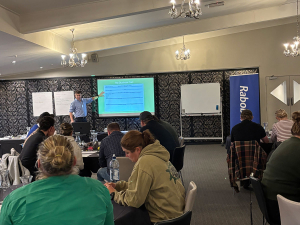
Rabobank has celebrated the tenth anniversary of its AgPathways Programme, with 23 farmers from Otago and Southland gathering for two-and-a-half days to learn new business management and planning skills.
Adopting strategies to reduce worm burden on farm goes hand-in--hand with best practice farm management practices to optimise stock production and performance, veterinarian Andrew Roe says.
Last night saw the winners of the 2026 Beef + Lamb New Zealand (B+LNZ) Awards named at a gala dinner at Te Pae Christchurch Convention Centre.
A 12-month pathway programme has helped kickstart a career in dairy for an 18-year-old student-turned-farmer.
Zespri says its global fruit sales revenue has reached a record NZ$5.9 billion from sales of 248.1 million trays.