Federated Farmers Welcomes ACT’s New Farming Policies
Federated Farmers has welcomed new rural policies released by ACT, saying they align closely with its own election priorities.
 increase font size
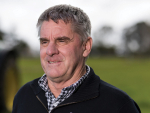
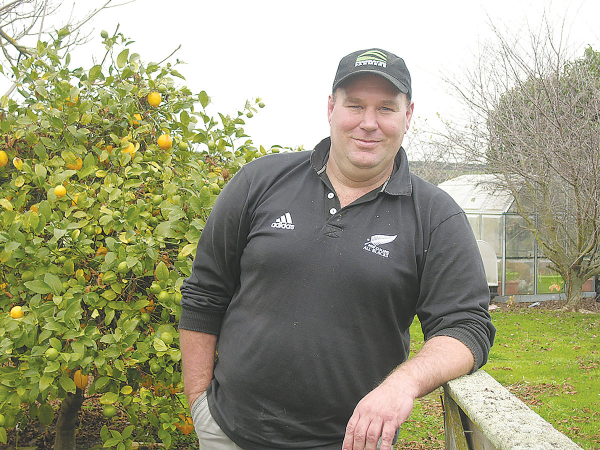 Fed Farmers' president Andrew Hoggard.
Federated Farmers national president Andrew Hoggard says he understands the frustrations farmers are feeling over HWEN.
“It is understandable people are completely frustrated over the potential of another cost,” he told Rural News. “One thing I would say is that all the numbers done in the modelling at the moment for He Waka, as mentioned in the letter, is what will happen under the ETS.”
Hoggard says under HWEN a committee – which he is dubious about and describes as “Soviet-type” – will be established to set the price.
“Whether or not that committee delivers anything different than the ETS, who the hell knows?”
Hoggard says the 3% methane reduction targets mentioned in the farmer letter is exactly what Feds argued for, while DairyNZ and Fonterra offered the 10% figure.
“Quite frankly, if we had tried to argue the targets within He Waka, there would not have been a HWEN and we (the agriculture sector) would have been dumped straight into the ETS,” he added.
“I really don’t think the ETS is an alternative. Anything other than a farm level system is just a tick box exercise to make it look like you’re doing something, but all you are doing is raising taxes, not reducing emissions.”
Hoggard believes there needs to be agreement within the sector on how similar farms benchmark, rather than a trade off between sectors such as sheep and beef versus dairy.
“My view would be, let’s measure sheep and beef farmers against sheep and beef farmers and dairy farmers against dairy farmers.
“If we can come up with smart benchmarks within the sectors that apply a marginal price to those in the bottom 25% to lift them to the 75% quartile and you don’t face a price; Is that a system that will work that we can all get behind, rather than having some farmers win and some farmers lose?”
Hoggard says Feds’ participation in HWEN was a fraught decision for the organisation but the majority its national council voted it was better to be part of it and contribute than be left on the sidelines.
“In the ideal world, the last thing we want is more regulation,” he told Rural News. “But being part of it means we can try and force changes from within.”
Hoggard said he was “pissed off” with the call in the letter for farmers to no longer support Federated Farmers for being part of HWEN.
“He Waka is one thing farmers are facing at the moment. We are also facing winter grazing regs not fit for purpose, there’s essential freshwater rules that are completely going nowhere, there’s regional water plans – everything under the sun coming at farmers right now.
Hoggard says a majority of Feds’ national council decided in May to support the HWEN recommendations and that still stands.
“When the Government comes out with its response, we will undoubtedly review our position then, in light of whatever they decide to pursue.”
Federated Farmers has welcomed new rural policies released by ACT, saying they align closely with its own election priorities.
Federated Farmers is backing Feilding High School’s call to keep Agriculture and Horticultural Science as a standalone subject in Year 11.
As part of its Election 2026 coverage, Rural News asked political parties how they would help pull the arable sector out of the doldrums. Here's what they said:
National’s pledge to introduce 19 new national standards shows the party is serious about getting Wellington out of farming, Federated Farmers says.
OPINION: Rivers never sit still. They start as snowmelt and rain in the high country, pick up a creek here and a stream there, and carry all of it down to where it's needed.



Federated Farmers has welcomed new rural policies released by ACT, saying they align closely with its own election priorities.

Rural Contractors NZ says proposed changes to land transport rules for agricultural vehicles are a welcome response by the Government to out of date regulations which have seen members hit with huge fines.
Alliance is calling for final applications for its 2027 Graduate Programme, with applications closing on Sunday 25 October.
Decades piloting planes has ensured vet and farmer David Hayes is focused on safety. So, after a serious accident while welding on farm, he is sharing his experience so others can learn from it.
Canterbury milk processor, Synlait Milk has confirmed Leon Fung as its chief executive officer.
OPINION: Making it easier to collect rainwater and use it to grow crops and livestock is a no brainer.