Ballance Launches AI Assistant for Fertiliser Ordering
A new digital assistant is now helping Ballance Agri-Nutrients farmers speed up nutrient information and ordering.
 increase font size
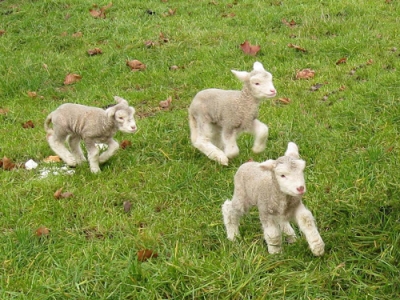 Increased feed supply over spring with nitrogen can help to finish as many lambs as early as possible.
With predictions the El Nino will continue through summer, Ballance says now is the time to proceed with a pasture and stock feed programme.
NIWA says there is a 'virtually certain' chance of the current El Nino climate pattern persisting into summer, with indications that this could be the strongest El Nino episode since the 1997-98 season.
Aaron Stafford, science manager at Ballance Agri-Nutrients, who is monitoring the strengthening El Nino trend says, "Top of everyone's mind is seeing the same weather patterns that were experienced during the last severe El Nino. There will be valuable lessons from 1997/98 and I'd encourage farmers who may be new to an area to talk to farmers who managed through that season.
"The result of an El Nino will likely be higher rainfall in the western and southern parts of the country and very dry central and eastern areas, with a more extreme drought risk," he says.
In the areas that will likely become dry, Aaron is advising farmers to make the most of the rainfall while it lasts by developing a plan to maximise grass growth and animal production early on in the season.
Stafford says these farmers should focus on the opportunity to apply nitrogen while there is still reasonable soil moisture.
In one examply he says lambs grow fastest still on the ewe, so increased feed supply over spring with nitrogen can help to finish as many lambs as early as possible. This could help farmers capitalise on a more favourable early lamb schedule, while also taking pressure off pastures when things start to get drier.
"Crops can provide high quality feed on farm, and can be very cost-effective when done well. Think about the type of summer crops you are using, and use more drought tolerant species like chicory or lucerne. These plants have deep roots and will grow through the dry summer period. Or, if you are using other crops, like turnips, get them in early so they become well established before it gets dry." says Stafford.
"Farmers on the wetter, west side of the country can take advantage of the extra rain and may be able to use nitrogen to promote additional growth through the summer, as long as conditions remain suitable. Take care to avoid pasture damage through pugging with the wet soil conditions experienced this spring, by rotating and moving stock often."
Even light to moderate pugging damage can compromise early season production, with up to 40% reduction in annual pasture production recorded with more severe pugging damage.
Stafford says feed budgets should be updated regularly and will indicate when nitrogen applications will be most advantageous, with early being likely to be best.
"The key to profiting from nitrogen is utilising the resulting extra feed effectively. It needs to go into filling a feed deficit or it should be turned into high quality supplement."
A new digital assistant is now helping Ballance Agri-Nutrients farmers speed up nutrient information and ordering.
A milk glut around the world shows no sign of easing, putting downward pressure on farmgate milk prices for the next few months.
Fonterra has reduced its forecast 2026/27 Farmgate Milk Price.
Scanning is a great time to start identifying and managing groups of ewes based on feeding priorities. Wormwise's Mary Bowron discusses some of the possible reasons ewes lose condition in early winter - and it's not necessarily internal parasites.
A warning to all those in the primary sector to prepare for an unpredictable El Niño weather pattern in the coming season.
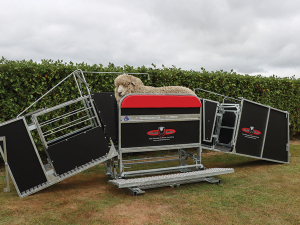
Oamaru-based livestock handling specialist Te Pari has bought Combi Clamp, the New Zealand manufacturer of Combi Clamp manual sheep handlers.
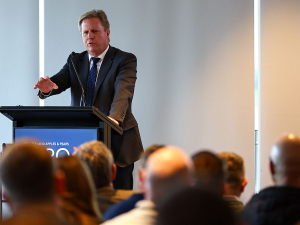
Agriculture Minister Todd McClay has admitted that a scheme bringing workers from Pacific nations to work on orchards has become too hard to navigate but says changes are coming.
A new app designed in New Zealand aims to help sheep, beef and deer farmers capture, analyse and use body condition score data more effectively.
Canterbury farmer Andy Macfarlane has been appointed to the board of AgriZeroNZ, the public-private partnership designed to accelerate the development and deployment of emissions reduction tools for New Zealand farmers.
For over 50 years Mel Ewers has been supporting the apple sector navigate through compliance and quality assurance issues.
The apple sector is enjoying a bumper harvest season.