OPINION: Every year, December 5 marks World Soil Day. This date wasn’t chosen at random, it’s the birthday of the late King Bhumibol Adulyadej of Thailand, a passionate advocate for soil stewardship.
It's also a timely reminder of how the very ground beneath our feet serves as the foundation of life. For farmers, growers and anyone who makes a living off the land, it’s a chance for us to better understand and appreciate one of our most valuable natural resources, soil.
Why is soil so important?
Soil does much more than simply provide a medium for growing pastures and holding up our crops. It provides essential services that keep farms and the planet ticking. From cycling nutrients that produce food and filtering water before it reaches our streams, to storing carbon dioxide; soil is a living, breathing system that sustains us.
Beyond farming, soil also supports a vast amount of life, from earthworms and soil microbes such as fungi and bacteria we can’t see but depend on. It even offers some unexpected benefits like building materials and antibiotics for human health such as penicillin, as well as acting as a record of our natural and cultural history, buried within its layers.
Productive soil is rare
Only ten per cent of the world’s land area has the right soil suitable for growing crops for food production, with the rest either too wet, dry, rocky or too poor in quality.
This is astonishingly small compared to the size and population of our planet. And while soil is technically a renewable resource, it takes a long time to renew, roughly 200-400 years in temperate regions to form just one centimetre. Knowing how rare productive soils are, reminds us how important it is to look after the soil we already have.
Soil sits at the heart of our farming systems
For farmers and growers, soil is more than a platform for pasture and crops to grow in. It’s the engine room of production. It provides the substrate that anchors them, acting as a reservoir, storing nutrients and water, then releasing them as plants need them.
Think of it as a finely tuned system. Soil takes in fertiliser nutrients, transforms them through biological and chemical processes, then supplies them to plants in just the right form and at the right time. It also acts as the first line of defence against flood water, absorbing and holding rainfall so that water doesn’t directly runoff the land and simply rush downstream, helping slow water movement.
When we observe soil through that lens, it really is the quiet achiever of the farming world, working tirelessly beneath our feet to support productive, profitable, and sustainable agricultural systems.
Keeping the balance in our soil
One of the challenges for farmers and growers, is that soil acts as a delicate ecosystem, where rock, air, water, and living organisms interact. When that balance is disturbed, the consequences can be significant. Soil degradation can creep in slowly, often unnoticed until it starts affecting productivity of the farm system and other important soil services.
Here in New Zealand and around the world, we’re seeing more fragmentation of farmland, where blocks which have been developed and taken out of production. This can make it harder to manage soils consistently, increasing erosion risks or nutrient loss. Intensive use without adequate management oversight can wear soils down over time, reducing structure, organic matter, and biological activity.
Compaction from heavy machinery or livestock can also restrict root growth and reduce services such as water infiltration. Poor drainage can lead to waterlogging, while over-cultivation can make soils prone to erosion. Each of these pressures chip away at the health of the soil, and in turn, the resilience of the farm.
A living investment
When soils are in good shape, crops and pastures make better use of available nutrients and water, meaning less wastage and more return from every dollar spent on fertiliser and feed. They’re also more resilient to extremes, whether it’s a dry summer or a downpour that tests our drainage systems.
Building healthy soil is an ongoing process. Practices like maintaining good ground cover, rotating crops, minimising compaction, replenishing nutrients all help. Regular soil testing and efficient nutrient application are extremely valuable tools, helping us understand what our soils need and what they don’t.
Healthy soil for a prosperous future
As we mark World Soil Day this year, it’s worth taking a moment to reflect on the incredible service our soil provides and the responsibility we all have to protect it. The soil beneath us is more than just the medium for our livelihoods, it’s a living resource and an important foundation for food security around the world, alongside its many other uses.
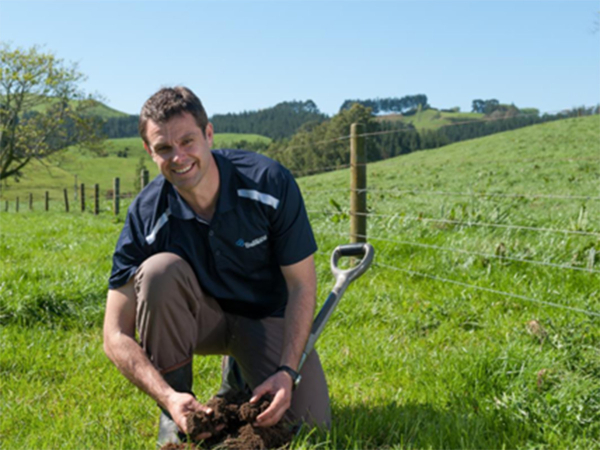
So next time you’re out in the paddock, take a moment to look down and appreciate the ground you’re standing on. Every handful of healthy soil holds a world of life, and our collective prosperity depends on keeping it thriving.
Jim Risk is a Nutrient Dynamics Specialist for Ballance Agri-Nutrients.