Banks Peninsula farm converts to dairy, cuts footprint by 46%
Converting a Banks Peninsula farm to dairy is expected to reduce its environmental footprint by 46%, say its owner and manager.
 increase font size
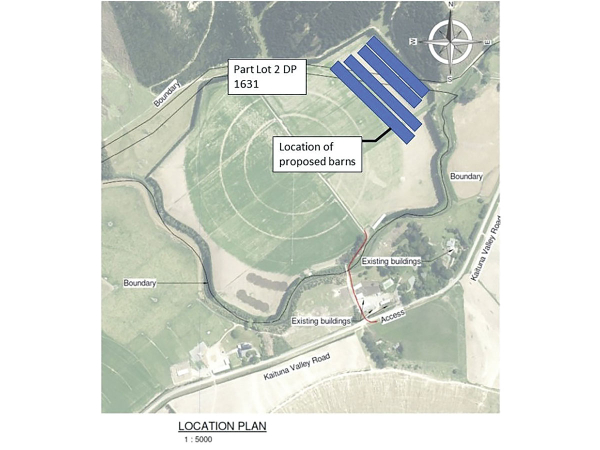 Farmer Brent Thomas, trading as Wongan Hills Limited, proposed to build four large composting barns housing up to 2,200 cattle for the export Wagyu beef market, on his farm in Kaituna Valley.
A Canterbury farmer's plan to establish an industrial-scale composting barn feedlot on Banks Peninsula is off the table - for now.
Farmer Brent Thomas, trading as Wongan Hills Limited, proposed to build four large composting barns housing up to 2,200 cattle for the export Wagyu beef market, on his farm in Kaituna Valley. The site is only a few kilometres upstream of the environmentally sensitive Te Waihora/Lake Ellesmere.
Thomas had received Christchurch City Council consent for the barns in November 2021.
Although public notification was not mandatory, Environment Canterbury then called for public submissions into its environmental consents, mainly on the grounds of the valley's possible flood risk.
With 128 submissions received mostly against the development, the proposal was due to go to a public hearing next month.
However, Thomas has now withdrawn the application, revealing that he has similar plans at another site, which he will now concentrate on.
"Wongan Hills Ltd have formally withdrawn the ECAN application for Land Use and Air Discharge consents associated with the proposed feed barns in Kaituna Valley - for the interim," he said in a press release.
"With consents already being held for an alternative site elsewhere, ongoing time delays means that the alternative site will now be developed first, with the Kaituna site potentially revisited in the future."
Thomas told Rural News the other site was in central Canterbury, of similar size and fully consented, but he gave no further detail.
In his statement, Thomas says Wongan Hills considers that the range of environmental effects actually at issue for the Kaituna proposal were narrow and would have favoured granting the consent. However, he conceded that the hearing process would be potentially protracted and expensive.
"In this regard, Wongan Hills considers that the RMA is not serving our productive sector (and stakeholders) well. Innovative projects are facing significant challenges and barriers to even get out of the starting gates," Thomas added.
"The RMA reform that is in process needs to urgently ensure the productive sector can get on with the job of innovating and creating environmental and economic solutions that will serve the wider community and economy."
Wongan Hills also welcomed recent remarks from the chair of the Climate Change Commission, Dr Rod Carr, that Feed Barns were an innovative environmental farming system.
"It is Wongan Hills' view that these types of barns will play an important role in the future in managing environmental and emission issues currently being grappled with by the industry."
Thomas' statement added that both ECan and Christchurch City Council senior leadership "have not been at all helpful in this process and in fact have at times been obstructive and seem to have a systemic culture of saying 'No' rather than 'How can we'".
The feedlot's consent withdrawal has been welcomed by the Little River Eco-Collective, which spearheaded opposition to the proposal.
Spokesman Donald Matheson called it a victory for the environment and the community, and good news "for the residents of Kaituna Valley, for the health of Te Waihora/Lake Ellesmere and for animal welfare".
Matheson claims Kaituna was not a suitable site because there would be a significant effect on the lake if anything went wrong.
He added that the intensification of cattle farming was also inconsistent with government and local government attempts to reduce methane emissions, which are a potent greenhouse gas.
"This sends a signal that industrial farming has to do its homework and must take account of fragile environments and the wishes of communities."
Converting a Banks Peninsula farm to dairy is expected to reduce its environmental footprint by 46%, say its owner and manager.
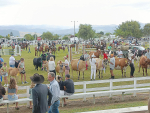
Christchurch City Council and the Canterbury Agricultural and Pastoral Association (CAPA) have signed an agreement which will open more of Canterbury Agricultural Park for public use while helping to provide long-term certainty for the A&P Show.

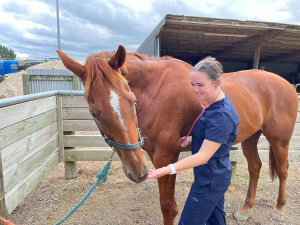
Tayla Steele is in her fourth year of a Bachelor of Veterinary Science at Massey University in Palmerston North.

The Ministry for Primary Industries (MPI) says no new cases of H5 bird flu have been detected following a case found earlier this week.
Two months after unveiling a major upgrade to its beef product, Halter says its farmers are on track for major production gains and additional grass growth.
New Zealanders are being urged to be alert following a confirmed positive case of H5 bird flu this week.
With a third of NZ dairy farmers still running outdated refrigerants, the country's largest farm refrigeration company says the opportunity for quick, meaningful emissions gains has never been clearer.
OPINION: Farmers are being put on notice by the Green Party.