The announcement marks a sharp turnaround from the $2 million loss recorded in FY25, as improving farmgate returns drove a rebound in fertiliser demand.
Revenue for the co-operative rose 20% year-on-year to $917.2 million, while total fertiliser sales volumes climbed 8% to more than 1 million tonnes, up from 962,000 tonnes the previous year.
Sheep and Beef Recovery Lifts Demand
The result follows several years of subdued fertiliser demand across the sector.
Ravensdown says improving agricultural returns, particularly for sheep and beef farmers, supported a recovery in nutrient applications and overall sales through the financial year.
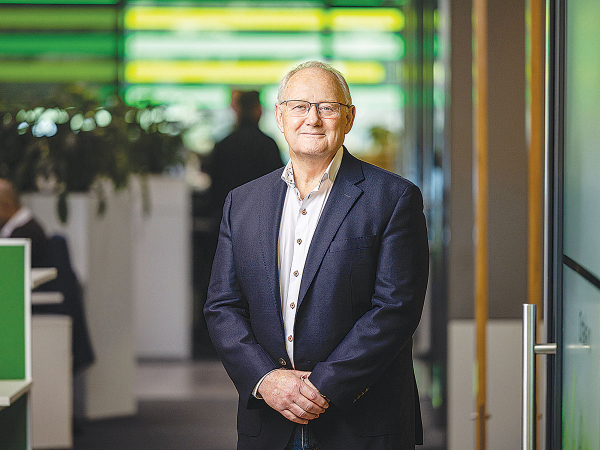
Garry Diack, chief executive of Ravensdown, says the co-operative delivered numerous targeted projects designed to drive performance during the financial year. These included investment in the manufacturing commitment, freight optimisation, improved data decision support, and automation supported by AI.
"This result reflects the discipline we've applied across the business to become a more efficient, resilient co-operative," Diack says.
"By improving our operations, we've strengthened our financial performance while continuing to invest in the products, services and expertise our shareholders rely on," he says.
The co-operative's balance sheet remains strong, with an equity ration of 79.1% which is broadly in line with 80.3% in FY25.
Board Approves $15/Tonne Rebate
Ravensdown chair Bruce Wills says the Board weighed global supply volatility against a commitment to returning efficiency gains to shareholders, approving a rebate of $15/tonne on qualifying tonnes.
“This returns value directly to the farmers and growers who own and use the co-operative and who supported the business through the volatility of supply certainty in a high demand year," Wills says.
He says the Board's focus throughout the financial year has been to provide secure access to Ravensdown products at competitive prices.
He says they're pleased to be returning additional value to shareholders through the rebate.
"Fully paid shareholders will receive their rebate as a cash payment, recognising the investment they've made in the co-operative, while partly paid shareholders will this year receive their full rebate in the form of shares, helping them build their ownership in the co-operative," Wills says.
“We encourage shareholders to be fully shared up to access the full value of membership in the co-operative."
Geopolitical Volatility Shaping Global Supply
Diack says the FY26 financial performance demonstrates the value of the co-operative to deliver on its purpose in an increasingly uncertain global environment.
"International fertiliser markets remain heavily influenced by geopolitical events. Conflict in the Middle East, the ongoing war in Ukraine and broader supply chain disruptions continue to create volatility in both product availability and pricing."
He says the co-operative's long-standing relationships with global suppliers and it's joint venture partnership with Ravensdown Shipping Services are valuable strategic assets that have proven their worth to the business and shareholders over the last year.
"Our supplier partnerships have been built over decades. They are founded on trust, reliability and mutual commitment, and they provide Ravensdown access to product through different market cycles," Diack says.
"These relationships, combined with our domestic superphosphate manufacturing capability and national inventory management system designed to handle volatility, mean we're able to provide loyal customers with certainty in an increasingly uncertain world."
Investment in Smarter, Lower-Emissions Farming
Ravensdown continued to invest in tools aimed at helping farmers lift productivity while reducing environmental impact, part of what it describes as a shift toward a "fertliser plus impact-based" relationship with customers.
The next generation of its HawkEye technology, HawkEye Pro, uses AI to generate more detailed nutrient insights and farm-specific fertiliser plans. It's now available to dairy and sheep and beef farmers, with crop and forage functionality due before the end of 2026.
Through subsidiary Agnition, Ravensdown continued to scale EcoPond, its methane-reducing technology which is now operating on more than 200 New Zealand farms in partnership with Fonterra and Synlait.
Diack says global food company Nestlé worked with both dairy processors to reduce emissions intensity across their supply chains.
"The support of our partners has been invaluable in taking EcoPond from an innovative prototype to a proven methane reduction technology that is being deployed on farms today," he says.
Outlook
Diack says global uncertainty is expected to persist, but the co-operative is well-positioned as it heads into the 2027 financial year.
"We know farming businesses continue to face changing market conditions and ongoing cost pressures," he says.
"Our focus remains on being a trusted partner for shareholders by securing reliable supply at competitive pricing, providing expert advice, and delivering value through every part of the co-operative."
FY26 At A Glance
- Total revenue before rebate: $917.2 million ($763.9 million)
- Net profit before tax and rebate: $50.1 million (-$2.0 million)
- Net profit after tax and rebate: $30.0 million (-$5.4 million)
- Operating cashflow: $38.1 million ($103.2 million)
- Equity ratio: 79.1% (80.3%)
- Rebate: $15 per tonne on qualifying tonnes