
Rural Contractors Urged to Renegotiate Contracts as Fuel Prices Surge
Rural contractors are getting guidance on how to deal with recent rising fuel prices.
 increase font size
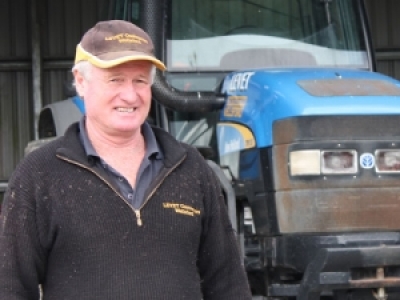 Rural Contractors NZ (RCNZ) president Steve Levet.
Agricultural contractors around New Zealand support the Government's current immigration rules on allowing temporary workers into the country.
This comes following recent criticism by opposition political parties that these regulations are cutting New Zealanders out of employment.
Rural Contractors NZ (RCNZ) president Steve Levet says the use of temporary, skilled overseas workers is vital for agricultural contracting sector.
"Every year, in many parts of the country, it's often impossible for rural contractors to find skilled New Zealanders to carry out this seasonal work," he explains. "That's why it is necessary for us to look overseas to find experienced people to fill this need."
It is not known exactly how many temporary, overseas workers are needed by rural contractors each year – but it is thought to be around 900.
Levet says RCNZ has worked hard with Immigration New Zealand in an effort to resolve the problems around contractors bringing in overseas workers for the harvest season. Later this year, national body will implement a new scheme to bring in overseas workers – following a deal struck between it and Immigration NZ.
This will see RCNZ applying for an Approval in Principle (AIP) on behalf of all members of the national body and contractors. Contractors will then be able to apply online for a visa for the person being recruited – without having to advertise, go to WINZ or any the other requirements currently causing so much difficulty.
"As RCNZ will hold the AIP, there are a number of responsibilities placed on us and it will be important that all those contractors who wish to use this scheme comply with all these conditions and requirements," Levet explains.
"For starters, there will need to be a written contract between RCNZ and each member company participating in the scheme – to ensure each knows their responsibilities and that RCNZ and other member companies are protected. If these conditions are not complied with, the AIP can be rescinded.
"This is a safeguard to ensure that the appropriate statutory and regulatory compliances are being met," Levet explains. "Those applying to the scheme will also have to fully comply with RCNZ's Code of Ethics and our Code for Employing Overseas Staff."
RCNZ aims to have the new scheme up and running by June 1, 2016.
Rural contractors are getting guidance on how to deal with recent rising fuel prices.

Rural contractors will be able to play a role in the revamped agricultural plastic recycling scheme with new regulations due for Cabinet signoff before this year’s election.
Rural Contractors NZ says members are frustrated at having to work through more layers to get visas approved for skilled seasonal machinery operators ahead of the imminent season start. Andrew Olsen comments.
Rural contractors deserve to be listened to on safety issues created by new roading developments which don’t allow motorists to pass slow-moving vehicles, says Associate Agriculture Minister Andrew Hoggard.
When the new National-led government is finally formed there will be a long list waiting for it to action from the primary industries sector.



LIC shareholders have elected a new North Island representative to the co-operative's Board, along with five representatives to its Shareholder Reference Group (SRG), following the company's Annual Meeting held in Invercargill.
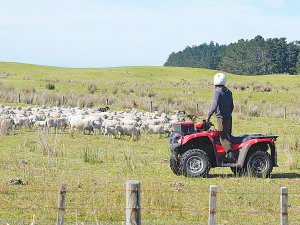
Farmers across parts of Southland and South Otago are continuing to deal with difficult conditions after a prolonged run of wet weather, with pressure building around feed supply, stock management, pasture damage, farm infrastructure and everyday workloads.
Federated Farmers says it welcomes Labour's commitment to reviewing the Sharemilking Agreements Act, calling on other major parties to do the same.
For Canterbury dairy farmers Sian Meijer and Rick Wobben, wearable technology has become one of their most valuable on-farm tools - helping manage 1850 cows across an expansive, high-performing dairy operation while improving efficiency, mating outcomes and day-to-day decision making.
Fonterra has unveiled its annual results for the 2026 financial year, posting $27 billion in revenue and close to $20 billion returned to New Zealand farmer owners and unit holders.
The first major update to the Dairy Cattle Code of Welfare in more than a decade has been released, marking what DairyNZ describes as an important step in ensuring animal welfare standards continue to evolve alongside scientific evidence and on-farm realities.