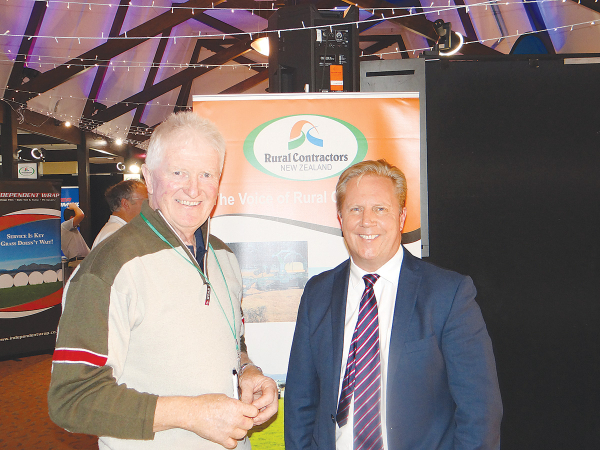
An appeal to address the urban/rural divide was made at the opening day of the recently held Rural Contractors NZ conference in Invercargill.
Former RCNZ president, Southland’s John Hughes, asked National’s Agriculture & Trade spokesperson Todd McClay to make this a priority.
Hughes said it had become its most divisive in the last five years.
“I’d love you to convince people we are not the enemy,” Hughes told the MP after his opening address to the conference of 150 rural contractors from around the country.
“We are not a bunch of rednecks. Everyone in this room is a conservationist. You don’t kill the goose that lays the golden egg.”
McClay agreed that the divide had worsened, even though urban New Zealanders had thanked farmers and the rural sector for continuing to produce food through the Covid lockdowns.
“In my experience, farmers are custodians of the land. We need to find a way to talk about the good things that are being done," he said.
At the conference, the association also formed an industry leadership group to make farmers and growers more aware of the benefits of using accredited agrichemical contractors and the inherent risks of not using qualified professionals.
RCNZ chief executive Andrew Olsen says agrichemical contractor members bring years of experience, as well as the requirement to be trained in handling and applying chemicals safely.
“We think farmers and growers deserve to know they reduce their risks by using our members and they don’t get the same benefits using people who don’t do any training or accreditation,” Olsen explained. “It’s a sad fact that, despite the harm they can pose to farmers and the environment, a handful of cowboys face little chance of facing any enforcement.
“We’ve formed this leadership group to see what more practical requirements from the regulators could look like if we worked together with agencies like Growsafe, WorkSafe and Federated Farmers.
RCNZ want to see an accreditation system that is easily understood by members and farmers, a requirement for basic and advanced training for anyone handling agrichemicals and enforcement to stop those who take no account of the risks they pose. It also notes that it’s not just farmers and growers who face risks if they don’t use accredited agrichemical contractors. Agrichemical distributors can also face the liabilities when a container leaks during a delivery or in an insecure shed.
Rural Contractors NZ also announced a new 5-year partnership plan with global agrichemical distributor Nufarm, reforging a previous partnership that recognises the increasing demands for sustainability and assurance from agricultural and horticultural spraying sector applications.
“This is the natural evolution of a relationship that began more than a decade ago,” Olsen said. “The partnership will add value for the established agrichemical professional and members who do a bit of spray work.”
Gavin Kerr, Nufarm’s NZ country manager, says the industry has never been under more scrutiny in terms of what it is spraying and how it’s being applied.
“We need contractors spraying with confidence and we believe this partnership ensures this confidence continues to grow,” he explained. “With escalating handling legislation and health and safety requirements, there’s more and more opportunity for the rural contractor to take the lead as the professional in the application of agrichemicals.”