NZ Food Safety Boss on Balancing Speed and Risk in Approvals
Striking a balance between meeting the needs of industry to speed up approval time for products but on the other hand ensuring that risks are properly assessed.
 increase font size

A developing oversupply of logs in China and continuing currency pressure has resulted in a small fall in New Zealand forestry export earnings for the latest quarter.
The Ministry of Agriculture and Forestry has this week released forestry production and trade figures for the December 2011 quarter.
The total value of New Zealand forestry exports for the quarter to 31 December 2011 was down $56.1 million on the previous December quarter, at NZ$1.1 billion.
But overall earnings were up for the 2011 calendar year (to 31 December), because China drove strong demand during the middle part of the year. The value of forestry exports increased by NZ$257.5 million to NZ$4.5 billion for the year.
Forestry still accounted for around 10% of New Zealand's total merchandise exports, at 9.8% for the 2011 calendar year (ending 31 December), compared with 10.2% the previous year.
Conditions were still challenging for the sawn timber industry, with total export earnings and volumes decreasing to NZ$751.0 million and 1.9 million cubic metres. MAF reports this is due to continuing weak housing sectors in the high-value United States and Australian markets, exacerbated by high exchange rates for key trading currencies.
For more information, go to the full reports in the Publications section of the MAF website.
Striking a balance between meeting the needs of industry to speed up approval time for products but on the other hand ensuring that risks are properly assessed.

The Government is being warned that some recent bad policy decisions are undermining its target of doubling exports by 2030.
According to new figures from Stats NZ, kiwifruit exports were valued at $3.1 billion in the year ended August 2024.
Zespri, in collaboration with ANL/CMA CGM, has initiated a feasibility study to investigate the potential for a low-emissions shipping corridor from Tauranga to Zeebrugge, Belgium, through the Panama Canal.
New Zealand’s major primary industry exporters have secured shipping capability to export $160 billion worth of products over the next 10 years.


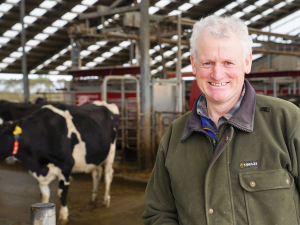
In Dacre, near Invercargill in New Zealand’s South Island, Bruce Dinnington is running a dairy operation unlike any other.

A free online platform aggregating governance vacancies across rural and regional New Zealand has been launched.
Environment Minister Nicola Grigg has announced details of a new rural plastics recycling scheme.
Agricultural drone operators say that a government decision to allow lower-risk drone work without certification won’t lower standards but drive innovation and efficiency.
OPINION: Warning bells are ringing in the arable sector.
Farmgate lamb prices are down by 8%, beef cattle by 4.5% and farm expenditure up by 4.2%.