Fonterra FY26 Results: $9.69 Milk Price, $3.4bn Profit
Fonterra has unveiled its annual results for the 2026 financial year, posting $27 billion in revenue and close to $20 billion returned to New Zealand farmer owners and unit holders.
 increase font size
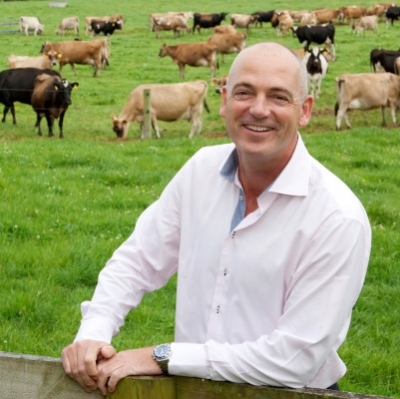
Fonterra has described its half year trading as subdued, with revenues dropping 14% compared to last year.
Announcing the co-op's half-year results in Auckland today, chief executive Theo Spierings says high volatility and challenging global market conditions affected the business.
"In the first quarter, opportunities to improve ingredients, consumer and foodservice gross margins were restricted until carryover inventory from the previous financial year was cleared," he says.
"There is often a lag between when product is produced and when it is sold. During the first quarter, the value of our ingredients inventory was relatively high as it was mostly produced when Whole Milk Powder (WMP) prices were higher, ranging between US$2,700 to US$4,700 per metric tonne," he says.
"However, these higher inventory costs were not recovered due to rapidly falling Whole Milk Powder (WMP) prices in the first quarter of this financial year, which dropped to a low of around US$2,400/ MT.
"This gap between the value of inventory and selling prices created a margin squeeze in the first quarter. This contrasts with the first quarter last year when the value of inventory was based on a lower milk cost, and was sold at a higher price.
"In the second quarter this year earnings for ingredients improved, benefiting from the lower cost of milk."
Fonterra's consumer and foodservice business in Asia and China source all of their milk from New Zealand and benefited from the lower value of milk, particularly in the second quarter.
The co-op's Australian and Chilean consumer and foodservice businesses source their milk in market.
Spierings says their earnings were significantly impacted by higher milk prices within each of these milk pools which squeezed margins.
"In Australia, Chile and Brazil the prices paid for milk are influenced by in-market dynamics rather than global prices, so our businesses in these markets have faced higher input costs."
The co-op's Sri Lanka business has turned around and improved earnings after rebuilding the market share lost, following the temporary suspension of operations last year.
Spierings says despite some challenges, the consumer and foodservice business overall achieved volume growth and improved pricing, together delivering a $91 million increase in gross margin.
"Normalised EBIT for consumer and foodservice for the first half was $116 million, an increase of 23% per cent on the prior comparable period," says Spierings.
Fonterra has unveiled its annual results for the 2026 financial year, posting $27 billion in revenue and close to $20 billion returned to New Zealand farmer owners and unit holders.
Fonterra Co-operative Group has confirmed the independently assessed candidates standing for election to its board in 2026.
Fonterra has revised its Farmgate Milk Price forecast for the 2026/27 season, lifting the midpoint and narrowing the range on the back of improving global dairy commodity prices.
Outgoing Fonterra Co-operative Council chair John Stevenson says that it has been a privilege to represent the co-op's farmer shareholders.
OPINION: Succession and long-term planning are perennial topics because it is perpetually sidelined on busy farms.



Federated Farmers says it welcomes Labour's commitment to reviewing the Sharemilking Agreements Act, calling on other major parties to do the same.
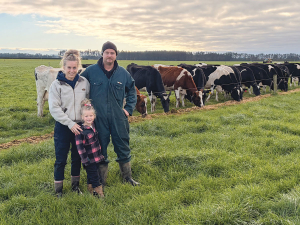
For Canterbury dairy farmers Sian Meijer and Rick Wobben, wearable technology has become one of their most valuable on-farm tools - helping manage 1850 cows across an expansive, high-performing dairy operation while improving efficiency, mating outcomes and day-to-day decision making.
Fonterra has unveiled its annual results for the 2026 financial year, posting $27 billion in revenue and close to $20 billion returned to New Zealand farmer owners and unit holders.
The first major update to the Dairy Cattle Code of Welfare in more than a decade has been released, marking what DairyNZ describes as an important step in ensuring animal welfare standards continue to evolve alongside scientific evidence and on-farm realities.
Ravensdown shareholders have elected Jane Montgomery and Kate Acland to the Ravensdown Board for three-year terms, following a closely contested director election.
Federated Farmers says new legislation replacing the Resource Management Act will cut red tape, unlock investment and help grow New Zealand's export-led economy, after the Planning Bill and Natural Environment Bill passed their third reading in Parliament yesterday.




