
Esther Guy-Meakin Appointed Chief Executive of the NZ Meat Board
Esther Guy-Meakin has been announced as the new chief executive of the New Zealand Meat Board (NZMB).
 increase font size
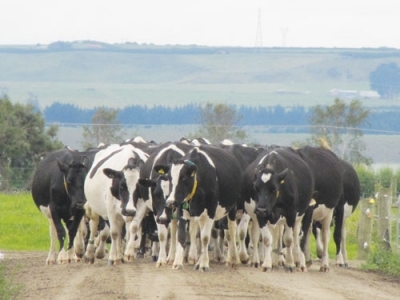 The Meat Industry Association says member meat processors have agreed to collect a TB eradication differential levy on dairy cattle.
The Meat Industry Association says member meat processors have agreed to collect a TB eradication differential levy on dairy cattle, although it does not agree with this method of collection.
New Zealand's meat processors have for some years collected a single uniform biosecurity levy on beef and dairy cattle at meat processors to pay for the costs of TB eradication, says the Meat Industry Association (MIA) in a statement.
Following a review undertaken last year, the Government and DairyNZ agreed that dairy farmers shall pay for a greater share of their share contribution to TB eradication via a differential levy paid on dairy cattle at meat processors.
"Meat processors opposed this differential levy on dairy cattle at meat processing,". MIA says.
"Meat processors believe that it is contrary to good public policy for costs to be charged at the point of production where they do not arise – in this case, costs incurred by dairy farmers should have been met by a charge on their dairy production, rather than through a complex system of differentiating dairy and beef cattle at meat processing.
"Meat processors also note that a differential levy at meat processing incurs greater costs which would not be incurred if the increase was made to the existing dairy levy.
"Nevertheless, meat processors recognise the importance to New Zealand of eradicating TB. The industry wishes to be constructive in this, so it has accepted the requests of the Government and DairyNZ that it impose a differential levy on dairy farmers. The Ministry for Primary Industries is shortly to promulgate the regulations to give effect to the differential levy, which will be imposed on dairy cattle from August 1, 2016.
"If any farmers have concerns about the application of the levy when the cattle are slaughtered they should contact OSPRI at 0800 482 463."
Esther Guy-Meakin has been announced as the new chief executive of the New Zealand Meat Board (NZMB).

As expected, the US has launched a safeguard investigation into lamb imports, a move that could impact New Zealand sheepmeat returns.
New Zealand's red meat sector says it welcomes the Government's focus on trade ahead of the general election in November.
New Zealand red meat exports are booming but a pending decision in the White House, Washington D.C., could dent sheepmeat earnings.
Prime Minister Christopher Luxon says the red meat sector is doing an excellent job promoting our pasture-fed system around the globe.


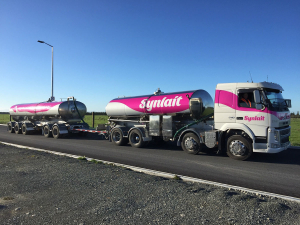
Synlait has swung to second-half profit as operations stabilise, but the dairy processor still posted a $75.4m annual loss.
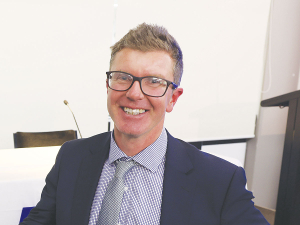
LIC shareholders have elected a new North Island representative to the co-operative's Board, along with five representatives to its Shareholder Reference Group (SRG), following the company's Annual Meeting held in Invercargill.
Farmers across parts of Southland and South Otago are continuing to deal with difficult conditions after a prolonged run of wet weather, with pressure building around feed supply, stock management, pasture damage, farm infrastructure and everyday workloads.
Federated Farmers says it welcomes Labour's commitment to reviewing the Sharemilking Agreements Act, calling on other major parties to do the same.
For Canterbury dairy farmers Sian Meijer and Rick Wobben, wearable technology has become one of their most valuable on-farm tools - helping manage 1850 cows across an expansive, high-performing dairy operation while improving efficiency, mating outcomes and day-to-day decision making.
Fonterra has unveiled its annual results for the 2026 financial year, posting $27 billion in revenue and close to $20 billion returned to New Zealand farmer owners and unit holders.




