MPI Opens New Canberra Position to Support Exporters
In line with New Zealand’s strategy to open up new markets, the Ministry for Primary Industries (MPI) his extending its diplomatic footprint.
 increase font size
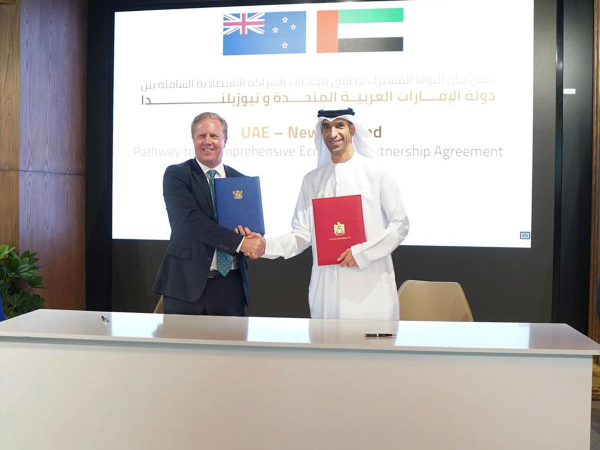 New Zealand Trade Minister Todd McClay and UAE Trade Minister Dr Thani bin Ahmed Al Zeyoudi. Photo Credit: Todd McClay/Twitter.
The dairy and red meat sectors have welcomed news that New Zealand will begin formal negotiations for a free trade agreement (FTA) with the United Arab Emirates (UAE).
The announcement by Trade Minister Todd McClay and his counterpart UAE Trade Minister Dr Thani bin Ahmed Al Zeyoudi in Dubai follows and earlier meeting in March where the pair set up a consultation programme to see if such a deal should proceed.
The UAE is an important market for NZ's red meat sector, generated $47 million of export earnings in 2023. High-value chilled beef is the most valuable export sub-category to the UAE, worth $31 million in 2023, making the UAE our fourth largest chilled beef market behind the US, China, and Japan.
Meat Industry Association (MIA) chief executive Sirma Karapeeva says a comprehensive FTA with UAE would open the door to reduce tariffs on other products that we export to the Middle East, including frozen beef and lamb, and wool.
Also happy with the news is Dairy Companies of NZ (DCANZ) executive director Kimberly Crewther. She says her sector looks forward to a high-quality FTA agreement that delivers certainty to our dairy exporters of duty-free access across all products.
In line with New Zealand’s strategy to open up new markets, the Ministry for Primary Industries (MPI) his extending its diplomatic footprint.

The head of the Ministry for Primary Industries (MPI) trade and international relations group says New Zealand is well-positioned to secure trade access and compete internationally as the world becomes more complicated, demanding and uncertain.
New Zealand's red meat sector says it is disappointed that the United States' investigation into lamb imports will move to its next phase.
Meat Industry Association chief executive Nick Beeby says there’s now much closer cooperation between meat processing companies than there was many years ago.
A new fruit quality research laboratory has been opened in Auckland by agritech company Hectre to develop pioneering hyperspectral technology.
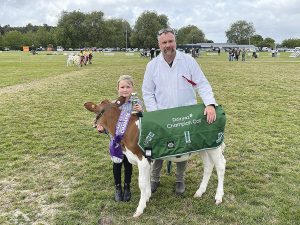
For eight-year-old Myra Smith, weeks of caring for and preparing her Red Holstein Friesian calf, Bell, have paid off, with the young Te Pahu handler taking home the Champion Dairy Type title at the recent Waikato A&P Show held at Claudelands.
A titan of the meat industry but a humble and generous guy.
In line with New Zealand’s strategy to open up new markets, the Ministry for Primary Industries (MPI) his extending its diplomatic footprint.
Demand for dairy products over the next two decades will increasingly be shaped by demographic shifts, rather than population growth alone.
The global dairy industry is fighting back against alternative proteins masquerading as dairy products.
Fonterra farmers are happy to see the board tackle the issue of shares from former milk suppliers.