Cool Beef: NZ's New Programme to Cut Cattle Methane
Beef+Lamb New Zealand and the Ag Emissions Centre have launched a new research project aimed at helping beef farmers reduce methane emissions without impacting productivity or profitability.
 increase font size
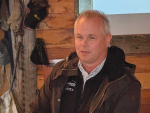
 Dr Will Happer
Visiting US climate change expert Dr Will Happer says the idea of reducing cow numbers to greatly reduce methane emissions is crazy.
Speaking at a farmer meeting in Hamilton on Friday night, Happer says cattle are being demonised “because they can't avoid burping methane when they chew their gut”.
“But if you put in the numbers, what does this really mean in terms of something that matters to us? We don't care about methane that's in the room, it's temperature.
“And the answer is that temperature effects are unbelievably small. So, why be modest about saving the planet, just keeping the cows from burping a little methane? Let's kill them all - all one and a half billion cows in the world.
“I looked it up carefully, and if you kill all those cattle so they don't emit any methane, none, how much do you lower the temperature - just 0.07 degree Celsius from killing them all, not just feeding the poison so they don't burp methane.
“So, you must think, is this really a good deal? And the answer, of course, is no, this is crazy.”
Happer, invited to NZ by Methane Science Accord and Groundswell to speak at farmer meetings around the country, points out that the total amount of methane that's in the atmosphere from cattle is “maybe a fifth or a sixth of the inventory there”.
It’s a measurable amount, but it's certainly not the major amount. The major amount comes from rice paddies.
“But people are not demanding that we stop eating rice. But we're supposed to stop raising cattle. I don't really see it.”
Happer believes the effects of greenhouse gases are extremely small.
It's difficult to understand how one could panic the world into thinking that this is a problem, he says.
“It's not a problem.”
Happer also talked down New Zealand's goals for methane reduction.
He says measures being proposed for farmers in NZ would have almost no effect on the amount of methane coming out.
This, he adds, is a problem if you are an alarmist.
“And the problem is that you really have a hard time getting political support by saying that the earth is going to die if the temperature goes up by 0.7 degrees centigrade from, say, doubling carbon dioxide or much less from doubling methane.”
Happer, an emeritus Princeton physicist is internationally known in atmospheric physics and climate debate.
On his NZ tour Happer is presenting his latest views on the effects of greenhouse gases, radiative transfer, and climate sensitivity.
Meeting schedule as follows;
Mon 8 – Masterton
Masterton, Keinzley Agvets, 131 Te Ore Ore Rd
12:00pm
Wed 10 – Christchurch
Sudima Hotel, 550 Memorial Ave
1:30pm
Wed 10 – Timaru
Pharlap Raceway, Greyway Lounge
7.30pm
Fri 12 – Balclutha
Balclutha Town & Country Club, Yarmouth St
1:30pm
Fri 12 – Gore
Gore, RSA - Bowler Avenue
7.30pm
Sat 13 – Wanaka
Wanaka Community Hub, 34 McDougall St
1:00pm
Beef+Lamb New Zealand and the Ag Emissions Centre have launched a new research project aimed at helping beef farmers reduce methane emissions without impacting productivity or profitability.

OPINION: The Hound reckons a big problem with focusing too much on the wrong goal - reducing livestock emissions at the expanse of food production, in this case - is that the Government starts throwing taxpayer coin at increasingly ridiculous ideas.
According to a new farmer survey, many farmers are rejecting New Zealand’s current ruminant methane strategy.
New Zealand is out of step globally in looking to put a price on agricultural emissions from food production.
New Zealand farmers could have access to low methane elite genetics by 2026.



The International Dairy Federation’s World Dairy Summit has returned to New Zealand after sixteen years.

The New Zealand government is calling on global dairy industry players to urge their countries to bring down trade barriers.
Overseer Ltd has released an update to OverseerFM, the farm environmental modelling software, incorporating research findings that refine its estimates of crop nitrogen uptake.
New Zealand's red meat sector says it is disappointed that the United States' investigation into lamb imports will move to its next phase.
Three men have been sentenced in District Courts after Ministry for Primary Industries prosecutions over animal welfare, food safety and cattle tracing offences.
Fonterra’s 2026 financial year was a year of delivery, with record volumes of milk collected, processed and shipped by the co-op.