Pāmu FY26 Report: Profit More Than Doubles to $113m
Pāmu has released its FY26 Integrated Annual Report, reporting a Net Operating Profit of $113 million, more than double the $49 million recorded in FY25.




 increase font size
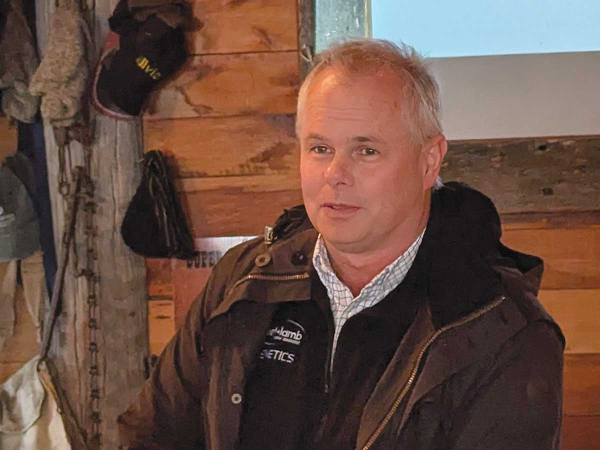 Jason Archer
Beef+Lamb New Zealand and the Ag Emissions Centre have launched a new research project aimed at helping beef farmers reduce methane emissions without impacting productivity or profitability.
Labelled "Cool Beef", the four-year programme will explore the relationships between feed efficiency, methane emissions, and production traits. The aim is to come up with new breeding tools to produce cattle that reduce methane by utilising feed more efficiently.
The Ag Emissions Centre has come on board to fund the programme, which will be led by Beef+Lamb NZ.
Following about three years of pilot work, the programme was officially launched last week at the Te Mania Angus Stud on the North Canterbury coast near Cheviot, which will be one of the two main research sites, the other being Pāmu's St Kilda farm near Taupo.
Speaking at the launch, Beef+Lamb chair Kate Acland said it has the potential to deliver practical benefits for New Zealand beef farmers.
"Understanding how efficiently cattle convert feed into production has real value for us in our farm businesses and that's what makes this programme so important."
The goal was to generate robust science and data needed to support future breeding tools.
Acland said that every farm has different breeding objectives, selecting animals for productivity, fertility or productivity.
"Cool Beef will build on that by exploring whether additional information around feed efficiency and methane traits can help support future breeding decisions."
She said that having breeders contribute animals for the research would ensure the results would be grounded in real New Zealand farming systems.
Dr Jason Archer, head of Beef+Lamb NZ Genetics, said the challenge was in balancing three things - feed efficiency (the relationship between feed intake and production); methane intensity (how many kilos of meat are produced per unit of methane); and how much methane is produced per kilo of feed eaten.
"That's something that we really want to work on."
Archer said there were many research questions to be asked.
"What's the opportunity to reduce methane yield and improve feed efficiency together? Is it one or the other or both? We obviously hope the outcomes are both."
Some of the methodology comes from the ongoing Cool Sheep programme, which started in 2006 with similar aims. That uses trailer-mounted Portable Accumulation Chambers (PACs) to measure individual animals' methane and other emissions by shutting animals in and monitoring gas levels over a short period of time.
Cattle-sized PACs have been installed at Te Mania and St Kilda for feed intake and methane emissions data, with animals to be provided by Te Mania and St Kilda and about another eight breeders around the country. Another Pāmu location, Kepler Farm in Te Anau, will collect methane measurements directly from cattle grazing on pasture. The programme will work with Hereford, Angus, and Hereford-Angus crosses, because they represent about 80% of the national beef herd.
Pāmu has released its FY26 Integrated Annual Report, reporting a Net Operating Profit of $113 million, more than double the $49 million recorded in FY25.

Ravensdown shareholders have elected Jane Montgomery and Kate Acland to the Ravensdown Board for three-year terms, following a closely contested director election.
Beef + Lamb New Zealand (B+LNZ) says it welcomes the passage of the Natural Environment Bill and Planning Bill, calling the bills a positive step for sheep and beef farmers.
If you're thinking about investing in ways to push feed forward, this is the year to do it.
As farmers begin thinking about establishing next year’s winter forage crops, Beef + Lamb NZ is encouraging farmers to carefully consider what crops they are planting and where.


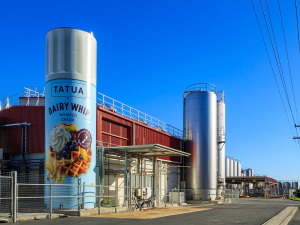
Waikato milk processor Tatua has again declared a record milk payout to farmer shareholders, leaving other processors in the dust.
A Labour-led Government won’t be bringing back the controversial freshwater rules of 2020.
National’s much-touted free trade deal with India featured in the Rural Issues Debate at Mystery Creek, Hamilton on Wednesday night.
New Zealand's 2026-27 freshwater fishing season has opened, with anglers encouraged to head to rivers and lakes over the coming days as conditions look favourable across much of the country.
Central Otago District Council (CODC) has voted against a plan to spread treated sewage sludge from Cromwell and Alexandra on farmland near Lauder, a decision Federated Farmers says reflects strong opposition from rural residents.
Pāmu has released its FY26 Integrated Annual Report, reporting a Net Operating Profit of $113 million, more than double the $49 million recorded in FY25.




OPINION: The same mainstream media muppets that brought you Jacindamania in 2017 have been flat out pimping for the Opportunities…
OPINION: Your old mate reckons the atrocious way farmers in the UK are treated by their lords and masters in…