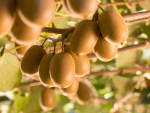
NZKGI Responds to Migrant Worker Exploitation Reports
Where any worker in the kiwifruit industry is mistreated, we expect the authorities to take action.
 increase font size
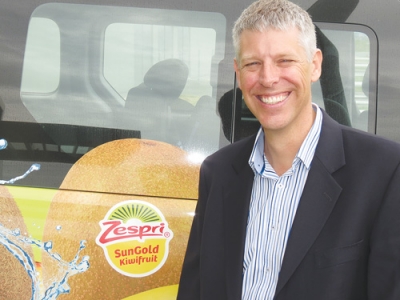 Zespri chief Lain Jager says the NZ kiwifruit industry must innovate faster than competitors to keep ahead.
The race to innovate faster than our competitors is one we must win, says Zespri chief executive Lain Jager.
He told the recent kiwifruit innovation symposium that doing the things we do today better will not be good enough to keep the industry up with competitors.
It's no use thinking about the status quo when thinking about the future, Jager says.
"Our competitors will be breeding new cultivars and bringing new varieties to the market. They will devise new production systems and new supply technologies," Jager says. "We are at real risk of disruption. The choice we must make is between being disrupted by our competitors or disrupting them and I know what I'd prefer."
Jager says the pace of change has increased especially in the last 20 years, but now it is accelerating at an even greater rate.
"Technology is driving change – robotics, new production systems, better pest control and greater computing power.
"That's positive because there are opportunities inherent in that. But there are enormous risks, in particular the risk of being disrupted by other industries that come up with new ways of doing things."
Jager says what is needed is 'transformational innovation' which may be outside some people's comfort zones. This requires embracing the concept of 'unbelief' and thinking about an innovation system completely different from what exists today.
Worldwide emerging macro trends include more melons and berries are appearing in markets: consumers see these as offering flavour and fruit 'ready to eat'... they don't want to take it home and find it is too hard or too soft. They want to be able to take it home and eat it," Jager explains.
"These macro trends enable us to gain insights into what's working and what is meaningful for consumers. And we need to be able to breed varieties of kiwifruit which meet those objectives."
High quality science is fundamental to the success of Zespri, Jager says. Science is a crucial tool in the innovation process and in providing quality data to consumers about products.
Maori co-branding
Zespri is now working with Maori on a co-branding exercise, Lain Jager says.
Maori orchards produce about 10% of the national kiwifruit crop and this is expected to increase. Maori are very supportive of the integrated industry structure but are also keen to put their own stamp on the marketing of kiwifruit providing it can link with Zespri's objectives.
"Maori are telling us that the origin of the fruit, the land, the people and where the fruit comes from is very important to them. They are looking at ways to represent that view in the market and we support working with Maori on co-branding initiatives."
Zespri is now doing market research to see if such a concept resonates with consumers.
Where any worker in the kiwifruit industry is mistreated, we expect the authorities to take action.

Kiwifruit growers are watchful but remain optimistic as concerns around the potential effects of the El Niño weather pattern this season.
More signs of a booming kiwifruit sector.
After delivering a strong financial year, rural trader PGG Wrightson says the coming months will depend on customer confidence and weather.
New Zealand growers have always adapted to changing conditions, but one challenge is steadily gaining ground across the horticulture sector: resistance.


Synlait has swung to second-half profit as operations stabilise, but the dairy processor still posted a $75.4m annual loss.
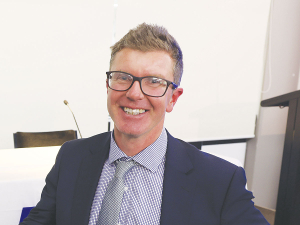
LIC shareholders have elected a new North Island representative to the co-operative's Board, along with five representatives to its Shareholder Reference Group (SRG), following the company's Annual Meeting held in Invercargill.
Farmers across parts of Southland and South Otago are continuing to deal with difficult conditions after a prolonged run of wet weather, with pressure building around feed supply, stock management, pasture damage, farm infrastructure and everyday workloads.
Federated Farmers says it welcomes Labour's commitment to reviewing the Sharemilking Agreements Act, calling on other major parties to do the same.
For Canterbury dairy farmers Sian Meijer and Rick Wobben, wearable technology has become one of their most valuable on-farm tools - helping manage 1850 cows across an expansive, high-performing dairy operation while improving efficiency, mating outcomes and day-to-day decision making.
Fonterra has unveiled its annual results for the 2026 financial year, posting $27 billion in revenue and close to $20 billion returned to New Zealand farmer owners and unit holders.



