Precision N application test costs 'outweigh returns'
Precision application of nitrogen can improve yields, but the costs of testing currently outweigh improved returns, according to new research from Plant and Food Research, MPI and Ravensdown.
 increase font size
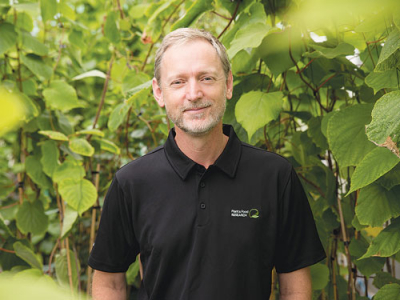 Plant & Research chief executive David Hughes.
Plant & Food Research is doing an international review to definitively determine the ways in which the organisation and New Zealand horticulture are world-class, says chief executive David Hughes.
But they already know about some areas. For example, NZ’s apple industry for five years has been rated the world’s best.
“That is everything from the way the orchards are run, the varieties grown and sold, financial returns received -- the whole way the industry works. There is also science that has gone into that,” Hughes told Rural News.
“We have one of the world’s biggest kiwifruit breeding programmes; we are the biggest outside of China and comparable in size to the biggest programmes within China. We have a strong track record in producing great kiwifruit cultivars.
“Broadly our kiwifruit and apple research programmes are world class. Certainly, the cultivar development parts of them but also the production systems too – pest and disease system controls, sustainable production and post-harvest and all the consumer work. All of that sweeter stuff for those two industries is world class.
“We have a reasonably strong programme in processed raspberries which we do in a joint venture with Washington State in the US. We compete very strongly in that.”
Some of the work done on water use efficiency and understanding natural capital stocks and quantifying that whole area and some genetics work is world recognised.
Hughes says he has challenged their chief scientist to come back with a definitive view of where NZ is world class.
“We have been running for the last five years a series of international science reviews – panels of international experts who come and look at the science and critique it. Three more reviews to do and we will have covered the entire organisation. At the end of that process we will define where we are world class and world leading.”
With 1000 employees including about 700 scientists, Plant and Food can be divided into about five chunks from genetics to growing systems through to consumers’ experience.
Growing royalties revenue
Royalties are an important part of the Plant & Food Research revenue mix and they want to see that continue, says Hughes.
“We think royalties are a win-win for us and the sectors we support.
“It is effectively about sharing in success. If you develop something and nobody uses it, nobody pays. So you only get paid if it is picked up and used. We set our royalties to take a fair share of the value created, but we recognise the company doing the marketing for a new cultivar will have to do a lot of work to introduce it to the market, for example, spend a lot of money on advertising and promotion. So they should get the lion’s share of the value.
“If we have created the cultivar we should get a bit of the value too. We can reinvest that ourselves to create the next one. It enables us to be a financially sustainable business. It is to make sure you create value then take a fair share so you can create some more.”
They are getting royalties from offshore as well.
“The NZ horticultural scene led by Zespri and Turners & Growers is increasingly a set of global companies.
“Even when you get below that level to the next tier they are increasingly global in their outlook. They are all exporting, and some have international offices. A number of them are sourcing products internationally. In horticulture NZ is playing on a global stage.”
The trend has accelerated in the last few years, but it has roots a lot further back. Zespri has been sourcing kiwifruit from other countries such as Italy and France for a long time.
T&G Global has had a multinational view of the world for a long time, but this has accelerated.
“The whole industry has matured substantially. The industry has evolved quite naturally as an export industry because of the size of the NZ market.”
Precision application of nitrogen can improve yields, but the costs of testing currently outweigh improved returns, according to new research from Plant and Food Research, MPI and Ravensdown.

Reaction to the Government’s major overhaul of the country’s seven crown research organisations has so far been largely positive.
The government has announced a major restructuring of the country's seven crown research institutes (CRIs), which will see them merged into three public research organisations (PROs).
Later this month, Ardgour Valley Orchards apricots will burst onto the world stage and domestic supermarket shelves under the Temptation Valley brand.
Regenerative farming trials in Gisborne, in partnership with Woolworths, LeaderBrand, and Plant & Food Research, are uncovering promising opportunities for sustainable vegetable farming in New Zealand.


The first major update to the Dairy Cattle Code of Welfare in more than a decade has been released, marking what DairyNZ describes as an important step in ensuring animal welfare standards continue to evolve alongside scientific evidence and on-farm realities.

Ravensdown shareholders have elected Jane Montgomery and Kate Acland to the Ravensdown Board for three-year terms, following a closely contested director election.
Federated Farmers says new legislation replacing the Resource Management Act will cut red tape, unlock investment and help grow New Zealand's export-led economy, after the Planning Bill and Natural Environment Bill passed their third reading in Parliament yesterday.
Leading figures from the major political parties will be questioned on their primary sector policies at the Rural Issues Debate at Mystery Creek Events Centre, Hamilton, on 30 September.
OPINION: Have a plan in place now!
Beef + Lamb New Zealand (B+LNZ) says it welcomes the passage of the Natural Environment Bill and Planning Bill, calling the bills a positive step for sheep and beef farmers.