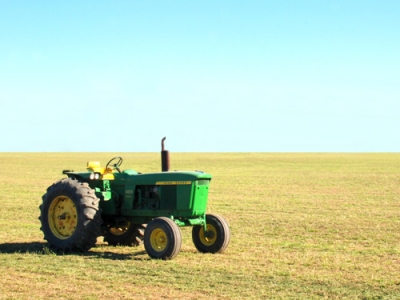
With the silly, busy season about to happen – and with margins tighter than ever – it might be worth considering a few salient points to save fuel in the trusty farm tractor.
Here are ten top points to consider:
First, try to match power to the job and if possible shift up a gear while throttling back, thereby increasing the forward speed with less engine revs. Think about using economy PTO settings in light load situations as most tractors generally have more power than a job needs.
Stop picking the 'favourite' tractor if you have more than one. If possible use the smallest tractor available to do the job, but don't go too small and make it work too hard.
Stop leaving tractors idling, as modern engines don't need to allow the turbo to cool down. Get in the habit of switching it off. Research has shown that most tractors will consume up to 5.5L/h at idle and fuel used at restart is only equivalent to 10 seconds idling time. Why do you think many modern cars are now automatically stopping and restarting engines in queuing traffic or urban situations?
Keep maintenance up to date and service regularly. For starters, clean oil prolongs engine life. By contrast dirty air filters cause poor airflow and incomplete combustion, hence the black smoke – unburnt fuel going up the exhaust pipe.
Aim to reduce unnecessary wheel slip: though a little is needed for a 4WD tractor to achieve the best traction, too much is a waste of fuel. Aim for 9-11% on firm ground or 13-16% in soft or sandy situations for optimum grip
Keep tyres properly inflated according to load and speed and think about buying a good quality gauge. This alone will help prolong tyre life and achieve the best fuel economy. In busy periods, check at least once a week and ensure that any duals being used are matched for size, tread pattern and equal pressures. With implements it's interesting to note that a trailer tyre run at minimum permissible pressure uses 15% more fuel than one run at the maximum permissible value.
Add ballast to tractors sparingly to achieve traction. If not required remove any weights or water particularly during summer. One extra tonne of ballast consumes around 1L/h fuel to move it around.
Consider low-cost GPS systems to reduce in-field overlaps. Reducing these by 10% will result in 10% savings in fuels, fertiliser and spray and help reduce overall compaction figures in any paddocks.
Take the time to read operating manuals and set implements up accurately. Misaligned ploughs that 'crab' behind tractors increase tyre wear and can push fuel consumption up by 20%, and a plough tilted over too far from vertical can cause increases of a further 10%.
If an implement needs a constant flow of hydraulic oil, spend the time to ensure the minimum is delivered to the machine. Increase oil flow gradually to achieve the required result. With gear pump tractors, throttle back or for higher spec PFC versions adjust the flow control setting. Interestingly New Holland has found that a 120hp tractor takes around 20hp to deliver the maximum oil flow whereas the minimum setting only requires around 5hp.
Finally, this harvest be safe and don't take risks. Know the capabilities of your tractors and implements, but more importantly – know yourself.