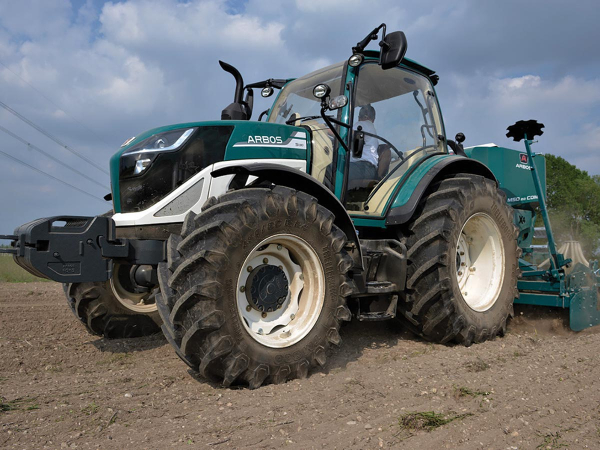
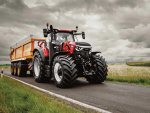
The climate of uncertainty and market fragmentation that currently characterises the global economy suggests that many of the European agricultural machinery manufacturers will be looking for new markets.
The issues are strongly reflected in Italian machinery exports, which after an overall decline in 2024 of 15%, also show negative figures for the first half of this year, with a fall of 10.4% reported by industry association FederUnacoma.
The decline in exports to the US market was extremely sharp, where “Made in Italy” technologies were affected by the Trumpimposed tariffs and fell 42.4% in the first half of the year (year on year) - moving from € 480 to €276 million.
“The current American administration’s policies,” said FederUnacoma President Mariateresa Maschio, “are severely detrimental to our sector, which last year counted the United States as its primary export market accounting for 14% of our total exports.”
The demand primarily focused on tractors, construction machinery, specialised crop equipment, as well as irrigation and haymaking equipment.
“These new commercial structures are encouraging our companies to seek outlets in those countries experiencing a developing agricultural economy, so encountering growing demand for machinery, such as Indonesia, Thailand, Vietnam, and the Philippines,” added Maschio.
The Italian agricultural machinery industry is typically a key supplier for the Mediterranean countries, which despite the 10.4% drop in global supply was showing resilience with a more limited decline of only 3%.
Indeed, Italy is currently the main supplier of agricultural machinery to countries such as Albania, Greece, Turkey, Israel, and Tunisia, and the second largest to France, Slovenia, Bulgaria, Jordan, Lebanon, Algeria, Libya, and Morocco.
Italy also ranks third in supplies to Spain, Hungary, Croatia, and Serbia, with the value of Italian exports to the Mediterranean region growing by 15%, from EUR 1.93 to 2.21 billion, between 2021 and 2024, accounting for 36.2% of the total value of exports in the sector.
While the Mediterranean region continues to appear promising, North Africa and sub-Saharan Africa appear to have even greater potential as demand for technology grows. The African continent is experiencing huge demographic growth, likely to reach 2.5 billion inhabitants by 2050, who are already unable to ensure food security for its current population.
Food imports to Africa, which have been around US$ 35 billion a year in recent years, are expected to jump to US$110 billion by the end of 2025.
“In the near future, demand for food will also grow in qualitative terms, due to the emergence of a middle class with more advanced consumption styles and greater spending power,” Mariateresa Maschio said.
“Mechanisation is required not only to increase productivity, preserve natural resources, and optimise water consumption, but also to streamline the entire supply chain, including transport, preservation, and initial processing of products.”